Glycocalyx degradation / Endothelial dysfunction
Peripheral Circulatory Insufficiency and Raynaud's Phenomenon
Pathophysiology, Mechanistic Pathways, Evidence, and the Case for FIR as a Vasodilatory Adjunct
Companion document to the patient-facing summary. Last revised August 2026.
Clinical Summary
Peripheral circulatory insufficiency spans a heterogeneous set of conditions united by common downstream physiology: reduced nitric oxide (NO) bioavailability, endothelial dysfunction, exaggerated sympathetic vasoconstriction, and impaired microvascular reactivity. Raynaud's phenomenon (RP) is the prototypical vasospastic disorder, affecting an estimated 3–5% of the general population and up to 90% of patients with systemic sclerosis (SSc).
Far-infrared (FIR) therapy in the 7–14 μm band has demonstrated direct, measurable effects on peripheral blood flow, skin perfusion pressure, and endothelium-dependent vasodilation, with a clearly documented molecular mechanism: CaMKII-mediated eNOS phosphorylation at Ser1179 and subsequent NO production. Recent 2025 evidence (Cho et al.; Lin et al.) extends the evidence base into the specific populations most likely to benefit — cold-extremity syndromes and end-stage renal disease with peripheral vascular dysfunction. No large FIR-specific RCT has been performed in Raynaud's populations. The mechanistic case is nonetheless strong, and FIR should be considered a reasonable complementary intervention alongside guideline-directed therapy.
1. Classification and Pathophysiology
Raynaud's Phenomenon
Raynaud's phenomenon is a paroxysmal vasospastic disorder of the digital arteries and cutaneous arterioles, presenting classically as a triphasic color change (pallor → cyanosis → rubor) triggered by cold exposure or emotional stress. The distinction between primary and secondary forms is critical for management and prognosis:
Primary Raynaud's (Raynaud's Disease)
- Idiopathic; no underlying disease
- Onset typically 15–30 years, F:M ~4:1
- Symmetric bilateral involvement
- Absent nailfold capillary changes
- Negative ANA
- No tissue loss / digital ulceration
- Generally benign course
Secondary Raynaud's
Associated with underlying pathology:
- Systemic sclerosis (SSc): ~90%
- SLE: ~35%
- MCTD, Sjögren's, RA, DM/PM
- Vibration white finger (occupational)
- Drug-induced (β-blockers, ergotamine, chemotherapeutics, stimulants)
- Hyperviscosity syndromes
May progress to digital ulceration, gangrene.
Key Mediators of Vasospastic Physiology
| Mediator | Direction | Role in RP Pathophysiology |
|---|---|---|
| Nitric oxide (NO) | ↓ | Reduced eNOS activity and NO bioavailability; central defect in both primary and secondary RP |
| Endothelin-1 (ET-1) | ↑ | Elevated in SSc-associated RP; potent vasoconstrictor; therapeutic target of bosentan |
| α2C-adrenoceptors | ↑ activity | Cold-induced translocation to smooth muscle cell surface; exaggerated cold-response |
| Reactive oxygen species | ↑ | Reduce NO bioavailability via peroxynitrite formation; endothelial injury |
| Thromboxane A2 | ↑ | Vasoconstriction and platelet aggregation, particularly in secondary RP |
| Calcitonin gene-related peptide (CGRP) | ↓ | Reduced sensory-vasodilator peptide; loss of counter-regulatory vasodilation |
Broader Peripheral Circulatory Insufficiency
Beyond RP, conditions producing peripheral hypoperfusion via distinct mechanisms include peripheral artery disease (atherosclerotic macrovascular), diabetic microangiopathy (glycation-mediated microvascular), chronic venous insufficiency (venous return failure), post-COVID microvascular dysfunction (endothelialitis + endothelial glycocalx loss), and cardiac output-limited perfusion (CHF, cardiomyopathy). These converge functionally at the level of reduced tissue oxygen delivery and reduced endothelium-dependent vasodilation — the same physiology FIR appears to address.
2. Standard Treatment Landscape
Non-Pharmacologic (First-Line)
- Cold avoidance; hand and body warming (gloves, layered clothing, hand warmers)
- Smoking cessation (absolute)
- Avoidance of sympathomimetics, ergotamines, non-selective β-blockers
- Stress management, biofeedback
- Regular aerobic exercise
Pharmacologic Therapies
- Dihydropyridine CCBs: (nifedipine 30–60 mg XL daily; amlodipine 5–10 mg daily) — first-line; ~35% reduction in attack frequency
- PDE5 inhibitors: (sildenafil 20–50 mg TID; tadalafil 20 mg alt days) — second-line for CCB-refractory RP
- Topical nitrates: (nitroglycerin ointment) — limited by headache
- IV prostaglandins: (iloprost, epoprostenol) — severe RP with digital ulceration in SSc
- Endothelin receptor antagonists: (bosentan) — digital ulcer prevention in SSc-RP
- SSRIs: (fluoxetine) — mild benefit for stress triggers
- ARBs / ACE-Is: minor benefit in hypertension overlap
Complementary Tier: Published support exists for L-arginine, arginine-citrulline, Ginkgo biloba, fish oil, and low-level laser therapy (LLLT). Far-infrared therapy fits into this complementary tier with mechanistic and adjacent clinical support outlined below.
3. Mechanistic Pathways: FIR and Peripheral Vasodilation
The vasodilatory effect of FIR operates through a coordinated set of thermal and non-thermal mechanisms. The distinction matters clinically because ordinary conductive warming is not sufficient to reproduce the full effect — a critical finding from the 2025 Bagabir work.
CaMKII Ser1179 Phosphorylation
FIR acutely activates eNOS via Ca²⁺ mobilization and CaMKII-mediated phosphorylation (Park 2013). Direct upregulation of vessel-opening NO — the exact signal reduced in primary and secondary Raynaud's.
Cytoprotective / Antioxidant
Reduces ROS, which are elevated in RP and directly quench NO via peroxynitrite formation. Preserves NO bioavailability (Chen 2007, Bagabir 2025).
Barrier Defense
Induced by FIR; supports endothelial barrier function and reduces inflammatory injury to microvasculature (Ishibashi 2008, Yuan 2020, Bagabir 2025).
Parasympathetic / HRV
Waon therapy improves HRV metrics and reduces plasma norepinephrine (Kuwahata 2011). Attenuates sympathetic vasoconstriction — directly relevant to RP's cold-response.
4. Detailed Evidence Base
Cho et al. (2025) — Biomedicines
RCT · Cold extremities · Laser Doppler flowmetry
Design: Randomized trial comparing FIR (loess bio-ball mat), conventional heating, and control in participants with cold feet.
Endpoints: Blood flow (mL/min/100g) in bilateral big toes by laser Doppler flowmetry; epidermal temperature by infrared thermometer.
Key Findings: FIR produced the largest increases in toe blood flow and epidermal temperature among the three modalities tested; effect was immediate and measurable.
Relevance to RP: Directly measures the functional endpoint (peripheral blood flow, extremity temperature) that Raynaud's patients care about, in a population with the same cold-extremity phenotype.
Lin et al. (2025) — J Formos Med Assoc
n=28 HD patients · 1-year FIR to feet · Peripheral vascular endpoints
Design: Prospective study of 28 chronic hemodialysis patients receiving FIR therapy to both feet for 40 minutes per HD session over one year.
Endpoints: Ankle-brachial index (ABI), pulse volume record (PVR), skin perfusion pressure (SPP), peripheral vascular sonography (PVS), maximal venous outflow / segmental venous capacitance.
Key Findings: Improvements in venous thrombus resolution and peripheral vascular measures over one year in a population with severe baseline peripheral vascular dysfunction.
Significance: Longest published follow-up of FIR effects on peripheral circulation; validates sustainability of benefit with continued use.
Lin et al. (2007) — J Am Soc Nephrol
n=145 · RCT · 12 months · AV fistula patency
Design & Endpoints: Prospective RCT in 145 HD patients testing FIR therapy (40 min/session, 3×/week) vs. standard care on access blood flow (Qa) and unassisted AVF patency.
Key Findings: Significant increase in Qa and unassisted AVF patency (86% vs. 67%, p=0.008).
Relevance: Peripheral (upper extremity) macrovascular endpoint with hard clinical significance in a real-world population.
Park et al. (2013) — Biochem Biophys Res Commun
In vitro HUVEC · Mechanistic
Key Findings: FIR acutely increased NO production via Ca²⁺ mobilization and CaMKII-mediated eNOS phosphorylation at Ser1179. Establishes the direct molecular pathway linking FIR exposure to vasodilation.
Relevance to RP: Provides the biochemical rationale: FIR partially compensates for the reduced NO bioavailability that defines RP pathophysiology.
Bagabir et al. (2025) — Free Radic Biol Med
Human · Isolated FIR from thermal effect
Key Findings: Localized FIR improved endothelial function (laser Doppler + iontophoresis) and reduced arterial stiffness; upregulated NOS3, TXNRD1, HSP70 via NRF2. Effects persisted independent of thermal effect.
Significance: First rigorous separation of FIR-specific vascular effects from generic thermal effects. Argues FIR does something a hand warmer cannot.
Adjacent & Systemic Evidence (Waon & LLLT)
Imamura (2001), Kihara (2002) — JACC: Two-week Waon protocol improved flow-mediated dilation and endothelial function in coronary risk and CHF populations. Systemic evidence that FIR sauna reliably improves endothelium-dependent vasodilation.
Hirschl et al. (2002) — VASA: Double-blind RCT of low-level laser therapy (LLLT) in primary RP showing symptom improvement with active LLLT vs. sham. (Note: LLLT uses 630–830 nm red/NIR laser, serving as adjacent photobiomodulation evidence).
The Open Question
No adequately powered RCT has tested FIR sauna therapy against Raynaud's-specific endpoints. A well-designed study would enroll patients with primary RP, measure attack frequency (daily diary), attack duration, digital blood flow (laser Doppler perfusion imaging), and skin temperature recovery after cold challenge (dynamic infrared thermography). A 12-week Waon protocol would provide the appropriate exposure window.
Until such a trial is published, FIR for RP remains supported by strong mechanistic evidence, direct evidence in the closely related cold-extremity phenotype (Cho 2025), and adjacent photobiomodulation evidence (Hirschl 2002 with LLLT). This is a reasonable clinical position, but it should not be presented as proof.
5. Evidence Quality Assessment
| Claim | Evidence Grade | Primary Support |
|---|---|---|
| FIR increases peripheral blood flow / skin temp | Strong | Cho 2025, Lin 2004, Lin 2007 |
| FIR upregulates eNOS / NO production | Strong (mechanistic) | Park 2013, Bagabir 2025 |
| FIR improves endothelial function (FMD) | Moderate (clinical) | Imamura 2001, Kihara 2002, Bagabir 2025 |
| FIR improves peripheral vascular endpoints in HD | Strong | Lin 2007 (RCT), Lin 2025 (1-yr follow-up) |
| FIR improves autonomic balance / reduces sympathetic tone | Moderate | Kuwahata 2011 |
| FIR reduces Raynaud's attack frequency or severity | No Direct Evidence | Untested in RP populations |
| FIR benefits digital ulcer healing in SSc-RP | No Direct Evidence | Untested |
| FIR improves PAD (walking distance, QoL) | Emerging | Some Waon therapy data; larger trials needed |
| Photobiomodulation family (LLLT) benefits primary RP | Moderate (adjacent) | Hirschl 2002 (double-blind RCT — LLLT, not FIR) |
6. Clinical Protocols
Waon Therapy (Standard Protocol)
- Active session: 15 minutes at 60°C dry FIR
- Warmth retention: 30 minutes wrapped rest post-session
- Frequency: Daily or 5–7×/week
- Minimum duration: 2–4 weeks for endothelial functional change; symptom benefit may emerge earlier
- Hydration: 200–500 mL pre-session; monitor post-session
Modifications for Peripheral Circulation Populations
Standard Waon protocol; may benefit from year-round use with increased frequency in winter months.
Coordinate with rheumatology; do not discontinue CCBs, PDE5i, or bosentan. Watch for orthostatic effect.
Standard Waon protocol; monitor for post-session claudication changes.
Verify preserved thermal sensation before use; foot inspection routine given burn risk in neuropathy.
Per Lin 2007 — 40 min per session, 3×/week, applied to lower extremities during dialysis where equipment permits.
Start with shorter sessions (5–10 min) given autonomic instability common in this population.
7. Contraindications and Clinical Considerations
Absolute Contraindications
- Acute limb ischemia
- Active deep vein thrombosis
- Critical limb ischemia with active tissue loss (until stabilized)
- Acute MI (within 4–6 weeks)
- Unstable angina
- Uncontrolled arrhythmia
- Severe aortic stenosis
- Active dehydration / hypovolemia
- Active febrile illness
- Decompensated CHF
Relative Contraindications
- Peripheral neuropathy with impaired thermal sensation
- Autonomic dysfunction with orthostatic instability
- Recent stroke (<3 months)
- Uncontrolled hypertension (SBP >180)
- Pregnancy
- Photosensitivity conditions or medications
- Implanted cardiac devices (verify specifications)
- Active systemic infection
- Concurrent high-dose vasodilator therapy (monitor orthostasis)
Practical Clinical Considerations
- Baseline orthostatic BP assessment in older or medically complex patients.
- In patients on nifedipine or amlodipine, watch for post-session orthostatic hypotension in the first 1–2 weeks.
- In SSc patients, digital ulcers are not an absolute contraindication but require close monitoring; tissue fragility persists even if blood flow improves.
- In neuropathic patients (diabetes, chemotherapy-induced), verify thermal sensation before each session; consider timer use given impaired warning signals.
- Document baseline attack frequency (RP diary) and digital blood flow/temperature if available; reassess at 4 and 12 weeks.
- Encourage patients to continue standard cold-avoidance measures — FIR does not replace basic environmental control.
8. Patient Counseling Points
- Complementary Role: FIR therapy is complementary to established RP treatment (calcium channel blockers, PDE5 inhibitors, cold avoidance) — not a substitute.
- Evidence Context: Direct FIR-Raynaud's outcome data does not exist; the mechanistic rationale and adjacent evidence are solid but not proof.
- Effect Timeframe: Peripheral warming and blood flow effects are typically immediate; sustained symptom improvement generally requires 2–4 weeks of daily use.
- Red Flags: Not appropriate as primary therapy for critical limb ischemia, digital ulcers with tissue loss, or acute limb events.
- Drug Interactions: Coordinate with rheumatology in secondary RP; several standard medications (CCBs, ARBs, bosentan) have additive vasodilatory effects that can amplify orthostatic risk.
- Safety Monitoring: Report new dizziness, chest pain, palpitations, or worsening peripheral symptoms immediately.
9. Clinical References
View the 16 published clinical studies and citations supporting this article.
Quick Reference
- Wavelength: 7–14 μm FIR
- Standard protocol: Waon (15 min + 30 min rest)
- Central defect in RP: reduced NO bioavailability
- Primary FIR pathway: CaMKII → eNOS → NO
- First-line pharmacotherapy: DHP CCBs (nifedipine, amlodipine)
- Direct FIR-RP RCT: None to date
- Adjacent RCT evidence: Hirschl 2002 (LLLT)
Red Flags for Secondary RP
- Onset after age 40
- Asymmetric involvement
- Digital ulceration or pitting
- Positive ANA, elevated ESR/CRP
- Nailfold capillary changes
- Joint pain, sclerodactyly, telangiectasias
- Constitutional symptoms
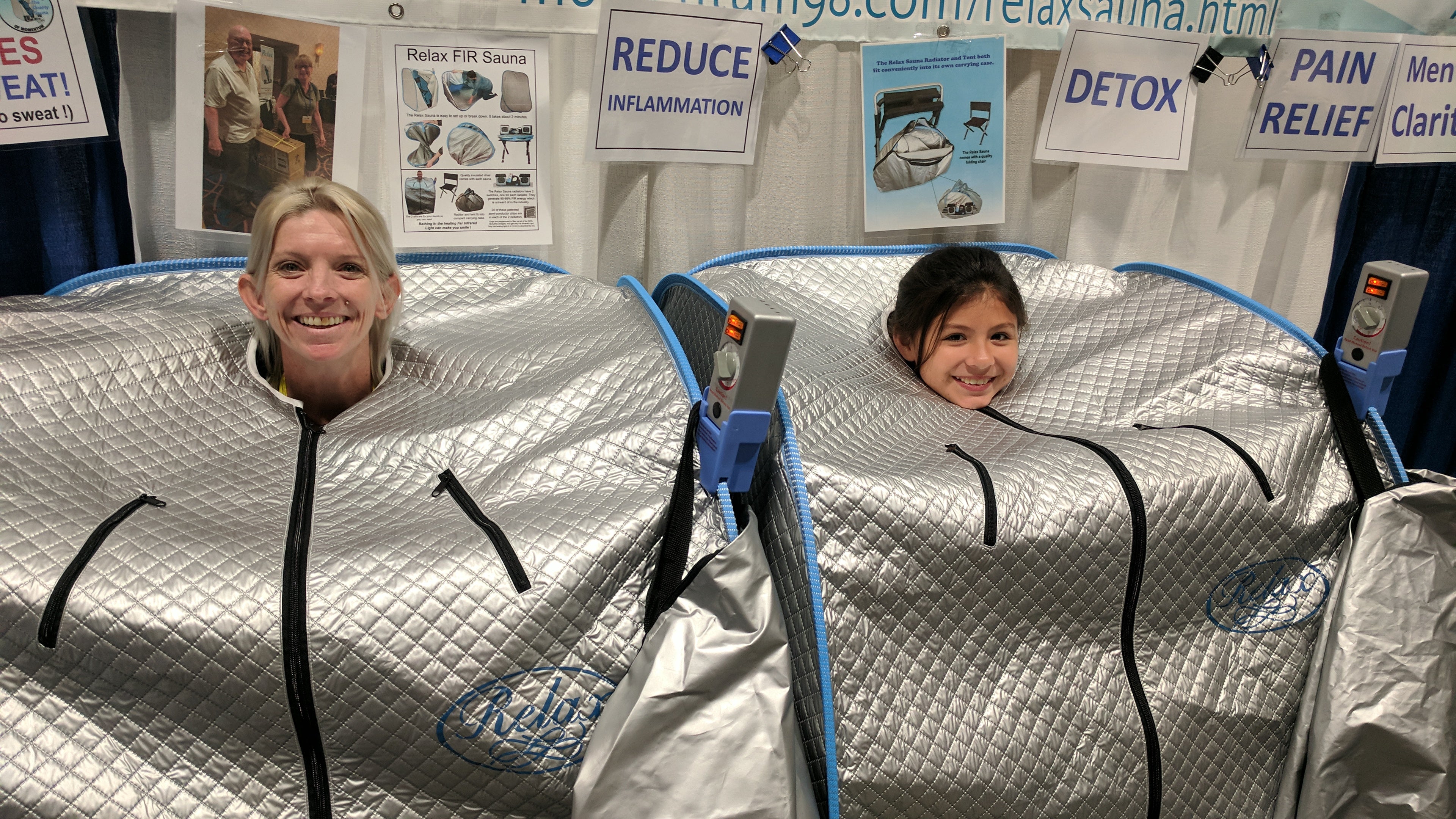
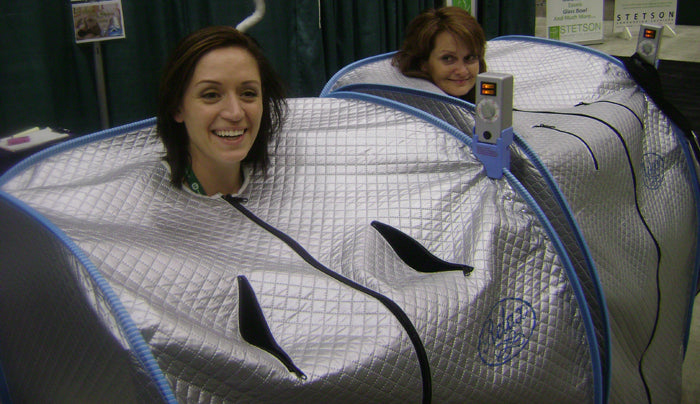
The Relax Sauna
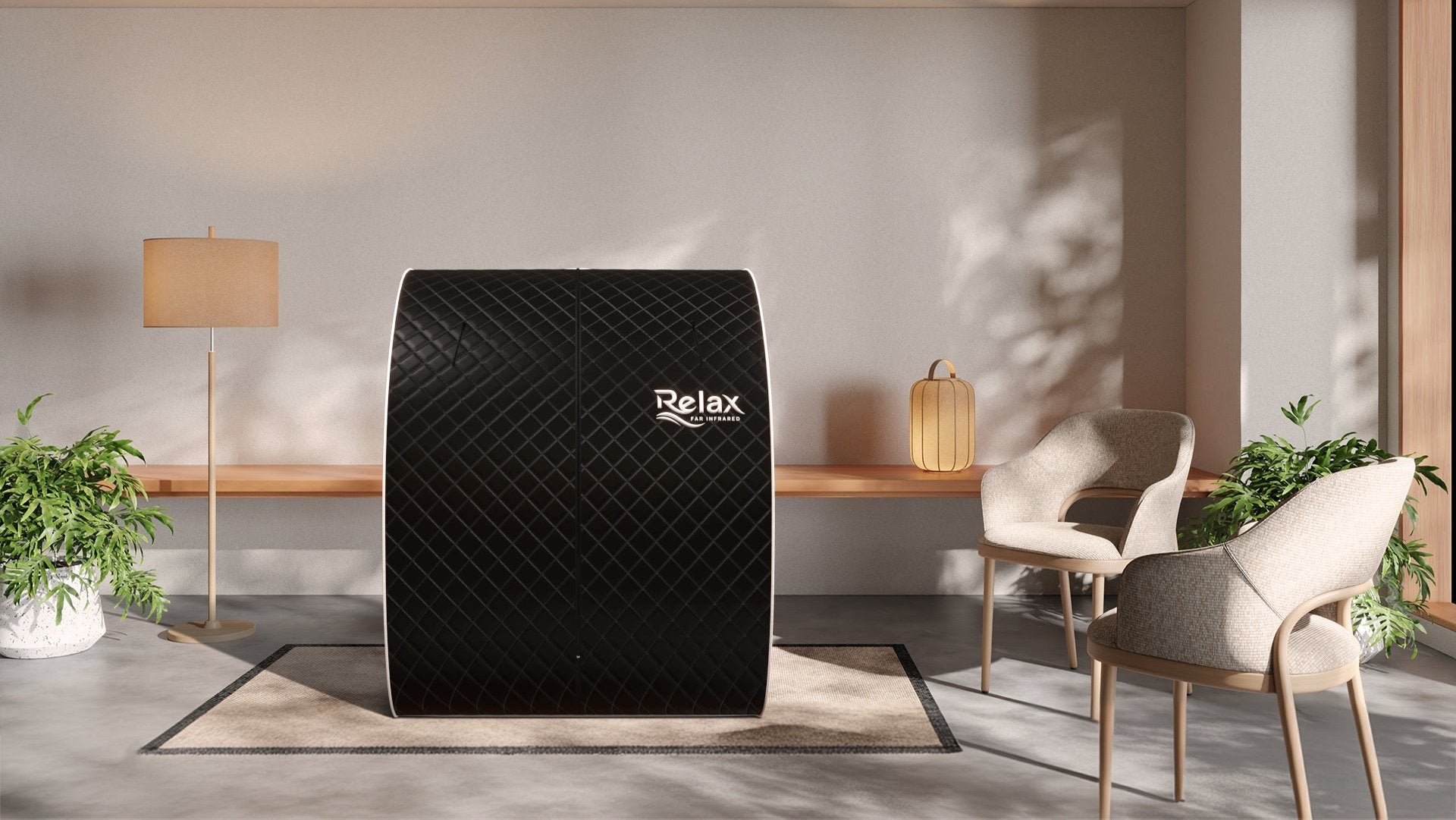
Delivers the same 7–14 μm far-infrared wavelength band used in the peripheral-circulation studies referenced on this page. Portable, adherence-friendly, appropriate for daily home use.



Explore the Relax Far Infrared Line Up


Feel the Momentum