Relax Science Series - Water & Cannabinoid
Structured Water at Cannabinoid–Oil Interfaces
A Novel Mechanism for Enhanced Bioavailability — Exclusion Zone Water, Pickering-Type Stabilization, and the Accidental Nano-Emulsion
Abstract
When delta-9 THC distillate is combined with medium-chain triglyceride (MCT) oil and subjected to vigorous mechanical agitation, the expected result is a homogeneous solution that clears within minutes as entrained air escapes. In a recent formulation observation, however, the opposite occurred: persistent foam (bubbles stable for more than 48 hours) and a visible phase separation between the distillate and MCT fractions that resisted remixing. This paper proposes that these anomalous physical behaviors are best explained by the formation of exclusion zone (EZ) structured water at the hydrophobic interfaces created during agitation. Trace moisture present in both the MCT oil and the cannabinoid distillate, when spread across the enormous interfacial surface area generated by vigorous shaking, undergoes spontaneous structuring into the liquid-crystalline fourth phase of water documented by Gerald Pollack and colleagues. This structured water forms mechanically rigid, charge-separated shells at bubble walls and at the boundary between the two oil phases, stabilizing the foam and resisting coalescence through a mechanism analogous to Pickering emulsion physics. Critically, if this interpretation is correct, the resulting preparation is not a failed formulation but a superior one: the cannabinoid molecules are pre-packaged within nanoscale structured water architectures that mirror the interfacial water environment at cell membranes, potentially reducing the thermodynamic barriers to mucosal absorption and dramatically enhancing oral bioavailability compared to conventional oil-dissolved cannabinoid preparations.

1. The Observation
The starting materials were straightforward: delta-9 THC distillate (a viscous, amber, cannabinoid-rich concentrate produced by short-path distillation) and organic, food-grade MCT oil (a mixture of caprylic [C8] and capric [C10] triglycerides derived from coconut or palm kernel oil). The distillate was added to the MCT oil at a standard tincture concentration and the vessel was shaken vigorously for approximately 60 seconds.
The expected outcome would be a uniform, amber-tinted oil that would clear within minutes as entrained air bubbles rose to the surface and burst. Instead, two anomalies were observed:
- Persistent Foam: Extensive foam formed during shaking and did not dissipate. After 72 hours at room temperature, the bubbles remained intact—a physically remarkable persistence for bubbles in a pure oil system.
- Phase Separation: The mixture exhibited visible phase separation, with the distillate and MCT oil separating into three distinct layers rather than forming a homogeneous solution.
2. The Hidden Ingredient: Trace Water
Neither MCT oil nor cannabinoid distillate is truly anhydrous in commercial practice. MCT oil typically contains 0.03–0.1% residual moisture by weight—trace amounts that are analytically insignificant for nutritional purposes but physically significant when distributed across interfacial surfaces. Cannabinoid distillate can carry residual moisture from the extraction process, biomass source material, or ambient humidity.
Under normal gentle mixing, trace moisture has no observable effect. However, vigorous mechanical agitation creates thousands of bubbles and droplets, generating enormous interfacial surface area. Trace water molecules migrate preferentially to these interfaces, accumulating in thin films at every bubble wall and phase boundary.
3. Exclusion Zone Water at Hydrophobic Interfaces
Gerald Pollack and colleagues at the University of Washington have documented extensively that water in contact with hydrophilic and hydrophobic surfaces spontaneously reorganizes into a structured, liquid-crystalline phase termed exclusion zone (EZ) water. This fourth phase of water forms as hexagonal sheets stacking into an ordered lattice with the empirical formula H₃O₂. EZ water is more viscous than bulk water, carries a net negative charge, excludes solutes, and can extend hundreds of micrometers.
Structuring occurs spontaneously at hydrophobic interfaces at room temperature whenever water contacts a non-wetting surface. Oil–air and oil–oil interfaces provide this classical hydrophobic boundary, driving trace moisture toward EZ formation simultaneously across all agitated bubble walls and phase boundaries.
4. Why the Bubbles Persist: Structured Water as a Pickering Stabilizer
In pure oil systems, bubbles are unstable because surface tension drives rapid collapse. However, the presence of a rigid or semi-rigid material at the interface changes stability dramatically, a principle established by Spencer Pickering in 1907 for Pickering emulsions.
Exclusion zone water exhibits gel-like viscosity, net negative charge for electrostatic repulsion, and an ordered hexagonal lattice providing mechanical rigidity. This structured shell around each air pocket functions as a Pickering-type stabilizer, preventing normal collapse and explaining the 48-hour bubble persistence.
5. Why the Phases Separate: Structured Water as a Boundary Membrane
Delta-9 THC distillate and MCT oil differ in molecular weight, viscosity, density, and polarity. Vigorous shaking creates boundaries where trace water structures into EZ, forming a thin ordered water membrane between the fractions that resists mixing.
Heating the mixture to 60–70°C disrupts EZ structure, melting the ordered lattice back into bulk water and allowing the distillate and MCT to interdiffuse homogeneously.
6. The Bioavailability Argument: Why the “Failed” Formulation May Be Better
Oral bioavailability of THC is notoriously poor (estimated at 6–20%) due to lipophilicity, aqueous mucus and enterocyte membrane barriers, and extensive first-pass hepatic metabolism. Nano-emulsions address this by reducing droplet size and increasing interfacial surface area.
Structured water at the droplet surface acts as a molecular escalator, bridging the gap between lipophilic cannabinoids and aqueous mucosal environments. This mimics the native interfacial water architecture of cell membranes and parallels phospholipid liposomal delivery systems.
7. Implications
- Formulation Science: Suggests maximizing interfacial water structuring can enhance bioavailability beyond particle size reduction alone.
- Structured Water Research: Extends exclusion zone observations from solid boundaries to oil–air and oil–oil interfaces.
- Consumer Products: Indicates foamy or separated tinctures are functional delivery mechanisms activated by vigorous shaking rather than defective products.
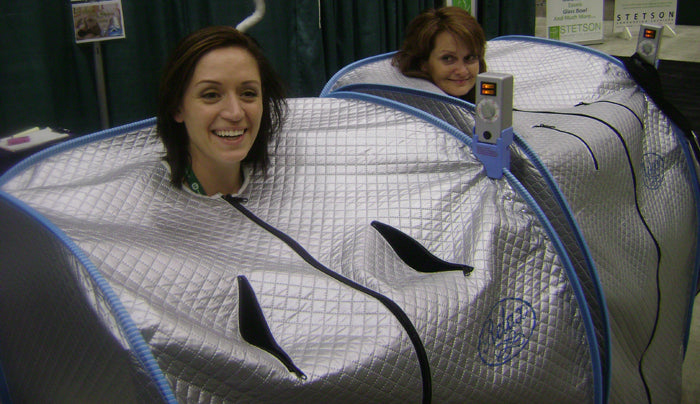
- FIR Enhancement: Combining structured-water cannabinoid preparations with far-infrared sauna exposure may synergistically amplify absorption.
8. Testable Predictions
- Prediction 1 (Onset): Shaken foamy preparations show faster subjective onset (15–25 min) than warmed clear oil (45–90 min).
- Prediction 2 (Dose-Response): Shaken preparations have lower effective doses due to higher absorption fractions.
- Prediction 3 (Heat Disruption): Warming to 60–70°C collapses foam and normalizes absorption kinetics.
- Prediction 4 (Moisture Dependence): Rigorously anhydrous MCT oil and distillate should fail to produce persistent foam upon shaking.
- Prediction 5 (FIR Potentiation): Administration prior to FIR sauna sessions enhances bioavailability and onset speed.
9. Conclusion
What appeared to be a formulation failure—persistent bubbles and phase separation in a cannabinoid–MCT oil mixture—may in fact be a visible signature of structured water formation at hydrophobic interfaces. The exclusion zone water documented by Pollack provides a pathway toward nano-emulsion-like bioavailability enhancement without surfactants or high-pressure equipment, working with the body’s native interfacial water architecture.
The Bottom Line
What looks like a failed formulation may actually reveal a deeper physical process: cannabinoid molecules distributed across interfacial structures that may better match the body’s own water-rich membrane environment.
Download the Full Document


Explore the Relax Far Infrared Line Up


Feel the Momentum