Parkinson's Disease
Parkinson's Disease & Infrared Therapy
Real Research, Different Light: Understanding the Science, Wavelength Mismatches, and Safety Considerations
1. Parkinson's Needs Real Medical Management
The infrared research in Parkinson's disease is real. It just isn't about far-infrared saunas — and safety questions must come first.
Parkinson's disease is best managed by a neurologist, ideally a movement disorder specialist, along with a comprehensive physical therapy, exercise, and medication plan built around you. Nothing on this page is a medical treatment. This page provides an evidence review and safety information for people who are already under qualified medical care.
Search "infrared" and "Parkinson's" together online and you will find genuine scientific papers. Here is the critical distinction to understand before anything else: nearly all of them evaluate near-infrared light — a different spectral wavelength delivered by LEDs, lasers, or surgically implanted fibers rather than a sauna or radiant lamp. Far infrared has not been tested for Parkinson's in human clinical trials, nor in animal toxin models.
2. What the Research Actually Shows
NOT STUDIED IN HUMAN FIR TRIALS
Evidence GapThere are no controlled trials of far-infrared saunas or far-infrared devices in people with Parkinson's disease. Wellness marketing claims stating that infrared saunas "help Parkinson's" do not cite human clinical data. Any alleged benefits for muscle stiffness, tremor, sleep disruption, or disease progression remain untested.
PRECLINICAL NEAR-INFRARED STUDIES (RODENT MODELS)
PhotobiomodulationIn mouse models where chemical toxins (MPTP) destroy dopamine-producing cells, near-infrared light treatment preserved more surviving cells — approximately 35–45% more survived in the substantia nigra in one study (Shaw et al.). Similar protection occurred with intracranial fibers (Moro et al. 2014) or light applied to the abdomen/legs (Gordon et al. 2023).

3. Near-Infrared Is Not Far Infrared
Parkinson's light research utilizes red and near-infrared wavelengths (around 670 and 810 nanometers). These are roughly 1,000 times shorter than the 4,000–14,000 nanometer far-infrared band used in radiant saunas.
Near-Infrared (NIR) PBM
Non-thermal light (LEDs/lasers generate negligible heat). Operates through mitochondrial photo-acceptor activation (photobiomodulation).
Far-Infrared (FIR) Saunas
Radiant thermal energy interacting with water molecules in biological tissue, inducing gentle systemic warming and vasodilation.
Because mechanisms, wavelengths, and delivery routes differ entirely, photobiomodulation study results cannot be transferred or applied to far-infrared saunas.
4. What Is Known About Heat & Parkinson's
A 2019 narrative review in Frontiers in Physiology concluded that research on warming the body in neurodegenerative patient populations is limited. It highlights that Parkinson's can impair brain regions controlling sudomotor function (sweating), affecting how well a person tolerates heat stress.
The review suggested infrared sauna — which imposed lower cardiovascular strain than traditional saunas in a small study of 10 people (Mero et al. 2015) — as an avenue worth investigating. That represents an exploratory research idea, not a clinical finding. Observational studies linking sauna use to reduced neurodegenerative disease risk concern traditional Finnish saunas and general populations, not FIR in Parkinson's specifically.
5. Safety Considerations Specific to Parkinson's
- Orthostatic Hypotension & Fall Risk: Blood pressure drops upon standing are among the most disabling non-motor features of Parkinson's. Heat-induced vasodilation and sweating deplete intravascular volume. Standing after a session presents a major fall risk. Get up slowly, with assistance present.
- Blunted Heat Sensation: Impaired temperature regulation may blunt normal overheating warning signals. Keep sessions short and stop immediately if lightheaded, nauseated, or unusually weak.
- Transfer & Mobility Hazards: Gait freezing, rigidity, and balance impairment make cabinet entry, seating, and exit the highest-risk moments. Never do this alone.
- Medication Interactions: Dopaminergic medications contribute to low blood pressure. Consult your treating neurologist before regular sauna exposure.
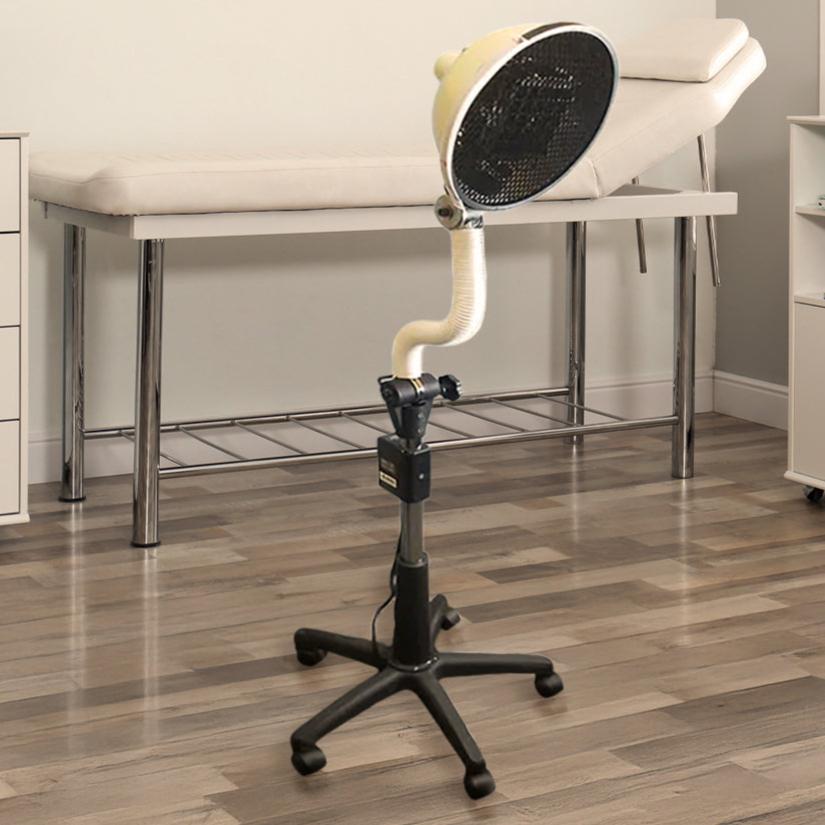
- Deep Brain Stimulation (DBS) Precautions: Device manufacturers strictly contraindicate diathermy (shortwave, microwave, therapeutic ultrasound). While FIR saunas are radiant heaters rather than diathermy, DBS clinic guidance (e.g., UC Davis Health) explicitly advises against focusing energy or heat sources over implanted pulse generators in the chest or abdomen. Always confirm with your DBS programming team first, and never point a heating lamp directly at the device.
- Cognitive Impairment: If Parkinson's has affected memory or thinking, direct supervision is mandatory. See our companion Cognitive Decline summary.
6. What We Can Honestly Say
There is no evidence yet that far infrared changes Parkinson's symptoms or disease progression.
If you already enjoy gentle warmth and your medical care team agrees, a short, supervised session can be a comfort choice. It is not a medical therapy, and it is never a reason to change or discontinue any aspect of your prescribed care plan.
At a Glance
- Human FIR Trials: None identified for Parkinson's
- Research Wavelengths: NIR (670/810 nm) ≠ FIR (4,000–14,000 nm)
- Primary Risks: Orthostatic hypotension, falls, heat tolerance
- DBS Implants: Avoid direct heat focus over pulse generator
- Clinical Role: Comfort choice only; not a therapy
Ask Your Neurologist First If You...
- Experience orthostatic dizziness upon standing
- Have a Deep Brain Stimulation (DBS) system
- Take dopaminergic blood pressure-lowering drugs
- Have significant gait freezing or balance issues
- Experience impaired thermal or sweating response
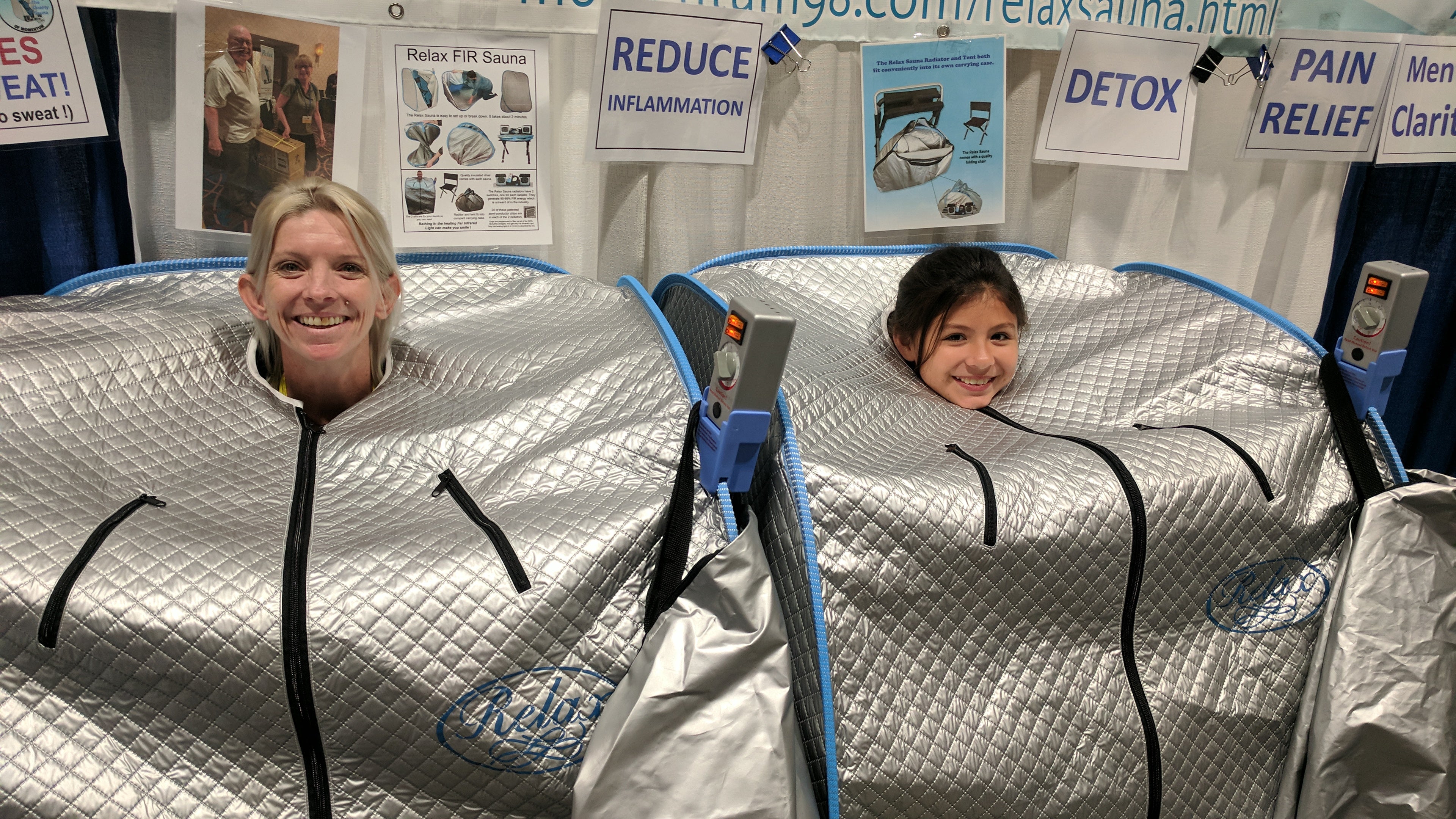
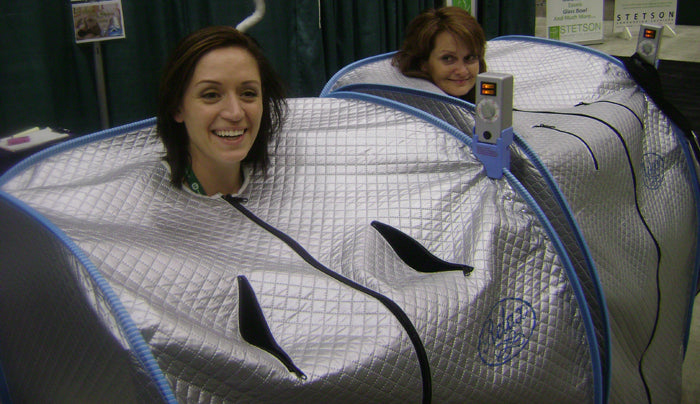
The Relax Sauna
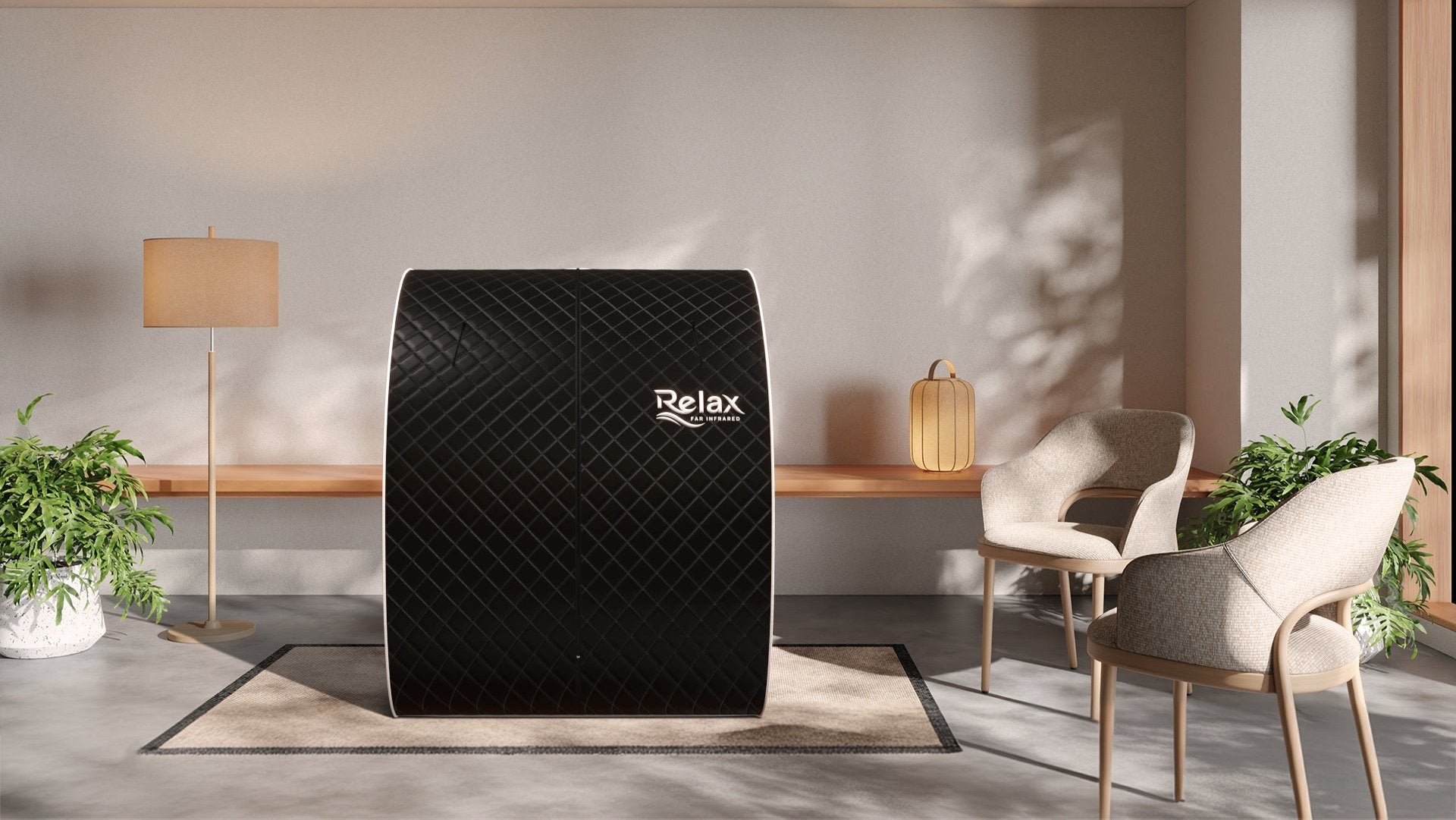
Delivers pure 7–14 µm far-infrared energy in a portable, head-out configuration. While appreciated for gentle relaxation, it must be cleared by your neurologist and used with fall-precaution supervision.



Explore the Relax Far Infrared Line Up


Feel the Momentum