Health Conditions - Sleep
Harnessing Far Infrared Light for Deep Restorative Sleep
The Science of Circadian Regulation & Autonomic Balance
1. Executive Summary & Overview
Chronic sleep issues plague millions, silently undermining immunity, mood, metabolic health, and cognitive performance. While pharmaceuticals offer short-term fixes, they often come with side effects, dependency risks, and diminishing returns. The Relax Far Infrared Sauna presents a science-backed, drug-free alternative that targets the physiological roots of poor sleep—without the downsides.
Far infrared (FIR) light penetrates deeply into the body, gently raising core temperature and activating the parasympathetic nervous system. This shift into “rest and digest” mode reduces cortisol, eases muscle tension, and stimulates endorphin release—natural processes essential for easing into sleep. Users often report not only falling asleep faster but also staying asleep longer and waking up more refreshed.
What makes FIR unique is its ability to balance the body from within. By improving circulation, reducing pain, and lowering blood pressure, it calms the body’s stress signals. FIR exposure has also been shown to help regulate circadian rhythms—your internal sleep-wake clock—by promoting melatonin balance and synchronizing thermal cues that guide the onset of deep sleep.
Emerging research shows FIR therapy also reduces systemic inflammation and oxidative stress—key culprits in sleep disorders like insomnia and restless legs syndrome. The detoxifying effects further support mitochondrial function and cellular recovery, helping the body transition more easily into restorative states.
For those seeking long-term solutions to poor sleep, the Relax Far Infrared Sauna is more than a wellness trend—it’s a proven path to better nights and brighter days. Add it to your evening routine and experience what real rest feels like.
2. The Epidemic of Poor Sleep: A Modern Societal Crisis
Sleep is not just a passive state; it's an active and essential biological process. During sleep, the body undergoes critical functions—cellular repair, metabolic regulation, neurocognitive processing, and hormone balancing. However, chronic sleep disorders affect up to 70 million Americans and countless others worldwide. This growing epidemic has driven significant demand for non-pharmacological sleep solutions, drawing substantial clinical attention to alternative modalities like Far Infrared (FIR) therapy.
This comprehensive analysis examines the underlying mechanisms, clinical evidence, and practical applications of FIR therapy as it relates to improving sleep quality, sleep duration, and circadian regulation. By understanding the science behind this promising approach, we can better appreciate its potential role in addressing one of modern society's most prevalent health concerns.

3. The Biophysics of Far Infrared Therapy
Far infrared radiation (FIR) is a subsection of the infrared spectrum, typically defined between 4 to 1000 microns in wavelength. The human body both emits and absorbs infrared radiation most efficiently in the 7–14 micron range, which perfectly aligns with the peak emission wavelength of specialized far infrared devices such as the Relax Sauna.
Unlike near-infrared or red light therapy—which interacts more with the surface of the skin and cellular mitochondria—FIR primarily exerts effects thermally, penetrating skin and subcutaneous tissues to increase core body temperature without significantly heating the ambient air.
As Vatansever and Hamblin explain in their comprehensive review, "Far Infrared Radiation (FIR): Its Biological Effects and Medical Applications," FIR's unique wavelengths allow for deeper tissue penetration compared to other forms of heat therapy, activating multiple biological systems simultaneously.
4. 5 Physiological Pathways to Restorative Sleep
FIR therapy's influence on sleep architecture stems from its unique ability to address several of the root biological causes of sleep disturbances through targeted physiological pathways:
Research by Imamura and colleagues published in the Journal of the American College of Cardiology demonstrates that FIR exposure increases parasympathetic tone ("rest and digest") while suppressing sympathetic dominance ("fight or flight"). This neurological shift increases heart rate variability (HRV) and reduces resting heart rate, allowing the mind and body to transition into a deep, relaxed state ideal for sleep onset.
A natural drop in core body temperature serves as a primary biological signal for sleep onset. Research by Laukkanen and team published in JAMA Internal Medicine confirms that evening passive body heating induces a transient elevation in core temperature followed by a rebound cooling effect post-sauna. This process shortens sleep latency and improves slow-wave sleep depth by amplifying the body's natural thermal dip.
Chronic pain creates a challenging, bidirectional cycle with poor sleep. Masuda and colleagues published findings in Psychotherapy and Psychosomatics showing that FIR therapy significantly reduces chronic pain expression, night awakenings, and musculoskeletal discomfort by upregulating microcirculation, tissue oxygenation, and nitric oxide pathways.
Elevated cortisol levels and mental hyperarousal directly inhibit melatonin production and disrupt slow-wave sleep. Research by Soejima and team in Internal Medicine reveals that regular FIR sessions reduce systemic cortisol while increasing endorphin release and alpha brain wave states. A clinical study by Beever in Canadian Family Physician similarly found that repeated FIR sauna sessions reduced symptoms of anxiety and depression, leading to more refreshing sleep.
Hussain and Cohen's systematic review in Evidence-Based Complementary and Alternative Medicine suggests that FIR serves as a thermal zeitgeber (biological clock cue). By improving mitochondrial efficiency and reducing oxidative stress, FIR indirectly supports optimal pineal gland function and rhythmic melatonin production, helping stabilize disrupted sleep-wake cycles.
5. Target Populations Applications Matrix
| Target Population | Specific FIR Sleep Benefit |
|---|---|
| Insomnia & Anxiety Sufferers | Suppresses autonomic hyperarousal, decreases cortisol, and induces alpha relaxation states. |
| Shift Workers & Jet Lag | Reinforces temperature-based circadian cues, helping to reset disrupted sleep-wake cycles when used strategically. |
| Athletes & High Performers | Accelerates tissue recovery, clears metabolic waste, and deepens restorative slow-wave phases. |
| Perimenopause & Menopause | Regulates vasomotor stability and body temperature fluctuations to reduce sleep-disrupting night sweats. |
| Chronic Pain & Arthritis | Provides systemic analgesic effects, decreases localized joint swelling, and prevents nocturnal awakenings. |
6. Comparative Efficacy: FIR vs. Other Sleep Interventions
While melatonin supplements directly provide an exogenous sleep-signaling hormone, they fail to address underlying autonomic imbalances, chronic inflammation, or thermoregulatory dysfunction, and long-term use risks receptor desensitization. FIR therapy works holistically to support the body’s intrinsic sleep-regulating and melatonin-producing mechanisms naturally.
Red light therapy focuses on cellular photobiomodulation and mitochondrial surface interactions. While helpful for retinal photoreception, it provides minimal thermal relaxation benefits. Full-body FIR therapy pairs deep circulatory enhancement and tissue warming with profound, systemic parasympathetic regulation.
Prescription sedatives and benzodiazepines artificially induce sleep via GABAergic inhibition, often disrupting natural sleep architecture by reducing vital REM and deep slow-wave sleep phases. FIR therapy acts as a non-addictive, long-term alternative that preserves normal sleep architecture without dependency or tolerance risks.
7. Device Specifics & Semiconductor Engineering
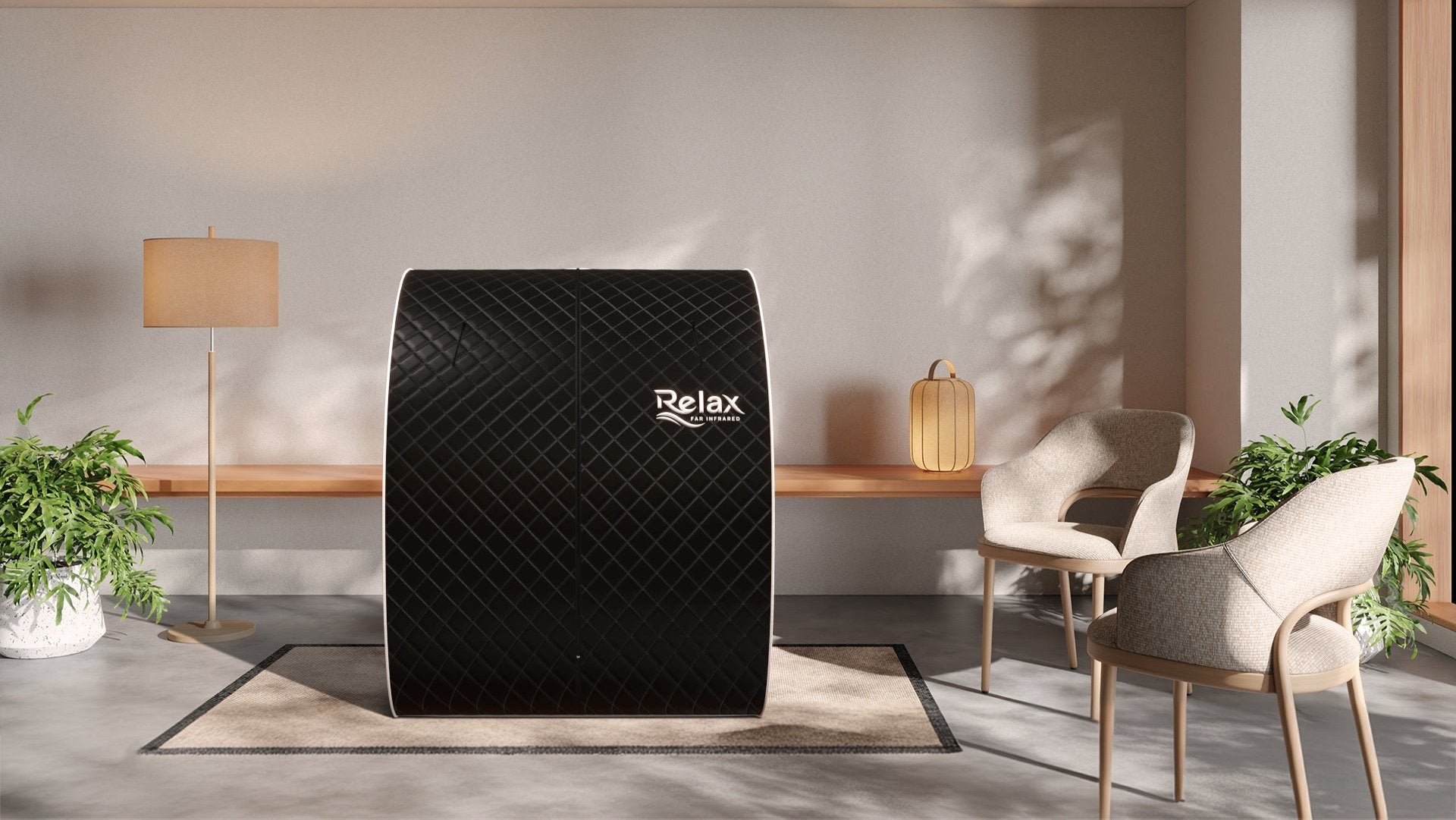
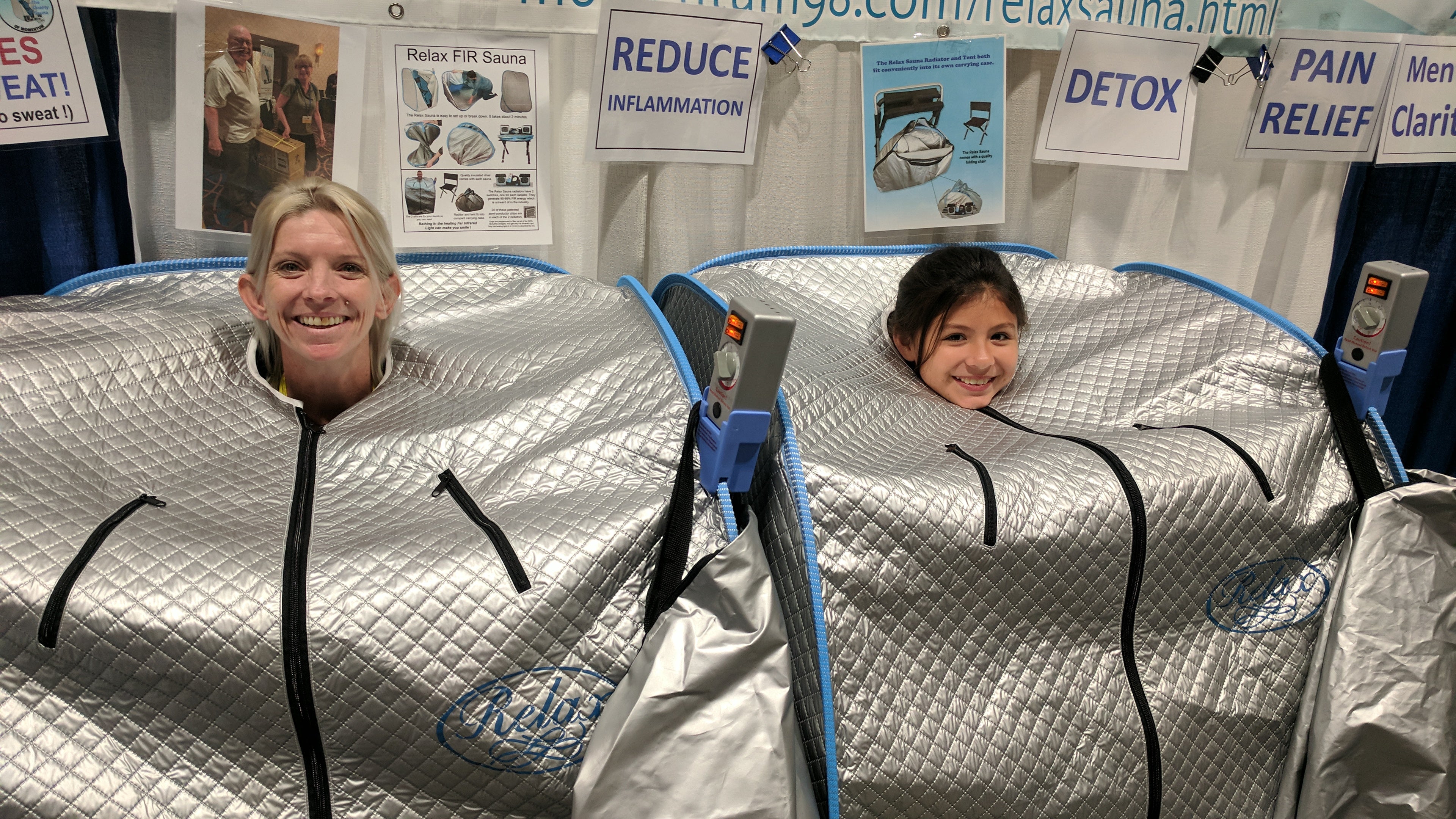
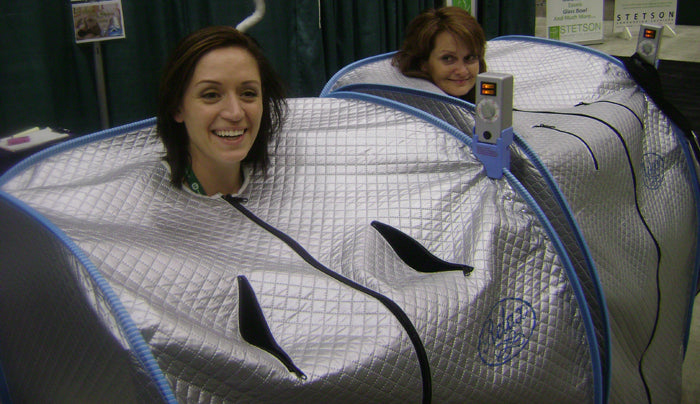
The Relax Sauna features patented, medical-grade semiconductor chip structures engineered specifically to focus emission within the pure 4–14 micron range, matching the human body's optimal biological absorption window. This targeted energy delivery achieves near 100% pure far infrared output, making it highly efficient for therapeutic sleep outcomes.
Unlike conventional saunas that rely on extreme, overstimulating ambient temperatures or long preheating cycles, this semiconductor system delivers gentle, consistent infrared energy. This advanced design eliminates the risk of superficial skin overheating, making it safe and highly practical for daily evening use directly before bed.

8. Sleep Optimization Protocols & Timing
Expected Outcome: Rather than heavy chemical sedation, users experience a clear-headed mental calm and physical ease that dramatically decreases sleep latency and preserves sleep consolidation over time.
9. Biochemical Biomarkers & Systemic Safety
Clinical studies by Crinnion published in Alternative Medicine Review demonstrate that FIR supports deep detoxification by increasing the sweat-based excretion of heavy metals and pollutants that disrupt neuroendocrine function. Clearing these toxic burdens helps optimize long-term sleep architecture.
Research by Hsu and colleagues published in PLOS ONE shows FIR increases critical antioxidants like superoxide dismutase (SOD) and glutathione, mitigating oxidative damage in sleep-regulating neural networks. Concurrently, work by Kihara and colleagues published in the Journal of Cardiology verified that repeated FIR exposure raises baseline heart rate variability (HRV), indicating enhanced autonomic resilience.
Verified Sleep Testimonials
A New Frontier in Non-Pharmacological Sleep Medicine
By simultaneously addressing thermoregulation, autonomic balance, systemic inflammation, oxidative stress, and circadian rhythm, far infrared therapy offers a comprehensive, holistic approach to sleep improvement that aligns with the body's natural physiological processes. Rather than masking symptoms, it works fundamentally to restore the vital conditions required for deep, natural, and truly restorative sleep.



Explore the Relax Far Infrared Line Up


Feel the Momentum