Relax Science Series - Athletic Recovery
Far Infrared Sauna Therapy for Athletic Recovery
What the Research Shows About Faster Recovery, Less Soreness, and Sustained Performance Between Sessions
Overview
Recovery is where adaptation happens. The training session creates the stimulus; the recovery period is where the body rebuilds stronger. An athlete who recovers faster can train with higher quality at the next session, accumulating a compounding advantage over time. The question is not whether recovery matters—it is which recovery modalities actually work, and what the evidence says about each one.
Far infrared sauna therapy has entered the athletic recovery conversation backed by a growing body of controlled research. The findings are specific and encouraging: FIR sauna after training attenuates the drop in explosive performance, reduces delayed-onset muscle soreness, and supports perceived recovery—without the hypertrophy-blunting effect documented for cold water immersion. This page reviews that evidence study by study so you can evaluate whether FIR belongs in your recovery protocol.

How Far Infrared Supports Recovery at the Tissue Level
Enhanced Circulation and Metabolic Waste Clearance: Far infrared energy in the 7–14 micron range is absorbed by tissue water through vibrational resonance, triggering nitric oxide–mediated vasodilation that increases blood flow to muscles, fascia, and connective tissue. This elevated perfusion accelerates the clearance of metabolic byproducts—lactate, hydrogen ions, bradykinin, prostaglandins—that accumulate during high-intensity training and contribute to soreness and stiffness. Mero and colleagues noted that FIR heat penetrates approximately 2 or more centimeters into fat tissue and the neuromuscular system, reaching depths that convective air heating from traditional saunas does not achieve at comparable ambient temperatures (Mero et al. 2015).
Heat Shock Proteins and Cellular Repair: Training, especially eccentric loading and high-volume work, causes microstructural damage to muscle fibers. The repair of that damage is mediated in part by heat shock proteins, particularly HSP70, which serve as molecular chaperones that refold damaged proteins and facilitate the removal of irreparably damaged cellular components. FIR-induced core temperature elevation activates HSP production through the same hormetic pathway as exercise itself, effectively adding a second repair stimulus to the training response without adding mechanical load.
Inflammation Modulation Without Blunting Adaptation: This is where the FIR recovery story diverges from cold water immersion in an important way. Roberts and colleagues demonstrated that cold water immersion after resistance training blunted muscle mass and strength gains over 12 weeks compared to active recovery—the inflammation that cold suppresses is part of the satellite cell activation and mTOR signaling cascade that drives hypertrophy (Roberts et al. 2015). The Ahokas 2025 data from a six-week training study found that post-exercise infrared sauna improved neuromuscular recovery and reduced soreness without any reduction in muscle hypertrophy compared to the control group (Ahokas et al. 2025). FIR appears to modulate the inflammatory response rather than suppress it—facilitating recovery while preserving the adaptive signal.
Autonomic Recovery: Intense training drives the autonomic nervous system toward sympathetic dominance. Recovery requires a shift back toward parasympathetic tone—a process reflected in heart rate variability metrics. FIR sauna exposure has been shown to increase parasympathetic markers, supporting the autonomic reset that underpins readiness for the next training session.
The Research: Study by Study
Neuromuscular Recovery After Resistance Training
Ahokas and colleagues studied competitive athletes performing a resistance training session followed by either infrared sauna (35 minutes at 50°C) or passive recovery. The infrared sauna group showed significantly attenuated drops in countermovement jump performance at 14 hours post-exercise compared to passive recovery (p < 0.01). Muscle soreness was less severe and perceived recovery was higher in the sauna group (p < 0.01). Importantly, post-exercise nighttime heart rate and heart rate variability did not differ between groups, confirming that the sauna session did not impose additional autonomic stress (Ahokas et al. 2023).
Long-Term Training With Post-Exercise Infrared Sauna
In a follow-up study, Ahokas and colleagues pair-matched 40 female team sport athletes into infrared sauna (n=20) and control (n=20) groups over a six-week strength and power training period with 2–3 sessions per week. The IRS group used a 10-minute sauna session at 50°C after training three times weekly. Both groups improved neuromuscular performance and muscle hypertrophy. The sauna group showed a significant interaction effect for loaded countermovement jump height (p = 0.002) and peak power (p = 0.010), suggesting enhanced explosive performance adaptation. Critically, DXA lean mass and ultrasound muscle thickness showed no significant differences between groups—confirming that post-exercise FIR did not blunt hypertrophy (Ahokas et al. 2025).
Recovery After Endurance Training
Mero, Tornberg, and colleagues at the University of Jyväskylä compared far-infrared sauna bathing, traditional sauna, and no sauna after both strength and endurance training sessions in men. After the endurance session—a maximal run to exhaustion—countermovement jump recovery was significantly better with FIR sauna compared to no sauna after 30 minutes. The researchers attributed this to the deep penetration of infrared heat into the neuromuscular system under mild temperature and low humidity conditions, which they described as favorable for neuromuscular recovery (Mero et al. 2015). FIR also produced a comfortable, relaxing experience that traditional high-heat saunas did not match at equivalent temperatures.
Recovery From Exercise-Induced Muscle Damage in Elite Runners
Hausswirth and colleagues at France’s National Institute of Sport (INSEP) compared whole-body cryotherapy, far infrared, and passive recovery in nine highly trained runners after a simulated trail running race designed to induce muscle damage. FIR reduced pain sensation by 48 hours post-exercise and improved perceived well-being, though whole-body cryotherapy showed faster recovery of maximal isometric strength at the 1-hour and 24-hour marks. Neither modality reduced creatine kinase elevations (Hausswirth et al. 2011). The practical takeaway: cryotherapy may have an edge for acute strength recovery in the first 24 hours, but FIR provides meaningful recovery benefits with substantially lower cost, greater accessibility, and a more comfortable experience.
FIR Ceramic Materials and Futsal Recovery
Nunes and colleagues studied elite futsal players wearing FIR-emitting ceramic garments during a two-week preseason training camp. The FIR group showed improved recovery of countermovement jump performance and reduced markers of muscle damage compared to controls (Nunes et al. 2020). While ceramic-based FIR delivery differs from sauna-based delivery in dose and coverage, the study adds to the mechanistic case that FIR wavelengths specifically—not just heat in general—contribute to recovery.
FIR Sauna Reduces Lactic Acid and Oxidative Stress Markers
Wiriawan and colleagues compared four recovery modalities—infrared sauna, traditional sauna, warm water immersion, and passive recovery—in 16 male athletes after submaximal exercise. The FIR sauna group showed significantly lower lactic acid levels (p = 0.035) and malondialdehyde—a marker of oxidative stress and lipid peroxidation—(p = 0.011) compared to passive recovery. Notably, FIR outperformed both traditional sauna and warm water immersion, suggesting the infrared wavelength itself contributes to the effect beyond heat alone (Wiriawan et al. 2024).
The Cold vs. Heat Question
Athletes often ask whether they should use cold or heat for recovery. The honest answer is that they do different things. Cold water immersion acutely reduces soreness and may speed strength recovery in the first 24 hours—but it has been shown to blunt muscle hypertrophy over time. FIR sauna reduces soreness and improves neuromuscular recovery without impairing muscle growth. For athletes in hypertrophy or strength-building phases, FIR may be the smarter choice. For athletes needing to compete again within 24–48 hours, cold may still have a role. The two modalities are not interchangeable—they serve different strategic purposes.
Why Emitter Quality Matters for Recovery
The studies above used infrared saunas delivering FIR energy in the 7–14 micron range at controlled, moderate temperatures. The recovery benefits appear to depend on deep tissue penetration by infrared wavelengths that are resonantly absorbed by tissue water—not simply on raising skin temperature.
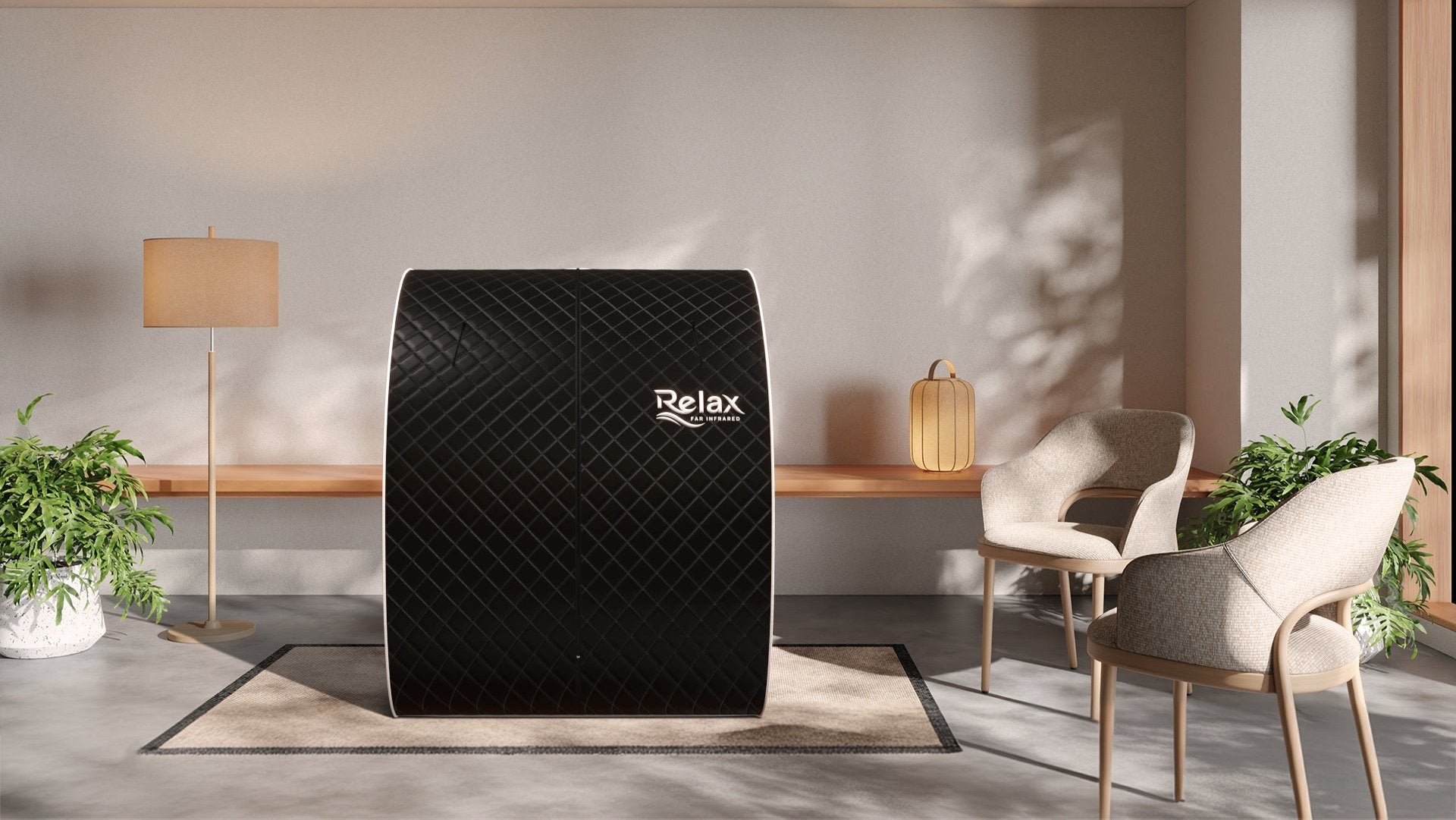
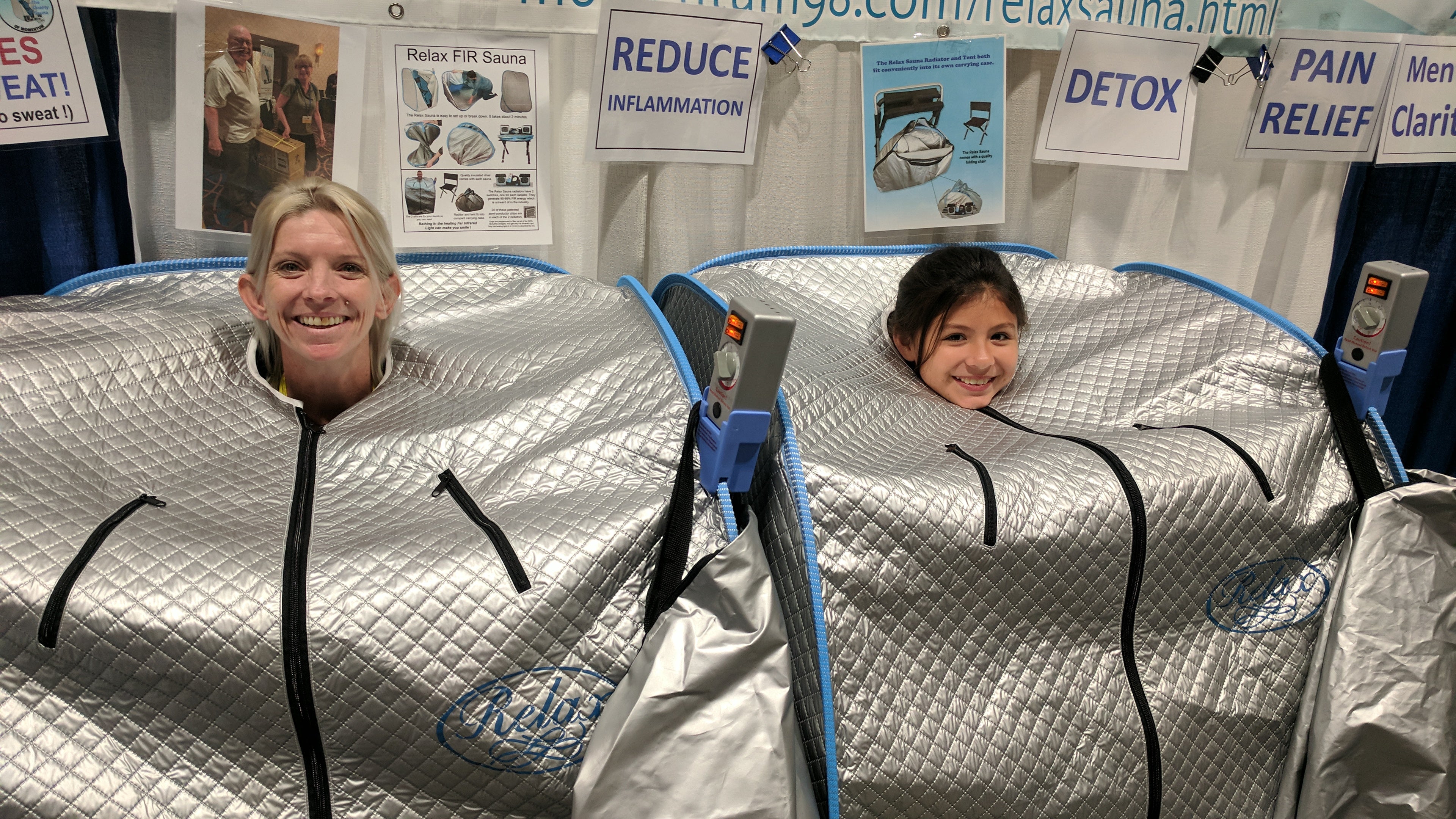
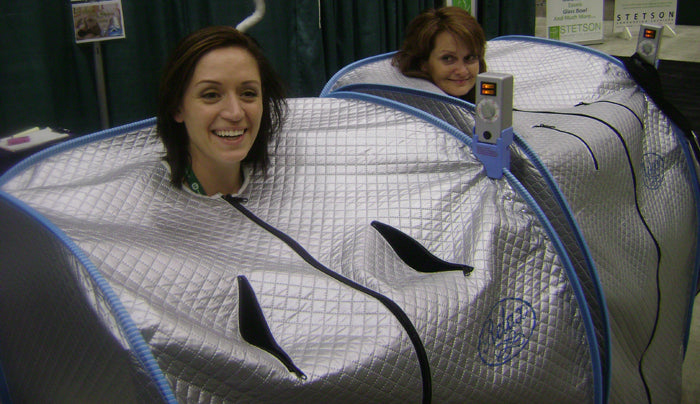
The Relax Sauna uses a patented semiconductor chip emitter producing near 100 percent far infrared output at a peak wavelength near 9.4 microns, confirmed by bolometer testing. It achieves operating temperature in under 60 seconds, requires no preheating, and is portable enough to travel with a team or fit in a training facility. It produces a full-body core temperature elevation of 2–3°F in 15–20 minutes. Our generator is an FDA-registered Class II medical device.
For athletes and performance staff, portability and time efficiency matter. A 15–20 minute post-session FIR sauna fits inside a standard recovery window and integrates easily with hydration, nutrition, and soft tissue work.
Suggested Protocol for Athletic Recovery
- Timing: Within 30–60 minutes after training, consistent with the post-exercise window used in the Ahokas and Mero studies.
- Session duration: 10–20 minutes at 45–55°C (113–131°F). The Ahokas studies used 10–35 minutes at 50°C; Mero used 30 minutes at 35–50°C. Start at the shorter end and adjust based on tolerance and training load.
- Frequency: After every high-intensity or high-volume training session—typically 3–5 times per week during training blocks.
- Hydration: Weigh before and after. Replace lost fluid ounce for ounce with water or electrolyte solution. Athletes in weight-class sports should account for sauna-induced water loss in their hydration planning.
- Pairing: FIR sauna pairs well with post-session stretching, foam rolling, or light mobility work. It does not replace nutrition, sleep, or periodized programming—it supplements them.
- Competition day: Avoid FIR sauna within 2–3 hours before competition. Use it after competition as a recovery tool, consistent with its studied applications.
The Bottom Line
Your far-infrared sauna is not a half-finished detox tool. When supported with water, minerals, nutrition, and a post-session rinse, your body already has the pathways it needs.
Download the Full Document


Explore the Relax Far Infrared Line Up


Feel the Momentum