CHRONIC PAIN & CENTRAL SENSITIZATION Consumer
Chronic Pain & Central Sensitization
Turning down the volume: Research, nervous system physiology, and how gentle far-infrared warmth fits into pain care.
1. What Is Central Sensitization?
When pain outlasts the injury that started it, the problem often lives in the nervous system itself. Your body's alarm system has learned to sound louder than it should.
Pain is a protective alarm. Normally it rings when tissue is hurt and quiets as healing finishes. In central sensitization, the spinal cord and brain turn up the gain on incoming signals, so ordinary pressure, movement, or touch can register as painful, and pain can spread beyond where it began.
It's a real, measurable change in how the nervous system processes information. It plays a role in fibromyalgia, long-lasting back pain, and many other conditions where pain persists after scans look normal. The encouraging part is that the nervous system stays adaptable. The same system that learned to amplify pain responds to the conditions around it.
2. The Lead Study: Far-Infrared Sauna in Chronic Pain
Researchers in Japan compared 46 patients with chronic pain receiving a full program of cognitive behavioral therapy, rehabilitation, and exercise. One group also received a daily far-infrared dry sauna session followed by warm rest.
Far-infrared group (77%) vs comparison group (50%) returning to productive work.
Pain, pain behaviors, and depression improved across both groups, with added warmth linked to long-term function.
Note on controlled trials: In 2023, a German team (Langhorst et al.) gave 41 fibromyalgia patients whole-body infrared heating vs. sham. Pain fell 31% with real heat vs 9% with sham, maintained at 6 months. While utilizing a different infrared technology and higher body temp, it provides robust support for the thermal approach.

3. Four Amplifiers, and Where Warmth Reaches Them
Sensitized pain doesn't run on a single switch. Researchers have identified everyday factors that turn its volume up or down. Far-infrared warmth touches several of them:
Stress & Nervous System
A body stuck in fight-or-flight amplifies pain. Repeated far-infrared sessions shift the nervous system toward calm, rest-and-repair mode (heart-rate variability nearly doubled in heart patients).
Sleep Quality
Poor sleep predicts next-day pain. Warming the body in the evening helps it cool on schedule, a pattern linked to falling asleep faster.
Mood & Emotion
Low mood and pain share brain circuitry. Controlled whole-body heat has produced lasting mood improvements in clinical depression trials.
Signals From the Body
Tight muscles, stiff joints, and poor circulation keep feeding the alarm. Far infrared relaxes blood vessels via nitric oxide and NRF2 pathways, easing stiffness.
4. How Strong Is the Evidence? & What We Do Not Claim
Central sensitization is real, and sleep, stress, and mood amplify it.
Small human studies of far-infrared and heat show pain relief in chronic pain & fibromyalgia.
How long relief lasts varies. Some studies saw lasting benefit; others found mainly short-term relief.
No study has measured far infrared's effect on nervous-system markers of sensitization directly.
What We Do Not Claim
- Far infrared does not cure fibromyalgia, central sensitization, or any chronic pain condition.
- There is no evidence it "resets" your nervous system. That claim hasn't been tested.
- It does not replace your pain care, physical therapy, or medications. Never stop or reduce medication without your prescriber.
- Results from clinical heat studies may differ from what any home sauna produces.
- New or changing pain needs a medical evaluation first. It should never be assumed to be "just sensitization."
5. How to Use It & Extension Tools
Practical Protocol Steps
- Start low and short: Begin with 10–15 minutes at the lowest comfortable setting. Sensitized nervous systems can react to too much too soon.
- Be consistent: Aim for 2–3 sessions per week to start, building gradually toward daily sessions if they feel good.
- Rest afterward: Spend 20–30 minutes resting warmly after each session. Stand up slowly and rehydrate.
- Evening timing: A session 1–2 hours before bed works with natural cooling for sleep.
- Track for four weeks: Jot down pain, sleep, energy, and flares.
Between-Session Extension Tools
- Raylieve Pad: Mineral matrix returns your own body heat as interactive far infrared for targeted, hours-long exposure on sore spots.
- HexTex Blanket: Woven carbon turns body heat into far infrared in the 7–14 µm band while you sleep, with no electricity or added heat.
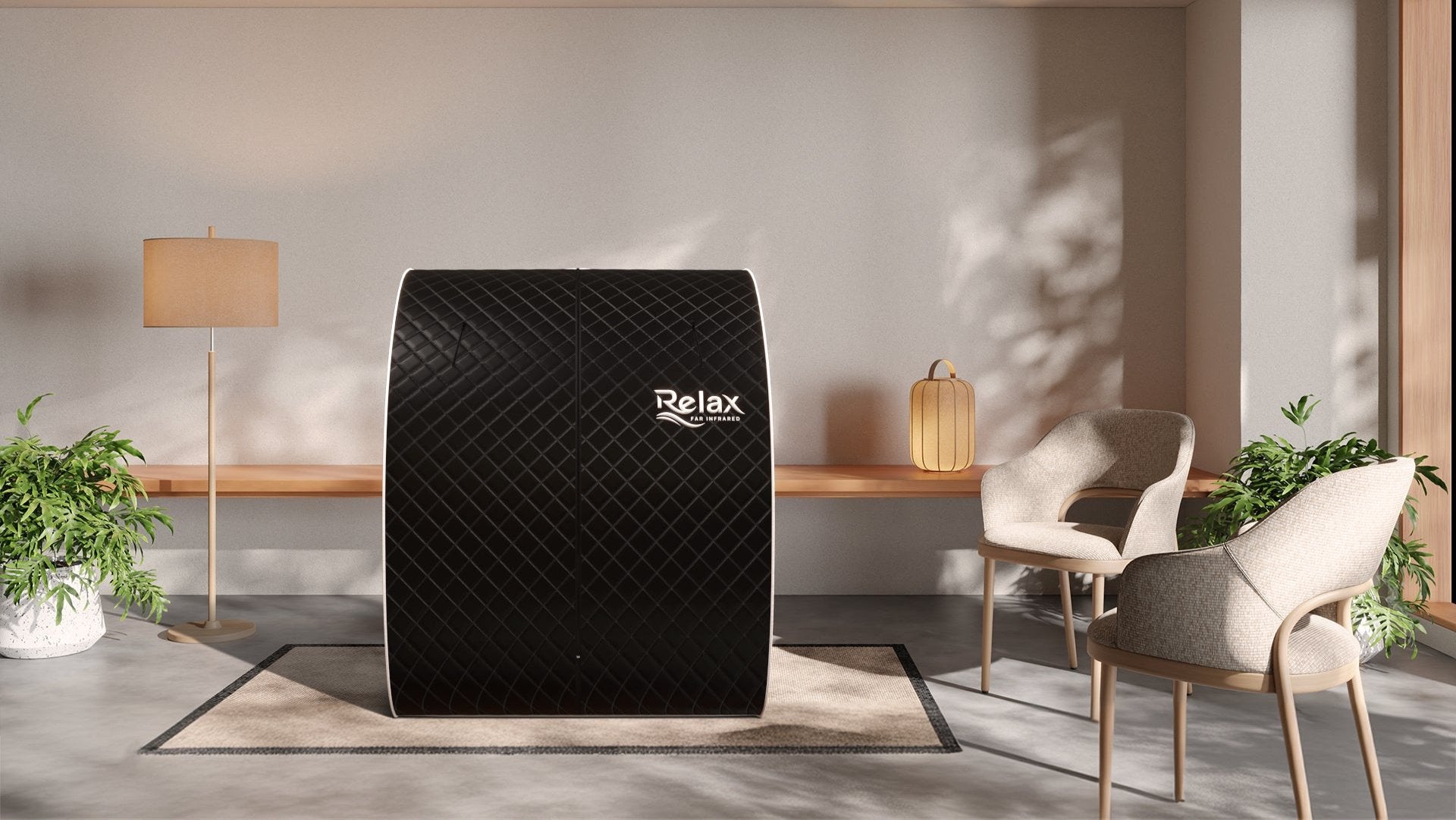
The Relax Sauna carries the clinical research above. Raylieve and HexTex extend exposure between sessions.
The Relax Sauna
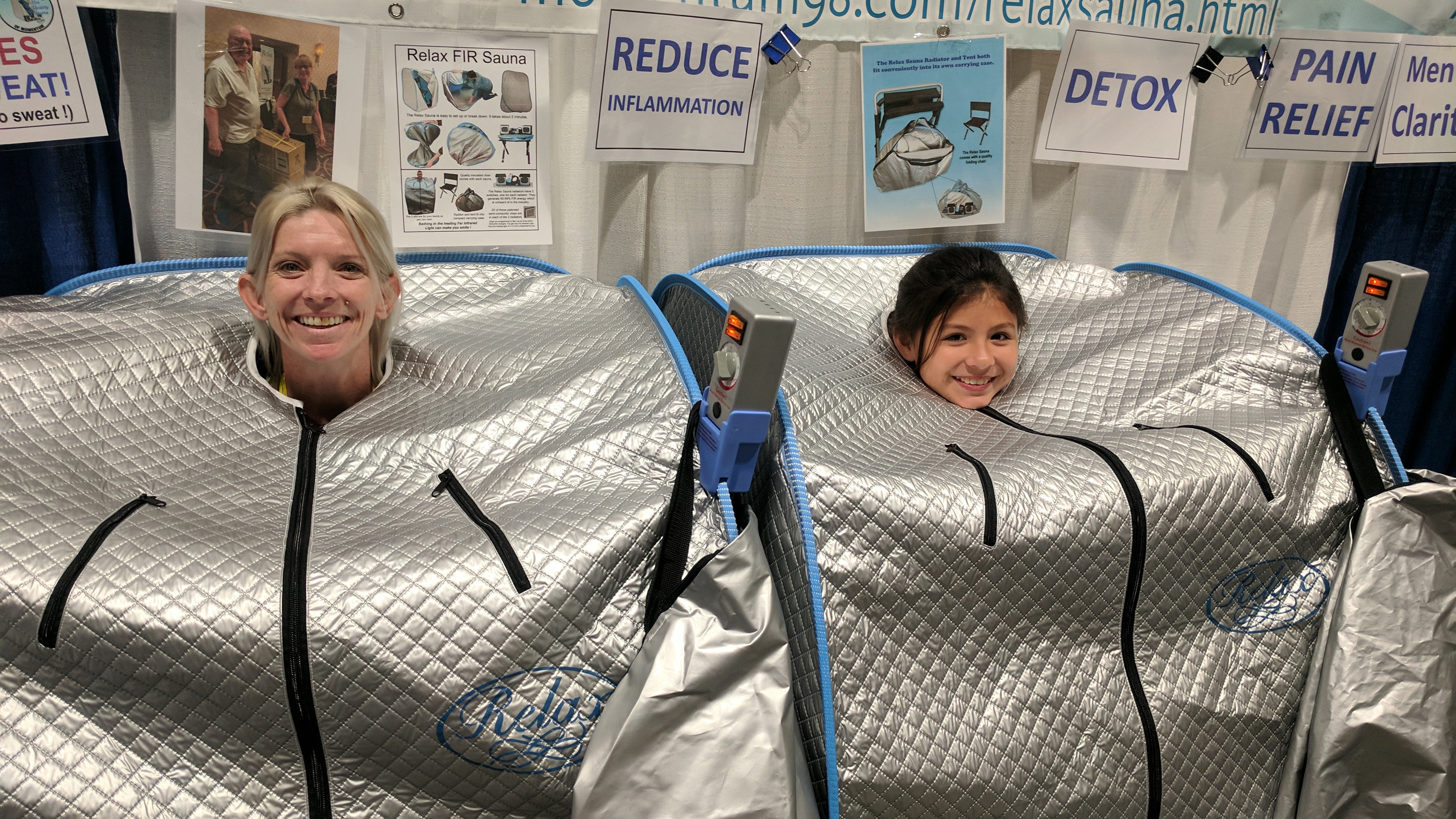
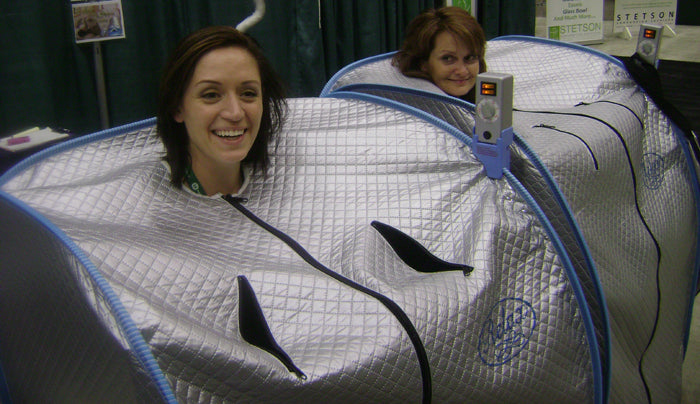
Delivers pure 9.4 µm far infrared with your head outside the cabin, so you can relax at your own pace, at home, on your schedule.
6. Talk to Your Clinician First If You Have...
- Dizziness on standing, POTS, or dysautonomia: Common alongside fibromyalgia; heat can trigger blood pressure drops.
- Heart disease or uncontrolled blood pressure: Requires cardiovascular clearance before thermal sessions.
- Reduced heat sensation: Such as from peripheral neuropathy, multiple sclerosis, or other heat-sensitive conditions.
- Medications causing dizziness or drowsiness: Including gabapentin, pregabalin, duloxetine, amitriptyline, or opioids.
- Pregnancy or red-flag symptoms: Pain with fever, unexplained weight loss, night pain, numbness, weakness, or bowel/bladder changes.



Explore the Relax Far Infrared Line Up


Feel the Momentum