Artery Disease
Far Infrared Therapy & Peripheral Artery Disease
A Mechanistic and Clinical Review on Microvascular Adjunctive Care in PAD
The Dual-Lesion Problem in Peripheral Artery Disease
Peripheral artery disease (PAD) affects over 230 million people worldwide. Standard clinical management primarily focuses on the macrovascular lesion—structural atherosclerotic stenosis in major lower-extremity arteries. However, clinical outcomes and tissue survival are equally driven by a secondary microvascular lesion downstream: endothelial dysfunction, reduced nitric oxide (NO) bioavailability, elevated ADMA, and impaired capillary flow-mediated vasodilation.
Macrovascular Pathology
- Atherosclerotic plaque obstruction in major vessels.
- Quantified via Ankle-Brachial Index (ABI).
- Addressed via bypass, stenting, angioplasty, or statins.
Microvascular Dysfunction
- Capillary endothelial damage and impaired NO bioavailability.
- Impairs oxygen and nutrient delivery downstream of stenosis.
- Targeted specifically by Far Infrared (FIR) radiation.
Patients with identical angiographic stenosis often exhibit vastly different claudication distances and wound-healing rates. This clinical heterogeneity is heavily governed by the functional state of the microvascular bed. FIR cannot remove structural plaque upstream, but it improves the functional capacity of the microvascular bed downstream.

Wavelength-Specific Endothelial Activation
Far-infrared radiation (4–14 µm band) induces non-thermal biological signaling pathways distinct from passive convective heating.
Water Absorption
4–14 µm photons resonate with water molecules in biological tissue.
Endothelial Signal
Upregulates NOS3, HSP70, and HMOX1 via NRF2/ARE signaling.
Microvessels Open
Nitric oxide bioactivity increases as circulating ADMA levels decline.
Tissue Perfusion
Microvascular blood flow and skin perfusion pressure measurably rise.
NRF2 Gene Panel
Wavelength-specific upregulation of NOS3, TXNRD1, HSP70, and HMOX1 demonstrated in a heat-controlled trial.
HO-1 & ARE Pathway
Induces Heme Oxygenase-1 via ARE, suppressing vascular endothelial inflammation.
Perfusion Boost
2.4-fold increase in skin microvascular blood flow recorded following a 40-minute session using laser Doppler imaging.
ADMA Suppression
Reduces circulating plasma ADMA (an endogenous NOS inhibitor), restoring NO bioactivity.
Clinical Trial Evidence in PAD
Clinical trials evaluating FIR in PAD originate primarily from prospective trials conducted in hemodialysis cohorts with confirmed peripheral arterial disease.
Six Months of Far Infrared: Bilateral ABI Improvement
Evaluation of 51 hemodialysis patients with confirmed PAD (Ankle-Brachial Index ≤ 0.90) receiving 40-minute FIR sessions 3 times per week for 6 months showed ABI improved significantly from 0.77 to 0.81 on the right leg and from 0.79 to 0.81 on the left leg. FIR therapy also prevented acute dialysis-induced ABI drops.
1-Year Prospective Evaluation
Extended FIR protocol to 12 months in hemodialysis patients using non-invasive diagnostic modalities. Abnormal ABI prevalence (<0.9) dropped from 7.1% to 3.6%. Vascular sonography showed reduced arterial stenosis, and skin perfusion pressure (SPP) increased significantly.
Randomized Controlled Trial
Enrolled 108 hemodialysis patients with PAOD. Statistically significant bilateral ABI improvements were confirmed in aspirin-using and hyperuricemic subgroups.
Perfusion literature bridges microvascular mechanisms to clinical outcomes. Studies recorded up to a 2.4-fold rise in skin perfusion, confirming multi-modal microvascular perfusion increases under FIR exposure. Perfusion is the fundamental physical prerequisite for tissue survival and wound healing in ischemic limbs.
Evidence Synthesis & Tiers
| Focus Area | Design / Population | Primary Outcome | Directness |
|---|---|---|---|
| 6-Month Protocol | Prospective (n=51 HD w/ PAD) | ABI ↑ bilaterally; protected against dialysis ABI drop | Direct (FIR + PAD) |
| 12-Month Protocol | Prospective (n≥28 HD) | ABI <0.9 cut 50%; ↓ stenosis; ↑ Skin Perfusion Pressure | Direct (1-yr PAD) |
| Subgroup Cohorts | RCT (n=108 HD w/ PAOD) | Subgroup ABI improvement (Aspirin/Uric acid) | Direct (Mixed) |
| Gene Expression | Heat-controlled RCT (n=50) | Endothelial restoration via NRF2, eNOS, and HO-1 upregulation | Mechanism |
FIR activates the cytoprotective gene program in damaged endothelium.
NRF2/NOS3/HSP70/HO-1 upregulation confirmed wavelength-specific in a heat-controlled trial. The mechanism directly addresses microvascular dysfunction.
Documented ABI improvement in hemodialysis-associated PAD.
Long-term evaluation showed clear ABI improvement, demonstrating direct benefits for hemodialysis patients with high vascular disease burden.
Unmeasured directly in non-dialysis PAD populations.
Trials in general vascular surgery cohorts (non-dialysis PAD) remain unmeasured. Biological mechanisms transfer plausibly, but direct trial validation remains pending.
We Do Not Open Blocked Arteries
FIR is an adjunctive microvascular therapy. Here are our strict clinical boundaries:
-
✕
NOT a Revascularization Substitute: FIR does not dissolve plaque or reverse macrovascular stenosis. Angioplasty, stenting, bypass, and medical therapy remain necessary for structural blockages.
-
✕
NOT Sole Therapy for Critical Limb Ischemia: Rest pain, non-healing ulcers, gangrene, or severe tissue loss require urgent surgical vascular care. Do not delay emergency care.
-
✕
Population Specificity: Primary clinical data was evaluated in hemodialysis cohorts. Application to non-dialysis PAD is mechanistically sound but clinically unmeasured.
-
✕
No Treadmill Claudication Data: 6-minute walk tests and treadmill claudication distances have not yet been evaluated in FIR trials.
Clinical Contra-Indications (Do Not)
- Do NOT defer recommended revascularization or vascular surgery.
- Do NOT use as sole therapy in Rutherford Class 4–6 (rest pain/ulcers).
- Do NOT apply to neuropathic limbs without strict visual skin inspection.
Appropriate Applications (Consider)
- Use as microvascular support in stable claudicants (Rutherford 1–3).
- Incorporate into post-revascularization microvascular rehabilitation.
- Utilize in hemodialysis patients with concurrent lower-extremity vascular burden.
Coordinate sauna use with your physician if you have a PAD diagnosis, diabetes with neuropathy, recent stent or bypass surgery, or are taking anticoagulant or antiplatelet medications. Bring this review paper to your appointment to discuss incorporating microvascular FIR care alongside your standard treatment plan.
Device Specifications & Outpatient Protocol
20 to 40 Minutes
Start at 20 minutes for the first two weeks and build up to 30–40 minutes to match trial protocols.
3 Sessions Per Week
Matches trial protocols that demonstrated ABI improvements. Space sessions with at least one rest day in between.
Legs Inside Enclosure
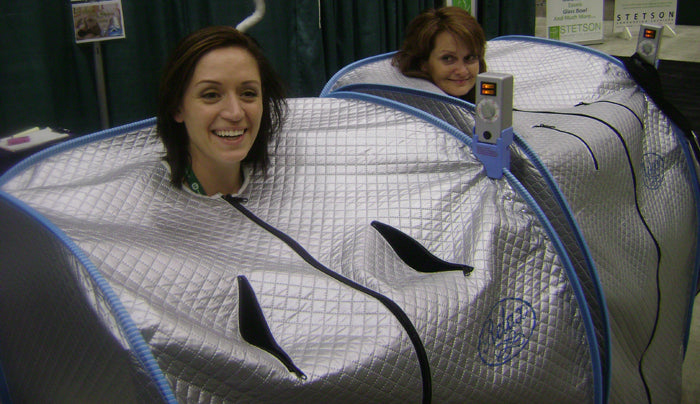
Ensure lower extremities are enclosed inside the Relax Sauna cabinet to receive the direct far-infrared dose.
Post-Session Skin Check
Perform a visual inspection of distal feet and lower legs after every session to monitor tissue safety in neuropathic limbs.
Microvascular Support for Ischemic Tissue
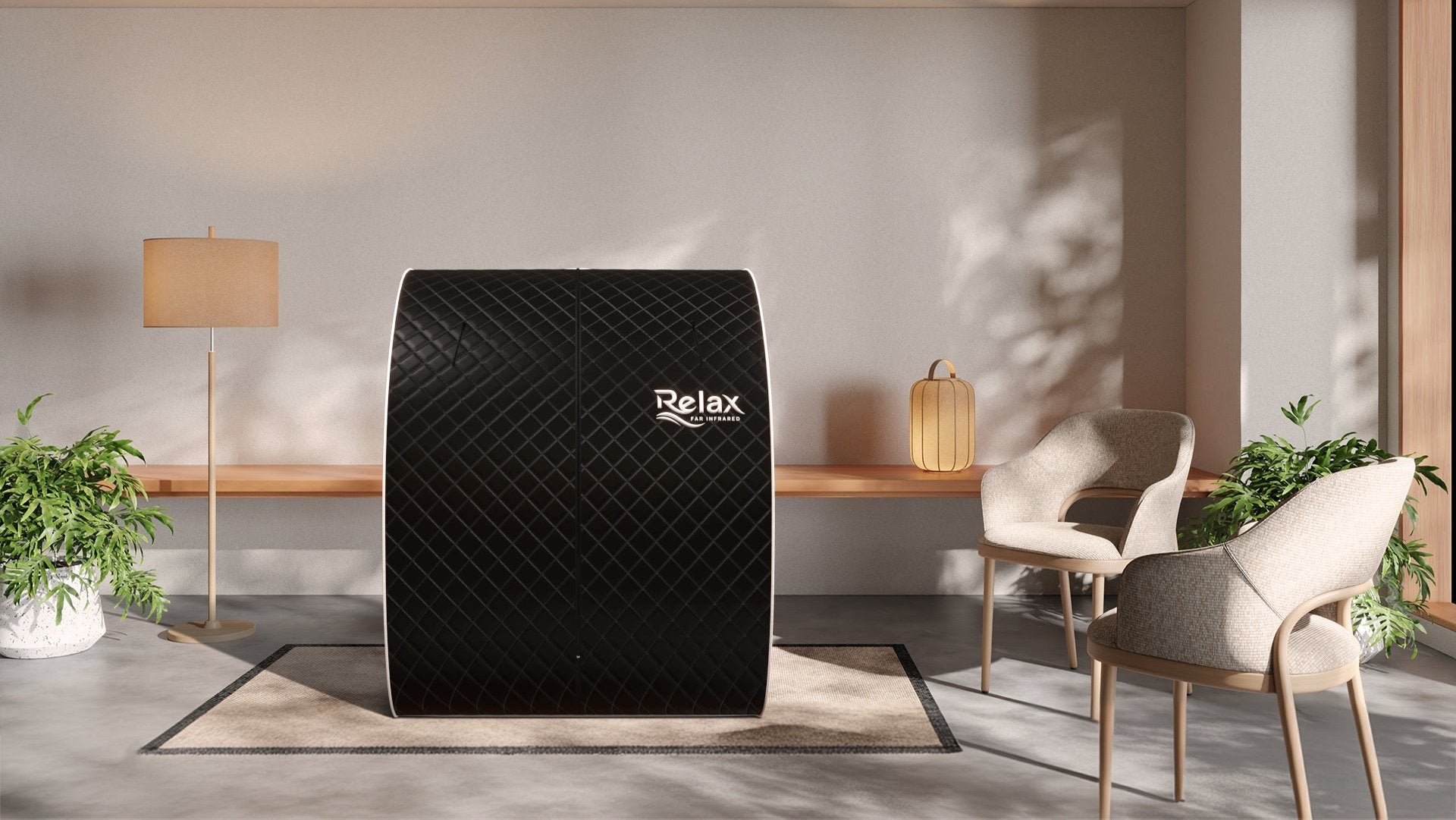
The Relax Sauna is an FDA-registered far-infrared generator (510(k) K053376) delivering the 4–14 µm ray band. Coordinated with your medical care team, it serves as a targeted microvascular adjunct.
For educational purposes only. Not medical advice, and not a substitute for prescribed vascular medications, supervised exercise programs, or recommended revascularization procedures. Coordinate use with your vascular specialist if you carry a PAD diagnosis. Seek immediate medical evaluation if you experience rest pain or non-healing wounds.



Explore the Relax Far Infrared Line Up


Feel the Momentum