Hashimoto's Disease
Hashimoto's and Far Infrared
Why so many people with Hashimoto's feel better in the sauna — and what the science says about why
1. Beyond Thyroid Medication: Understanding the Fire
If you have Hashimoto's thyroiditis, you already know what it's like to do everything your doctor recommends and still not feel right. The medication manages your thyroid levels on paper. But the fatigue is still there. The brain fog. The joint pain. The weight that doesn't budge. The feeling that your body is working against you every day — because in a very real sense, it is.
Hashimoto's is not simply a thyroid problem. It is an autoimmune disease — one in which your immune system has turned on your own thyroid gland and is slowly destroying it. The medication replaces the hormone the damaged gland can no longer produce. But it does not stop the immune system from continuing the attack. And that is why so many people with well-managed Hashimoto's still feel unwell. The fire is being contained, but it is not being put out.
Far infrared therapy does not put out the fire either. It is not a cure, and anyone who tells you otherwise is not being honest with you. But what FIR does — consistently, with a growing body of research behind it — is address the conditions that keep the fire burning. The chronic inflammation that makes the immune system more aggressive. The gut problems that feed the autoimmune cycle. The frayed nervous system that keeps the body locked in a stress state. The toxic load that disrupts thyroid function in ways your lab work may not capture.
2. What Is Actually Happening in Hashimoto's
Most people with Hashimoto's are told they have a thyroid problem. The fuller picture is that they have an immune regulation problem that happens to be attacking the thyroid. The immune system has lost its ability to tell friend from foe and is sending attack cells — called T lymphocytes — into the thyroid gland along with antibodies (anti-TPO and anti-TG) that mark thyroid tissue for destruction.
1. Chronic Inflammation
A persistent, low-grade fire of inflammatory molecules in the bloodstream that keeps the immune system in a continuous state of heightened alert.
2. Leaky Gut Barrier
Intestinal permeability allows partially digested food proteins to slip into the bloodstream, triggering immune reactions that cross-react with thyroid tissue.
3. Frayed Nervous System
A nervous system stuck in sympathetic stress mode impairs the immune regulatory cells (Tregs) meant to put the brakes on autoimmune attack.
The Vicious Cycle
Chronic inflammation damages the gut lining. A damaged gut lining allows substances into the bloodstream that trigger more immune activity. More immune activity means more inflammation. The nervous system stays on alert, suppressing the immune regulatory cells that could stop the cycle. These three problems reinforce each other — and all three are addressable.
3. What Far Infrared Does — In Plain Terms
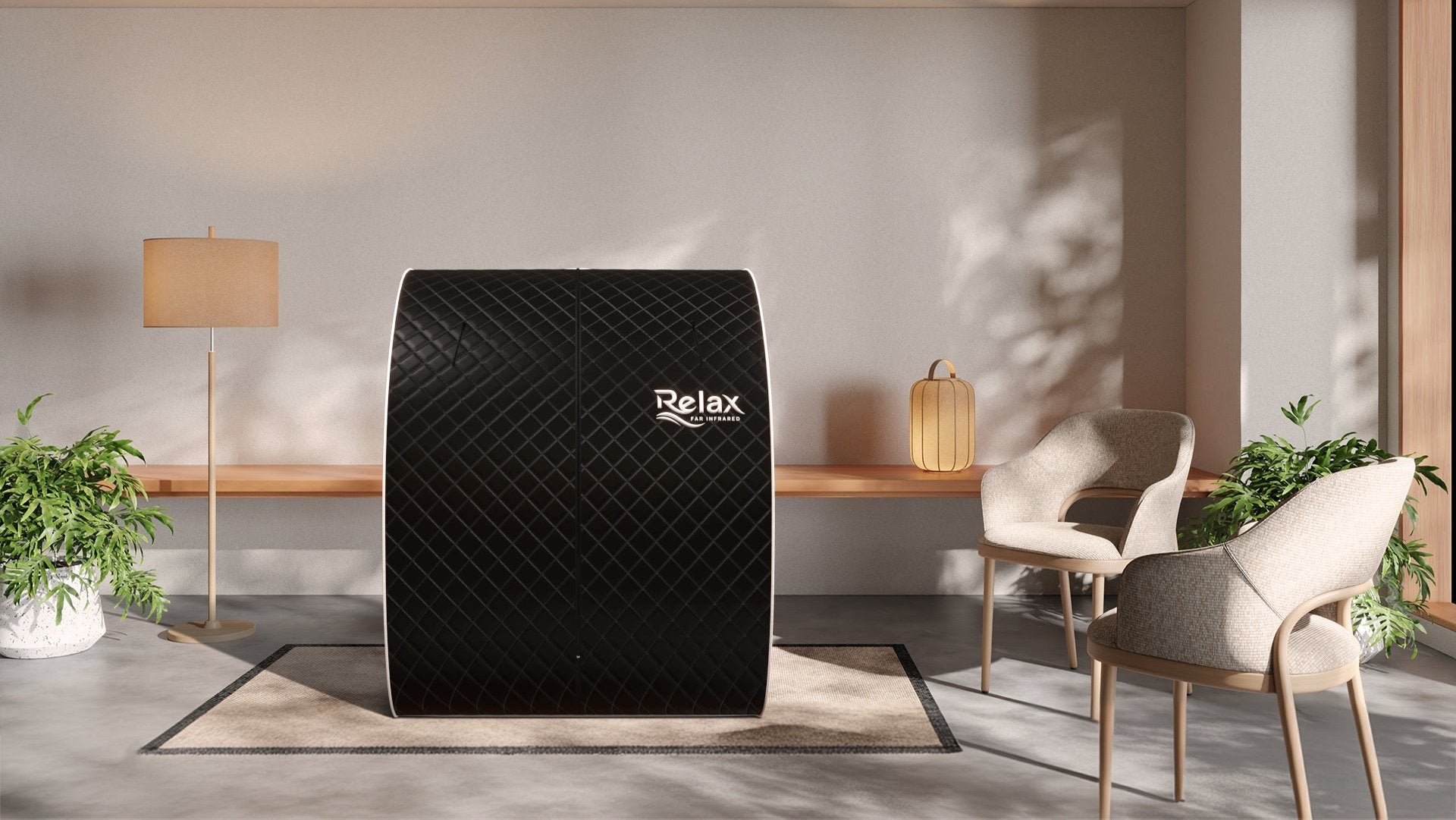
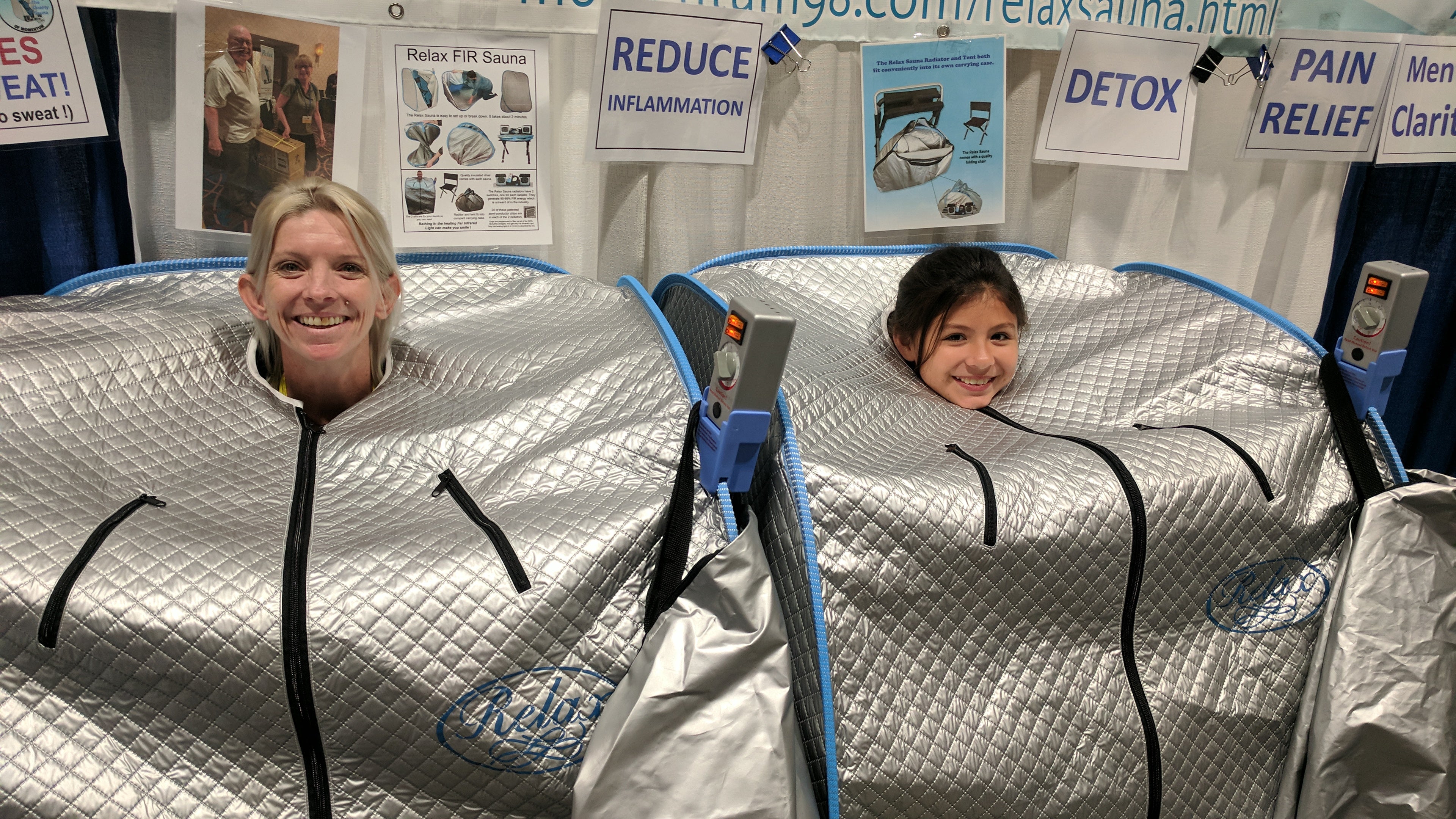
When you sit in a Relax Sauna, far infrared energy at a specific wavelength — 9.4 micrometers, the resonant frequency of biological water — is absorbed by the water in your tissue. Your core temperature rises gently, blood vessels open up, and your nervous system shifts from its stressed state into the calmer recovery state the body needs for repair work.
- Inflammatory Reduction: Key inflammatory markers (IL-6, TNF-alpha, C-reactive protein) are measurably reduced by regular FIR exposure, turning down the intensity of immune aggression.
- Microvascular Gut Support: FIR improves blood flow through intestinal tissues, supporting the cells that maintain tight junction integrity while promoting proper gut motility.
- Autonomic Recalibration: By promoting a parasympathetic shift and improving Heart Rate Variability (HRV), FIR gives regulatory T-cells better biological conditions to step in and calm autoimmune activity.

4. The Gut Connection — Why It Matters So Much
Of all the terrain variables in Hashimoto's, the gut may be the most important and the least addressed in conventional treatment. Recent studies measuring gut bacteria composition and intestinal permeability in Hashimoto's patients found significant dysbiosis alongside elevated markers of intestinal leakiness in the majority of subjects.
The underlying mechanism is called molecular mimicry. Certain food proteins — particularly gluten fragments in susceptible individuals — resemble thyroid proteins. When a leaky gut allows these proteins into the bloodstream, the immune system attacks both the food protein and the thyroid gland.
FIR therapy supports gut wall integrity through improved microcirculation and autonomic tone. While it does not replace dietary interventions, it creates a better-vascularized, better-regulated gut environment in which those interventions can work more effectively. Think of it as improving the soil before you plant the garden.
5. The Sweating Piece — Toxins and the Thyroid
The thyroid gland is extraordinarily sensitive to environmental toxins. Mercury, cadmium, lead, and halide compounds have documented disruptive effects on thyroid function and antibody production. Research confirms measurable levels of heavy metals in sweat — in some cases at higher concentrations than in urine — demonstrating that deep sweating is an active excretory route.
Critical Note: Replace What You Sweat Out
Selenium is concentrated in the thyroid gland and is vital for converting T4 to active T3, as well as protecting thyroid cells from oxidative damage. Because sweating depletes trace minerals, anyone with Hashimoto's doing regular FIR sessions should take 100–200 mcg of selenomethionine daily to replace losses and maintain cellular antioxidant protection.
6. What People with Hashimoto's Actually Report
In a survey of over 2,000 individuals living with Hashimoto's thyroiditis who utilized regular sauna sessions, patients documented significant improvements across multiple quality-of-life parameters:
7. How to Use FIR If You Have Hashimoto's
Hashimoto's patients often have impaired thermoregulation. Gradually building tolerance allows your body to calibrate its metabolic response.
Phase 1: Acclimatization
Weeks 1–2
10–15 minutes per session, 3 times per week. Focus on building baseline thermal tolerance without triggering fatigue.
Phase 2: Maintenance
Weeks 3–4+
20–25 minutes per session, 4–5 times per week. Consistency over months yields long-term physiological changes.
Hydration & Recovery: Hydrate well before each session with mineral-rich water. Post-session, replenish electrolytes (especially magnesium) to support nerve regulation and muscle recovery. Track changes in energy, joint discomfort, and sleep over your first 4 to 6 weeks.
For Healthcare Practitioners & Clinicians
A comprehensive scientific review detailing the biophysical pathways, peer-reviewed clinical citations, and practitioner guidelines is available in our full clinical whitepaper: Far Infrared Therapy and Hashimoto's Thyroiditis: Mechanistic Rationale, Supporting Evidence, and Clinical Considerations.
Hashimoto's Thyroiditis Whitepaper


Explore the Relax Far Infrared Line Up


Feel the Momentum