Far Infrared Radiation and Alzheimer's Disease / Cognitive Decline
A Review of Divergent Preclinical Findings and an Absent Human Evidence Base
Overview
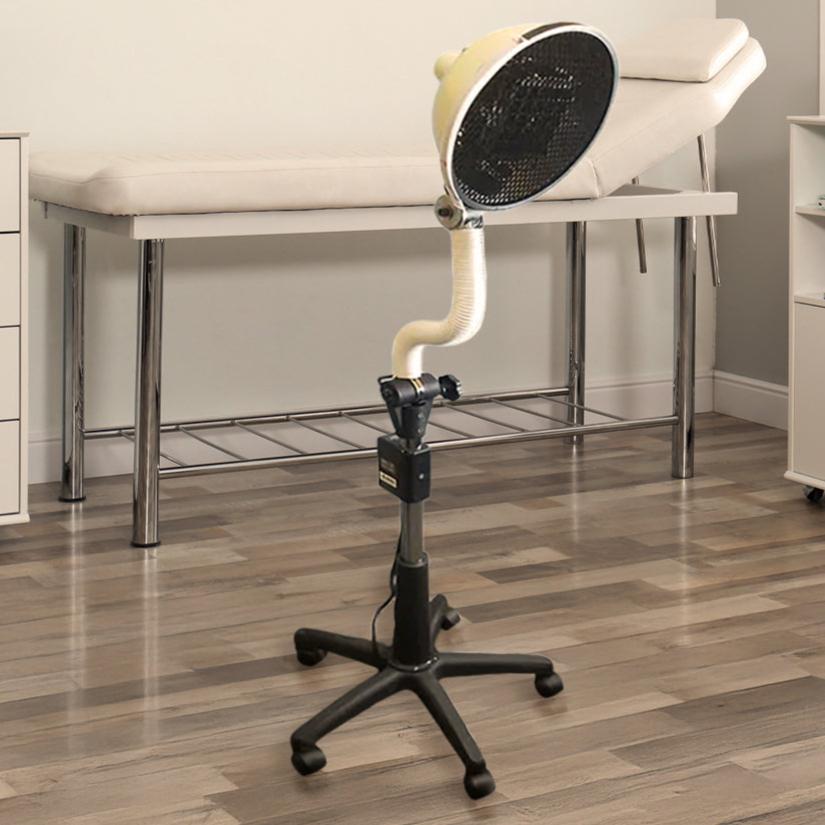
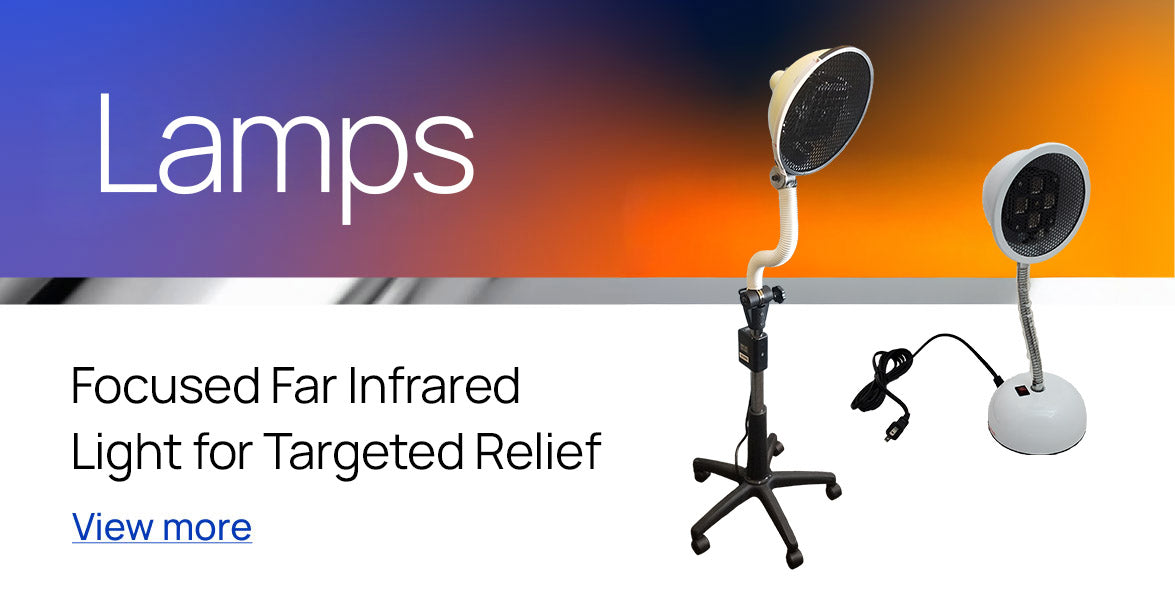
Far infrared (FIR) radiation has been tested directly in three independent transgenic mouse models of Alzheimer's disease (AD) by three separate research groups — a genuinely unusual degree of independent preclinical interest for a single mechanistic question in this review series.
The findings described below are not uniform: one study reports improved cognitive performance; another, despite documenting favorable changes in neurotrophic factor expression, found no significant improvement on direct cognitive or motor testing; and a third reports mechanistic and histological changes, with no direct cognitive behavioral outcome identified in the material reviewed.
No human trial has evaluated FIR in patients with diagnosed AD or mild cognitive impairment (MCI). This review presents all three preclinical findings without selecting for the favorable ones, and states the human evidence gap plainly.

Preclinical Evidence — Three Independent Models, Divergent Cognitive Outcomes
APPswe/PSEN1dE9 Model
Li et al. (2022, J Neuroinflammation) compared visible light (500 nm), near-infrared (800 nm), and far infrared (3–25 µm) in APPswe/PSEN1dE9 double-transgenic AD mice.
FIR light reduced amyloid-β (Aβ) burden, alleviated neuroinflammation, restored presynaptic protein (synaptophysin) expression, and ameliorated learning and memory impairment on Morris water maze testing — a positive result on the direct cognitive endpoint.
The proposed mechanism involves FIR enhancing microglial mitochondrial oxidative phosphorylation and ATP production, increasing exocytotic microglial Aβ phagocytosis.
5xFAD Model
Fukui et al. (2021, PLOS ONE 16(6):e0253320) exposed 5xFAD mice to FIR-emitting fabric for five months. Nerve growth factor and BDNF protein levels increased significantly in selected brain regions, and body weight decreased significantly in FIR-exposed AD mice.
However, cognition and motor function — assessed by Morris water maze and Rota Rod testing, respectively — did not differ significantly between FIR-exposed and non-exposed AD mice.
The authors concluded FIR “may have beneficial biological effects” but noted that experimental schedule and methods may need modification to obtain clearer cognitive results.
This is a direct null on the primary outcome of clinical interest (cognition), reported transparently by the original investigators, and should be retained alongside any positive finding from this literature.
TgCRND8 Model
A 2025 study (Neuromolecular Medicine) in TgCRND8 transgenic AD mice found FIR light suppressed microglial density (Iba-1 marker) in cortex and hippocampus and increased Nrf-2/HO-1 pathway expression, modulating Jak-2/Stat3 signaling.
This study characterizes neuroinflammatory and cytoprotective pathway changes consistent with FIR mechanisms described elsewhere in this review series (see companion Inflammation review), but a direct cognitive behavioral outcome was not identified in the material reviewed.
A Necessary Contrast: Different Wavelength, Same Model, No Effect
A randomized, fully blinded, GLP-compliant study of photobiomodulation (red/near-infrared light, not far infrared) in 5xFAD mice found no preventive effect on AD pathology (2023, Sci Rep).
This is a different band of the electromagnetic spectrum and a different proposed mechanism (cytochrome c oxidase-mediated photobiomodulation rather than resonant water absorption), and should not be conflated with the FIR-specific findings above.
But it is an important, methodologically rigorous reminder that “infrared helps the brain” is not a uniform finding across this broader research area, and that wavelength, model, and protocol specifics determine outcome.
Human Evidence
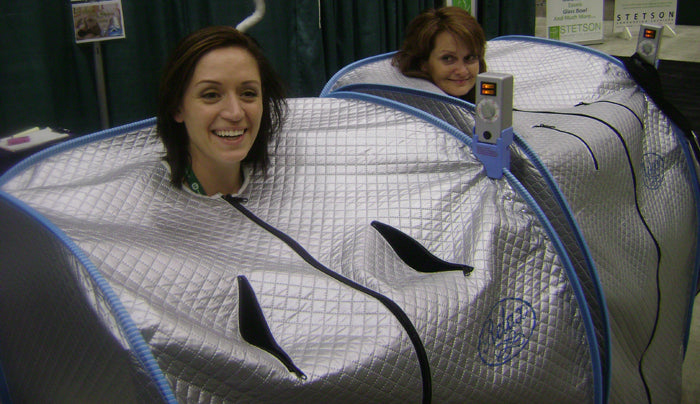
No controlled trial has evaluated FIR sauna or FIR-emitting devices in patients diagnosed with AD or MCI.
Adjacent research exists in general populations of older adults: a facility-allocated (not randomized) study of a body-heat-activated graphene FIR cap in 108 older adults across three care facilities reported immediate improvements in anxiety and cognitive measures (Zhao et al. 2024, BMC Geriatrics), and a registered follow-on trial comparing a graphene cap against an ordinary heated cap for cognitive outcomes is in progress (NCT06843824).
Neither study enrolled a diagnosed dementia population, and the non-randomized design of the completed study limits causal inference.
Evidence Grading Summary
| Study/Domain | Model & Design | Cognitive Outcome | Tier |
|---|---|---|---|
| APPswe/PSEN1dE9 mice (Li 2022) | Microglial ATP/phagocytosis, Aβ clearance | Improved (Morris water maze) | Positive, Preclinical |
| 5xFAD mice (Fukui 2021) | NGF/BDNF increase in selected regions | No significant change (Morris water maze, Rota Rod) | Null on Primary Outcome, Preclinical |
| TgCRND8 mice (2025) | Nrf-2/HO-1, Jak-2/Stat3, reduced microglial density | Not reported in material reviewed | Mechanistic Only, Preclinical |
| 5xFAD mice, PBM (red/NIR, not FIR) | Different band/mechanism | No preventive effect (randomized, blinded, GLP) | Negative Control Context |
| Diagnosed AD/MCI, human | N/A | No trial identified | Absent |
| General older adults, graphene FIR (human) | N/A | Facility-allocated, not randomized (Zhao 2024) | Preliminary, Not Dementia-Specific |
On smaller screens, swipe horizontally to view the full table.
Safety Considerations Specific to Cognitive Impairment
Clinical Cautions
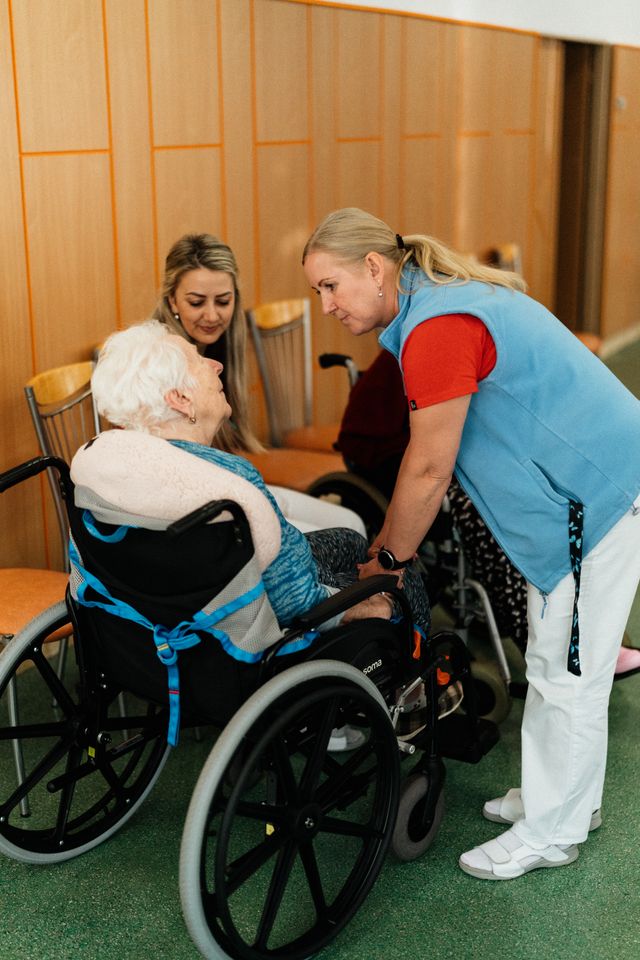
- Patients with cognitive impairment may have reduced capacity to recognize or report overheating, dizziness, or distress during sessions; direct supervision is warranted rather than reliance on patient self-report.
- Age-related and dementia-related thermoregulatory decline is well documented; conservative initial exposure and monitoring are appropriate.
- Fall risk during enclosure entry/exit should be assessed individually; supervision during transfers is advisable.
- Cardiovascular comorbidity and polypharmacy affecting thermoregulation are common in this age group; see companion cardiovascular and conduction-disease reviews.
- No claim in this document should be represented to patients, families, or caregivers as evidence that FIR treats, prevents, or slows Alzheimer's disease or any dementia.
Clinical Positioning
The preclinical literature on FIR in transgenic AD models is genuinely mixed at the level that matters most clinically — direct cognitive testing — with one of three independent studies reporting no benefit despite molecular changes.
This should be communicated as an active, unresolved area of preclinical research, not as suggestive human evidence.
No claim of benefit for diagnosed AD or MCI patients is supportable at this time, and safety guidance should center on the practical vulnerabilities of a cognitively impaired population rather than on disease-specific claims.
References
Li, Q., et al. (2022). Far infrared light irradiation enhances Aβ clearance via increased exocytotic microglial ATP and ameliorates cognitive deficit in Alzheimer's disease-like mice. J Neuroinflammation.
Fukui, K., Kimura, S., Kato, Y., & Kohno, M. (2021). Effects of far infrared light on Alzheimer's disease-transgenic mice. PLOS ONE, 16(6), e0253320.
Far-Infrared Radiation Ameliorates the Cognitive Dysfunction in an Alzheimer's Disease Transgenic Mouse via Modulating Jak-2/Stat3 and Nrf-2/HO-1 Pathways (2025). Neuromolecular Medicine.
A randomized, blinded study of photobiomodulation in a mouse model of Alzheimer's disease showed no preventive effect (2023). Scientific Reports.
Zhao, et al. (2024). Graphene far-infrared cap intervention in older adults. BMC Geriatrics.
Graphene far-infrared cap vs. ordinary heated cap for cognitive outcomes. ClinicalTrials.gov NCT06843824.