DIALYSIS & VASCULAR Deep Dive
Vascular Access Maintenance in Hemodialysis Patients
Arteriovenous fistula patency, pathophysiology, and the role of far-infrared therapy as clinical adjunct
Clinical Summary
Vascular access dysfunction remains the leading cause of morbidity, hospitalization, and healthcare cost in the hemodialysis population, with primary AVF failure rates of 20–40% at six months and progressive stenosis driving late failure through neointimal hyperplasia (NIH). Standard interventions are largely reactive — surveillance-triggered angioplasty, thrombectomy, and surgical revision — with limited evidence for pharmacologic prevention.
Far-infrared (FIR) therapy represents an unusual case in the complementary/adjunctive therapy landscape: it is supported by a randomized controlled trial in a major nephrology journal (Lin et al., J Am Soc Nephrol, 2007) with a hard clinical endpoint (12-month unassisted patency: 86% vs. 67%, p=0.008), subsequent multi-center replication, and continued research through 2025–2026 extending findings to peripheral vascular endpoints and peritoneal dialysis populations. FIR is standard-of-care adjunctive therapy in many East Asian dialysis units and is included as an option in some international access-maintenance guidelines. This document details the mechanistic rationale, evidence base, protocols, and clinical considerations.
1. Vascular Access Pathophysiology
Access Hierarchy and Patency DefinitionsCurrent KDOQI, ERA-EDTA/ESVS, and Fistula First guidelines maintain the AVF > AVG > CVC hierarchy for chronic vascular access based on infection, thrombosis, and mortality outcomes. Native AVF creation involves surgical anastomosis of an artery to a vein (typically radiocephalic, brachiocephalic, or brachiobasilic), producing high-flow arterial pressure in a venous conduit and driving progressive outward remodeling and wall thickening ("maturation") over 6–12 weeks.
| Term | Definition |
|---|---|
| Primary (unassisted) patency | Time from access creation to first intervention (or thrombosis); reflects natural durability. |
| Primary assisted patency | Time to thrombosis, including maintenance angioplasty; access remains never-thrombosed. |
| Secondary patency | Total time access remains functional, including post-thrombectomy interventions; abandonment endpoint. |
| Maturation | AVF adequate for cannulation: typically $Q_a \ge 500\text{--}600\text{ mL/min}$, diameter $\ge 6\text{ mm}$, depth $\le 6\text{ mm}$ ("rule of 6s"). |
| Access flow ($Q_a$) | Volumetric blood flow through access; measured by ultrasound dilution or Doppler; primary surveillance parameter. |
- Early failure (maturation failure): 20–40% at six months. Multifactorial — inadequate arterial inflow, juxta-anastomotic stenosis, accessory venous branches, patient vessel quality.
- Late failure (stenosis-driven thrombosis): Predominantly venous outflow stenosis at the anastomosis, cannulation zone, or central venous return. Neointimal hyperplasia is the pathologic substrate.
- Cannulation-related complications: Pseudoaneurysm, infection, skin breakdown at repeated puncture sites.
- Steal syndrome: Distal ischemia from preferential shunting; affects ~5% of AVFs and is a relative contraindication for direct FIR to affected limb.
2. Neointimal Hyperplasia: The Central Pathology
NIH is the dominant driver of late AVF failure and the mechanistic target for adjunctive therapies. The pathologic sequence includes:
Every mechanistic pathway FIR is known to activate targets one or more nodes in this cascade — the specific relevance is developed in Section 4.
3. Current Standard-of-Care Landscape
- AVF creation with appropriate vessel selection (preoperative ultrasound mapping).
- Percutaneous transluminal angioplasty (PTA) for stenosis (surveillance-triggered).
- Drug-coated balloon angioplasty (paclitaxel) — improved 6-month patency vs. plain balloon in some trials.
- Bare-metal or covered stent placement for recurrent stenosis.
- Thrombectomy (surgical or endovascular) for acute thrombosis.
- Surgical revision, superficialization, banding.
- Antiplatelet therapy: Aspirin and clopidogrel have been studied for primary patency with mixed results; DOPPS and Cochrane analyses do not support routine use.
- ACE inhibitors / ARBs: Observational data suggests possible benefit; RCT evidence weak.
- Fish oil (omega-3 fatty acids): Mixed evidence in AVG populations; less studied in AVF.
- Statins: Limited AVF-specific evidence.
- Far-infrared therapy: The best-evidenced non-pharmacologic adjunct — see Section 5.
- Isometric exercise ("fistula exercises"): Performed during maturation phase.
- Buttonhole cannulation technique: Implemented to reduce repeated trauma.
4. Mechanistic Pathways: FIR and AVF Preservation
FIR-activated pathways map onto every major node of the NIH cascade:
Direct FIR activation of NO production (Park 2013). NO inhibits VSMC proliferation, reduces platelet aggregation, prevents leukocyte adhesion — three primary drivers of NIH.
FIR upregulates HO-1 via NRF2 (Chen 2007). HO-1 is directly antiproliferative in VSMCs and reduces the inflammatory environment that drives intimal hyperplasia.
FIR induction (Bagabir 2025, Ishibashi 2008); supports endothelial barrier function and reduces inflammatory injury at the anastomosis.
Immediate increase in $Q_a$ (Lin 2007 documented ~2× access flow acutely post-FIR). Improved rheology (reduced viscosity, improved flow patterns).
5. Evidence Base
Lin et al. (2007) — J Am Soc Nephrol
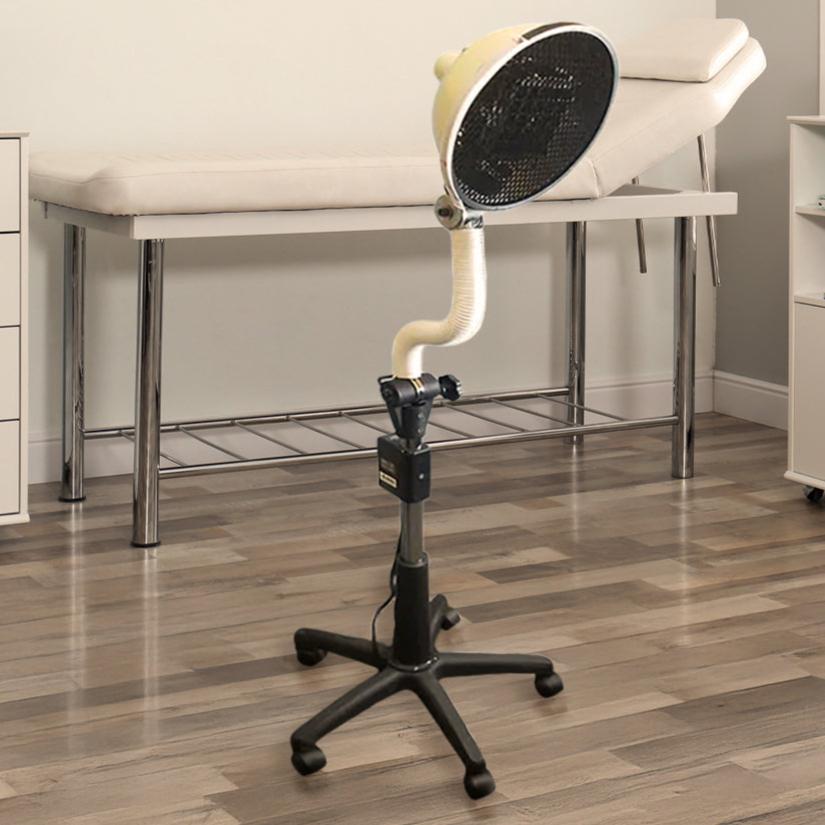
Design: Prospective randomized controlled trial in 145 chronic hemodialysis patients with functioning native AVFs. 73 controls received standard care; 72 in the treatment arm received FIR therapy applied over the AVF for 40 minutes during each dialysis session (3×/week) for 12 months. WS TY101 FIR emitter, distance ~20 cm from skin surface.
Endpoints: Primary: unassisted AVF patency at 12 months. Secondary: access blood flow ($Q_a$) by ultrasound dilution.
Key Findings: Unassisted patency 86% (FIR) vs. 67% (control), p=0.008 — an 19-percentage-point absolute reduction in access failure. $Q_a$ increased significantly in the FIR group. Acute increase in $Q_a$ observed within a single FIR session.
Significance: First and still most-cited randomized trial establishing FIR as effective adjunct for AVF preservation. Published in the flagship nephrology journal.
Multi-center prospective studies extending the 2007 findings; consistent methodology. Replicated improvements in AVF patency and access flow with FIR. Effect appears reproducible across dialysis centers and populations. Standard-of-care adoption followed across Taiwan and much of East Asia.
Prospective study of 28 chronic hemodialysis patients receiving FIR therapy to both feet for 40 min per HD session over 12 months. Measured ankle-brachial index (ABI), pulse volume record (PVR), skin perfusion pressure (SPP), peripheral vascular sonography (PVS), maximal venous outflow / segmental venous capacitance. Sustained improvements in peripheral vascular measures and venous circulation over 12 months. Establishes FIR benefit extends beyond AVF to systemic vascular health in dialysis patients.
Extension of FIR research to peritoneal dialysis population showing improved cardiovascular outcomes and reduced infectious complications compared to controls. Suggests FIR benefits in dialysis populations are not limited to AVF-specific effects but reflect broader vascular and immune benefits — consistent with the systemic mechanistic pathways.
FIR acutely increased NO production via $\text{Ca}^{2+}$ mobilization and CaMKII-mediated eNOS phosphorylation at Ser1179. Provides molecular mechanism for the vasodilatory and antiproliferative effects observed clinically.
FIR upregulated HO-1 via NRF2 pathway; reduced TNF-$\alpha$-induced adhesion molecule expression. HO-1 has documented antiproliferative effects on VSMCs — directly relevant to neointimal hyperplasia suppression.
FIR improved endothelial function and reduced arterial stiffness in healthy subjects; upregulated NOS3, TXNRD1, HSP70 via NRF2. Effect persisted independent of thermal effect. Reinforces that FIR mechanisms are distinct from simple warming.
6. Evidence Quality Assessment
| Claim | Evidence Grade | Primary Support |
|---|---|---|
| FIR improves AVF unassisted patency at 12 months | STRONG | Lin 2007 RCT (n=145, hard endpoint, top journal) |
| FIR increases access blood flow ($Q_a$) acutely and chronically | STRONG | Lin 2007, replication cohorts |
| FIR improves peripheral vascular measures in HD patients | MODERATE | Lin 2025 (1-year, comprehensive endpoints) |
| FIR benefits extend to peritoneal dialysis population | EMERGING | Lin 2026 (single study, needs replication) |
| Mechanism: eNOS activation and NO production | STRONG (MECHANISTIC) | Park 2013, Bagabir 2025 |
| Mechanism: NRF2/HO-1 anti-inflammatory pathway | STRONG (MECHANISTIC) | Chen 2007, Bagabir 2025 |
| Direct suppression of neointimal hyperplasia in vivo | MECHANISTIC ONLY | Inferred from HO-1/NO pathway; not directly measured in FIR-treated AVFs histologically. |
| FIR improves AVF maturation in newly-created fistulas | EMERGING | Suggested by mechanism; limited direct data on maturation-specific outcome. |
| FIR improves patency in AV grafts (AVG) | INSUFFICIENT | AVG-specific trials limited; extrapolation only. |
| FIR reduces cardiovascular mortality in dialysis populations | INSUFFICIENT | No long-term mortality trial; surrogate improvements only. |
The evidence base for AVF patency is unusually strong for a complementary modality — it clears bars that many pharmacologic interventions have not (Level I RCT with hard endpoint, replication, mechanistic explanation, long-term follow-up). The gap is in mortality/hospitalization endpoints and in AVG-specific data.
7. Clinical Protocols
- Timing: During each hemodialysis session (concurrent, does not extend chair time).
- Duration: 40 minutes per session.
- Frequency: 3×/week (matched to standard dialysis schedule).
- Target: FIR emitter positioned over the AVF/venous outflow tract.
- Distance: ~20 cm from skin surface.
- Wavelength: 5–25 $\mu\text{m}$ with peak in 7–14 $\mu\text{m}$ band.
- Course: Ongoing; benefits demonstrated at 12 months and appear sustained with continued use.
Where dialysis units cannot integrate FIR into the treatment session, home-based FIR sauna use provides an alternative delivery mechanism. Portable FIR devices delivering the 7–14 $\mu\text{m}$ band can be used on non-dialysis days or between sessions. The Waon-therapy protocol (15 min active session + 30 min warmth retention) is the most consistently studied home format, though it addresses systemic vascular endpoints rather than direct AVF exposure.
- Newly-created AVFs (0–8 weeks post-op): Coordinate with surgical team; some clinicians defer local FIR until suture line has healed (~2 weeks).
- Patients with steal syndrome: Avoid direct FIR to distal limb as it may worsen distal ischemia.
- Post-angioplasty/thrombectomy: Reasonable to resume FIR 24–48 hours post-procedure per interventionalist preference.
- Central venous stenosis: FIR does not address central lesions; endovascular management remains primary.
- Pediatric HD patients: Limited FIR data in pediatric populations; extrapolate cautiously.
8. Contraindications and Clinical Considerations
- Active vascular access infection (cellulitis, endovasculitis)
- Acute AVF thrombosis before evaluation/intervention
- Active steal syndrome with distal ischemia (to affected limb)
- Acute MI (within 4–6 weeks)
- Uncontrolled arrhythmia
- Decompensated CHF
- Active febrile illness
- Open surgical wound at access site (pre-healing)
- Newly-created fistula (< 2 weeks post-op) — defer local application
- Uncontrolled hypertension (SBP >180)
- Severe autonomic dysfunction
- Diabetes with severe peripheral neuropathy (thermal sensation)
- Photosensitivity conditions or medications
- Implanted cardiac devices near application field (verify specs)
- Extreme volume overload (may exacerbate hemodynamic instability during warming)
- Coordinate initiation with dialysis nursing to avoid interference with cannulation, blood pump function, or dialysis monitoring equipment.
- Verify no metallic surgical hardware in the treatment field per manufacturer's device specifications.
- Monitor cannulation site for burns or skin changes, especially in diabetic or elderly patients with reduced thermal sensation.
- Baseline documentation: physical exam of access (thrill, bruit), $Q_a$ measurement, venous pressure trends. Reassess quarterly to evaluate individual response.
- Do not interpret FIR use as substitute for guideline-based access surveillance (physical exam, $Q_a$ monitoring, venous pressure trending).
- Continue standard adjuncts (isometric exercises during maturation, cannulation technique optimization, blood pressure control).
9. Patient Counseling Points
- FIR therapy has among the best evidence of any complementary intervention for AVF patency — a real RCT, a real endpoint, published in a top nephrology journal.
- FIR is complementary to, not a substitute for, standard access care — including surveillance, interventional radiology when indicated, and surgical revision.
- Effects on $Q_a$ are often observable within a single session; sustained patency benefits require ongoing use over months.
- If access develops warning signs (weak thrill, high venous pressures, prolonged bleeding, arm swelling, reduced dialysis efficiency), evaluation takes priority over any adjunct therapy.
- Home FIR sauna use is a reasonable alternative when in-center FIR is not available; coordinate timing with dialysis schedule.
- Continue all prescribed medications, cannulation practices, and dietary/fluid restrictions.
Quick Reference
- Lead evidence: Lin 2007 JASN RCT (n=145, 12 mo)
- Endpoint: 12-mo unassisted patency 86% vs 67%
- NNT: ≈5 to prevent one AVF failure
- Standard protocol: 40 min/session, 3×/week during HD
- Distance: ~20 cm from skin
- Target pathology: Neointimal hyperplasia at venous outflow
- Wavelength: 5–25 $\mu\text{m}$ (peak 7–14 $\mu\text{m}$)
Access Surveillance Triggers
- $Q_a < 500\text{ mL/min}$ or > 25% drop from baseline
- Static venous pressure ratio > 0.5
- Recirculation > 10%
- Physical exam: weak/absent thrill, prolonged bleeding
- Kt/V decline without other explanation
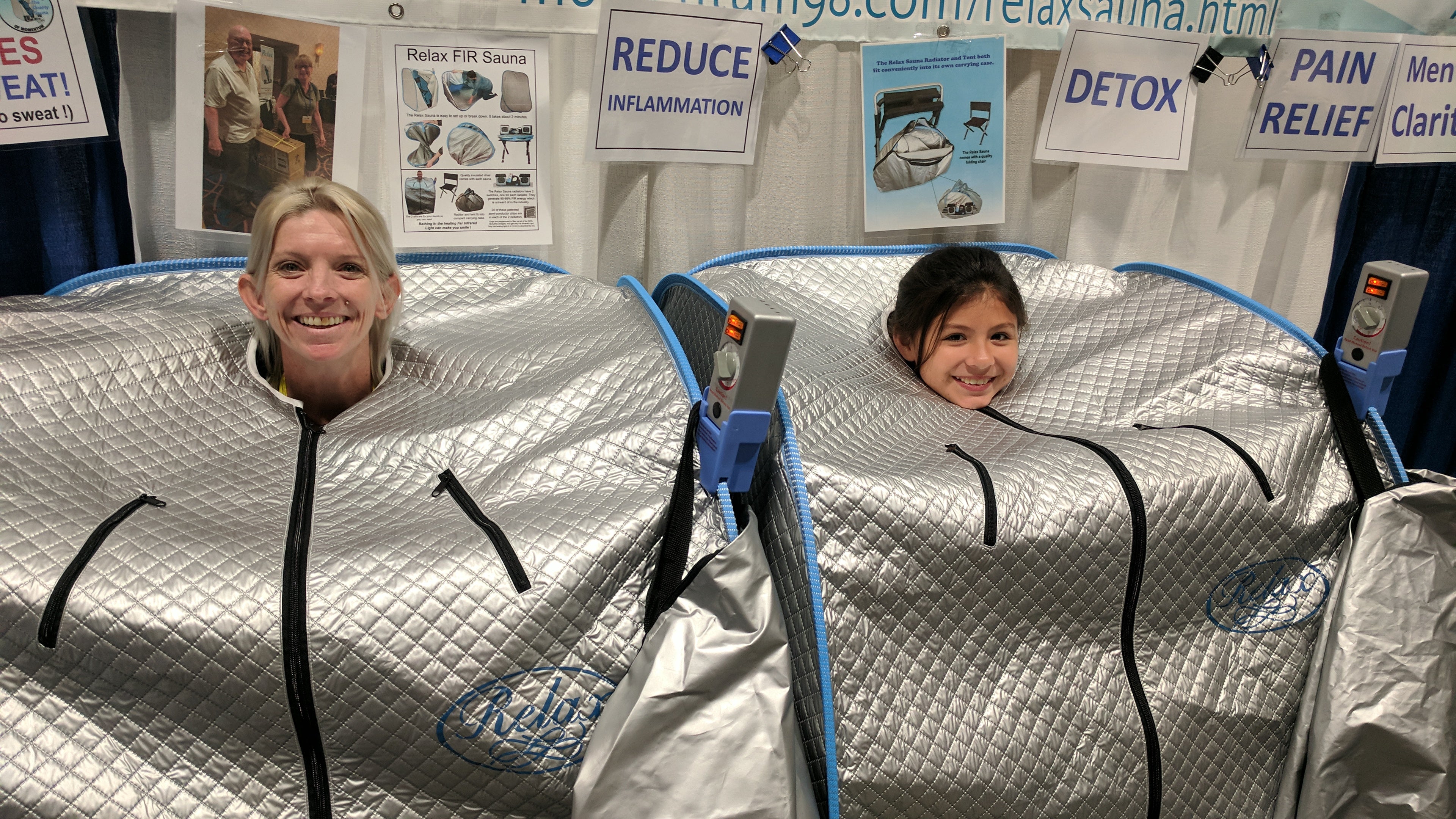
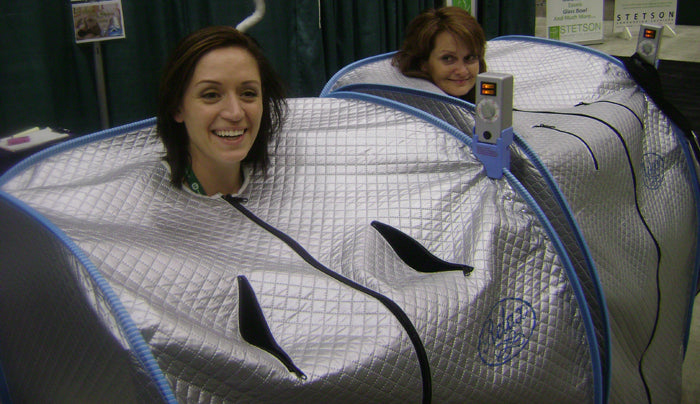
The Relax Sauna
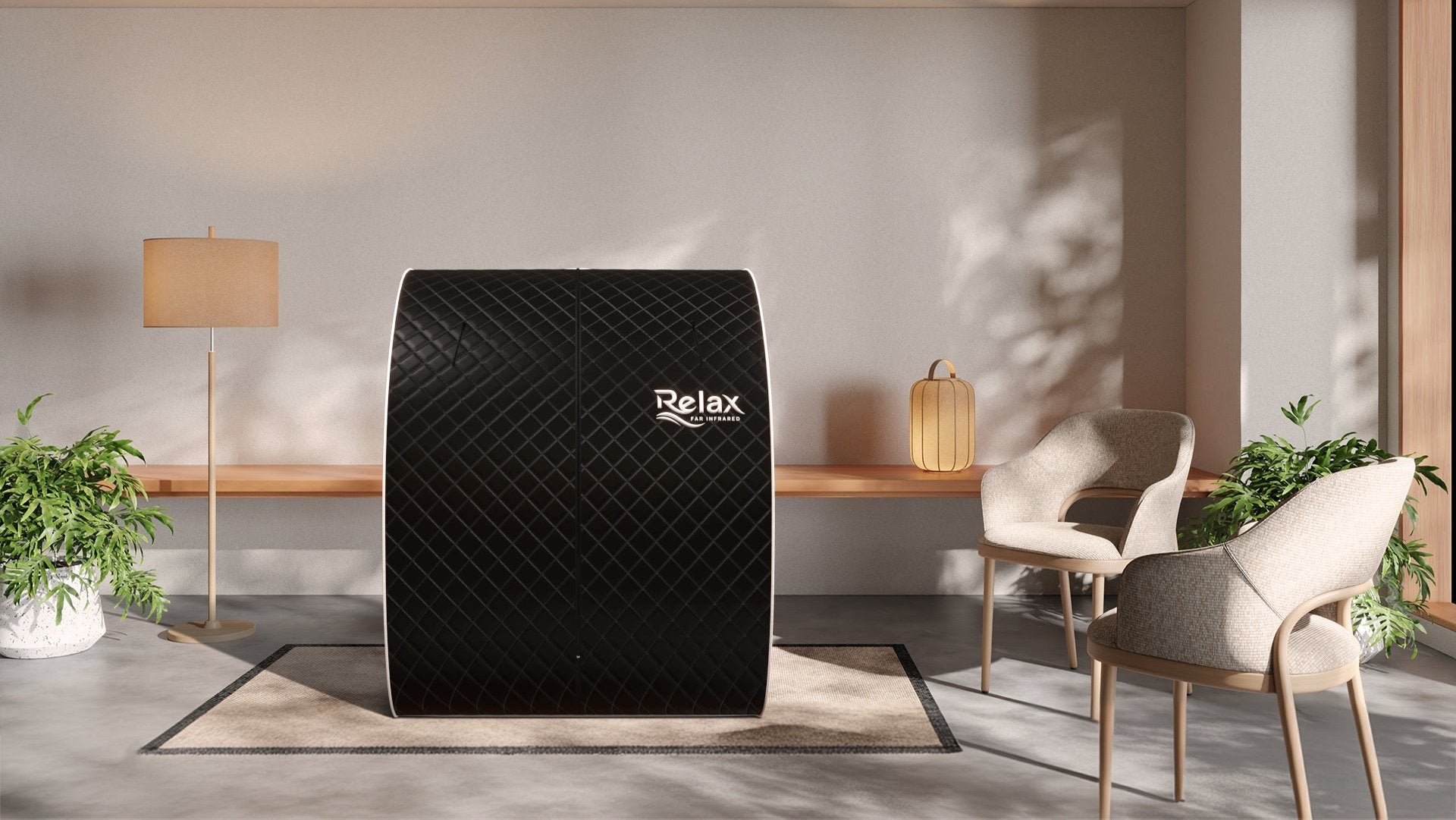
Delivers the same 7–14 $\mu\text{m}$ far-infrared wavelength band as the published dialysis vascular access literature. Home-based option where in-center FIR is not available.
```



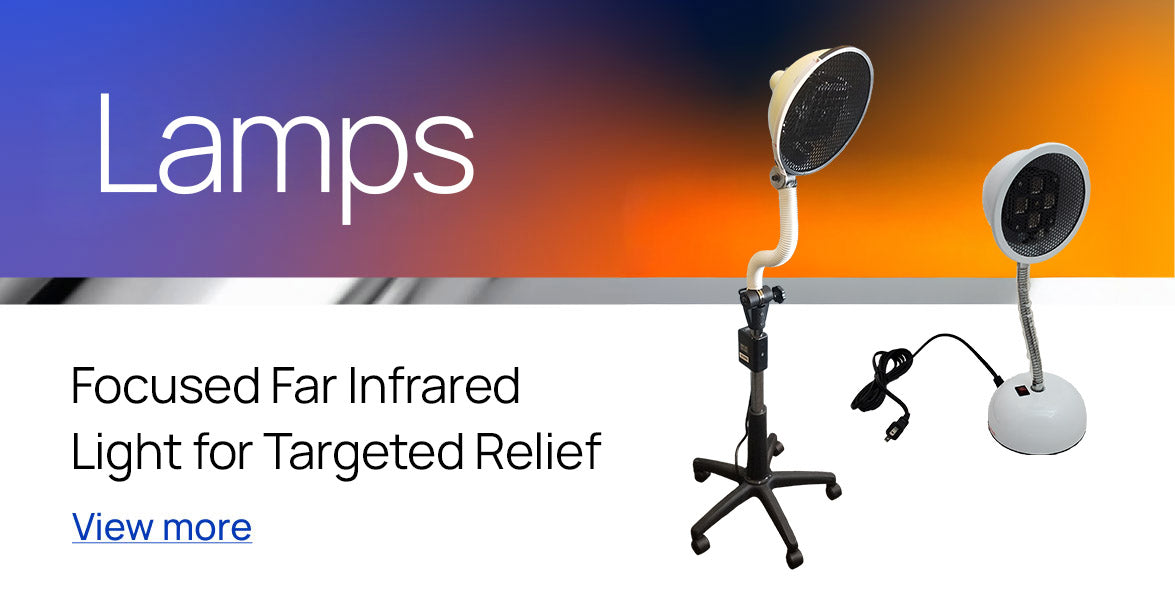
Explore the Relax Far Infrared Line Up


Feel the Momentum