Endothelial Glycocalyx Dysfunction and Far-Infrared Therapy
Endothelial Glycocalyx Dysfunction and Far-Infrared Therapy
Mechanisms, biomarkers, evidence, and the case for FIR as a cytoprotective adjunct
Companion document to the patient-facing summary. Last revised August 2026.
The endothelial glycocalyx (eGCX) — a 0.5–4.5 μm gel matrix of proteoglycans, glycosaminoglycans, and glycoproteins lining the luminal endothelium — has emerged over the last two decades as a central regulator of vascular permeability, mechanotransduction, coagulation, and inflammatory homeostasis. Its degradation is now implicated in the pathogenesis of atherosclerosis, diabetes, sepsis, chronic kidney disease, hypertension, ARDS, preeclampsia, and long COVID.
No human trials to date have directly measured eGCX biomarkers or thickness following a course of far-infrared (FIR) sauna therapy. The case for FIR as a glycocalyx-protective intervention is therefore mechanistic rather than clinical: FIR exposure has been shown to upregulate the same molecular pathways (eNOS activation, NRF2/HO-1 cytoprotection, HSP70 induction) that independently protect eGCX integrity in the published biology. This document lays out the mechanistic bridge, the biomarker panel that would validate it, the adjacent clinical evidence base, and the honest limits of current knowledge.

1. Glycocalyx Composition and Structure
The endothelial glycocalyx is a dynamic, negatively charged matrix anchored to the apical surface of every endothelial cell in the vasculature. In vivo thickness varies by vascular bed (0.5 μm in continuous capillaries; up to 4.5 μm in large conduit arteries), and total mass in an adult is estimated at approximately 1.7 liters — larger than the plasma volume it regulates.
| Component | Class | Vascular Role |
|---|---|---|
| Syndecan-1 (SDC1) | Transmembrane proteoglycan | Anchors HS/CS side chains; primary shedding biomarker in circulation |
| Syndecan-4 (SDC4) | Transmembrane proteoglycan | Mechanosensation; focal adhesion signaling |
| Glypican-1 (GPC1) | GPI-anchored proteoglycan | eNOS localization to caveolae; NO-mediated mechanotransduction |
| Heparan sulfate (HS) | Glycosaminoglycan | ~50–90% of GAG content; antithrombin III binding, growth factor sequestration |
| Chondroitin sulfate (CS) | Glycosaminoglycan | Charge-based permeability; shear force distribution |
| Hyaluronic acid (HA) | Non-sulfated GAG | Water retention; CD44-mediated signaling; anti-inflammatory |
| Sialic acid | Terminal sugar residue | Charge repulsion of erythrocytes and leukocytes; anti-adhesion |
| Bound plasma proteins | Albumin, antithrombin III | Structural stabilization; anticoagulant reservoir |
2. Functional Roles of an Intact Glycocalyx
Four functions are documented across the vascular biology literature:
- Permeability regulation. The eGCX is the primary determinant of the vascular barrier; the classic Starling equation has been reformulated (the "revised Starling principle") to place the eGCX at the center of transcapillary fluid exchange.
- Mechanotransduction. Shear stress deforms the eGCX, which transmits signal via syndecan-4 and glypican-1 to activate eNOS and generate NO. This is the primary shear-induced vasodilatory pathway. Loss of eGCX eliminates approximately 60% of shear-induced NO production.
- Anti-inflammatory / anti-adhesion. An intact eGCX sterically prevents leukocyte-endothelium and platelet-endothelium interaction; degradation exposes ICAM-1, VCAM-1, and P-selectin, permitting adhesion cascade initiation.
- Anticoagulation. Heparan sulfate side chains bind and activate antithrombin III at the vessel wall, providing endogenous anticoagulation; eGCX also sequesters tissue factor pathway inhibitor.
3. Mechanisms of Degradation ("The Sheddome")
eGCX degradation occurs through several enzymatic and oxidative mechanisms, often synergistic in disease:
- Heparanase activation — cleaves HS side chains; upregulated in diabetes, sepsis, ischemia-reperfusion, and COVID-19.
- Matrix metalloproteinases (MMP-2, MMP-9) — cleave syndecan and glypican core proteins.
- Hyaluronidase — cleaves hyaluronic acid backbone.
- Reactive oxygen species (ROS) — non-enzymatic oxidative degradation; mediates hyperglycemia and inflammation-associated damage.
- Neuraminidase — removes sialic acid; upregulated in sepsis.
- Direct mechanical injury — cardiopulmonary bypass, disturbed flow at arterial bifurcations (atheroprone regions).
Common upstream triggers include TNF-α, IL-6, LPS, hyperglycemia (both acute and chronic), oxidized LDL, angiotensin II, ischemia-reperfusion, and — as documented during the pandemic — SARS-CoV-2 spike protein interaction with ACE2 and downstream inflammatory cascade (Zha, Fu, Qian 2022).
4. Biomarkers of eGCX Shedding
Circulating fragments of eGCX components serve as clinically useful biomarkers of vascular integrity:
- Syndecan-1 (SDC1) — the most established biomarker; elevated in sepsis, ARDS, ischemia, trauma, cardiac surgery, and COVID-19. Prognostic value in critical care.
- Heparan sulfate fragments — direct measure of GAG shedding.
- Hyaluronic acid — elevated in liver disease, inflammation; less GCX-specific.
- Glypican-1 — less commonly assayed clinically but validated in research settings.
These are the biomarkers that a properly designed FIR-and-glycocalyx trial would measure. To date, none have been reported in the FIR literature.
5. Mechanistic Case for FIR as a Cytoprotective Intervention
The molecular pathways activated by FIR exposure and the pathways known to protect the eGCX overlap substantially. The bridge is mechanistic, not clinical:
FIR upregulates eNOS via CaMKII-mediated Ser1179 phosphorylation (Park 2013). eGCX is the primary shear-sensor upstream of eNOS. NO both preserves eGCX integrity and is itself dependent on it — a positive-feedback loop.
FIR activates NRF2/HO-1 (Chen 2007, Bagabir 2025). ROS is a primary driver of eGCX shedding. HO-1 induction has been shown to reduce syndecan-1 shedding in inflammatory models.
FIR induces HSP70 (Bagabir 2025). HSP70 has been shown to maintain endothelial barrier function and reduce permeability in sepsis models (Yuan 2020) — the functional endpoint of eGCX integrity.
FIR upregulates TXNRD1 (Bagabir 2025). Redox homeostasis is upstream of both heparanase activation and MMP activity — the two enzymes primarily responsible for eGCX cleavage.
Each of these pathways has independent, published evidence for eGCX protection in other contexts (pharmacologic NRF2 activators, HSP70 inducers, NO donors, antioxidants). What has not been tested is whether FIR exposure, which reliably activates all four in vascular tissue, translates to measurable eGCX protection in humans.
What a properly designed trial would look like: a randomized controlled study measuring circulating syndecan-1 and heparan sulfate at baseline and after a 4-week Waon-therapy FIR protocol, in a population with documented eGCX dysfunction — post-septic recovery, type 2 diabetics, hemodialysis patients, or post-COVID vascular symptoms. Sublingual sidestream dark-field imaging could add direct thickness measurement.
Until such a trial is published, the eGCX-specific case for FIR remains a well-founded hypothesis supported by strong mechanistic and adjacent clinical evidence — not a proven effect. Clinicians and patients should be told exactly that.
6. Adjacent Clinical Evidence Base
The following studies represent the closest available human evidence supporting FIR effects on endothelial function — the functional endpoint most directly linked to eGCX integrity — without measuring eGCX biomarkers directly.
- Design
- Cultured HUVECs exposed to FIR with intracellular calcium and NO measurements.
- Key Findings
- FIR acutely increased NO production via Ca²⁺ mobilization and CaMKII-mediated eNOS phosphorylation at Ser1179 — the same activation mechanism used by shear stress transduced through the intact eGCX.
- Significance
- Establishes the direct molecular link between FIR exposure and the eGCX-mediated NO pathway; FIR partially substitutes for the mechanotransduction signal.
- Key Findings
- FIR upregulated HO-1 via NRF2 pathway activation; reduced TNF-α-induced VCAM-1 and ICAM-1 expression. Adhesion molecule upregulation is a downstream consequence of eGCX loss; reducing it partially compensates for eGCX-mediated anti-adhesion function.
- Key Findings
- Human study showing FIR improves endothelial function (laser Doppler + iontophoresis) and reduces arterial stiffness (AIx). Gene expression: NOS3, TXNRD1, HSP70 upregulation via NRF2. Effects persisted independent of thermal effect.
- Significance
- The first study to isolate FIR-specific vascular effects from thermal effects in humans. All four upregulated pathways are eGCX-protective in independent literature.
- Design
- Sepsis model examining HSP70 role in endothelial permeability.
- Key Findings
- HSP70 induction preserved endothelial barrier function in septic conditions — the functional readout of eGCX integrity. Together with Bagabir 2025 (FIR induces HSP70), this closes one branch of the mechanistic loop.
- Key Findings
- Two-week Waon-therapy protocol improved flow-mediated dilation in coronary risk patients (Imamura) and CHF patients (Kihara). FMD is dependent on eGCX-mediated shear transduction; improvement in FMD is consistent with — though does not prove — improved eGCX function.
7. Evidence Quality Assessment
Grading follows the same convention used elsewhere in this reference set. Note the distinction between mechanistic evidence (published biology supports the pathway) and clinical evidence (documented in human trials with the specific endpoint):
| Claim | Evidence Grade | Primary Support |
|---|---|---|
| FIR upregulates eNOS/NO in endothelium | Strong (mechanistic) | Park 2013 (in vitro), Bagabir 2025 (human gene expression) |
| FIR activates NRF2/HO-1 cytoprotective pathway | Strong (mechanistic) | Chen 2007, Bagabir 2025 |
| FIR induces HSP70 | Moderate (mechanistic) | Bagabir 2025, Ishibashi 2008 |
| FIR improves endothelial function (FMD, AIx) | Moderate (clinical) | Imamura 2001, Kihara 2002, Bagabir 2025 |
| NRF2/HO-1/HSP70/NO pathways protect eGCX | Strong (independent literature) | Multiple, non-FIR — sulodexide, S1P, NRF2 activator studies |
| FIR directly reduces syndecan-1 shedding | Mechanistic Only | Inferred from pathway; no direct measurement in FIR literature |
| FIR directly restores eGCX thickness in humans | No Direct Evidence | No trial has measured this endpoint |
| FIR improves outcomes in eGCX-dependent conditions (sepsis, COVID vasculopathy) | No Direct Evidence | Untested in these populations |
The rigorous interpretation is that FIR activates the mechanistic prerequisites for eGCX protection but has not been shown to protect the eGCX itself in human trials. This is the gap that needs to be closed. It is not a small gap — but it is a well-defined one, and the biomarker infrastructure to close it exists.
8. Clinical Protocols
Waon Therapy
The most consistently studied protocol in the FIR endothelial-function literature:
- Active session: 15 minutes at 60°C (140°F) dry FIR
- Warmth retention: 30 minutes wrapped rest post-session
- Frequency: Daily or 5–7×/week
- Duration: Minimum 2–4 weeks for endothelial change
- Hydration: 200–500 mL pre-session; monitor post-session
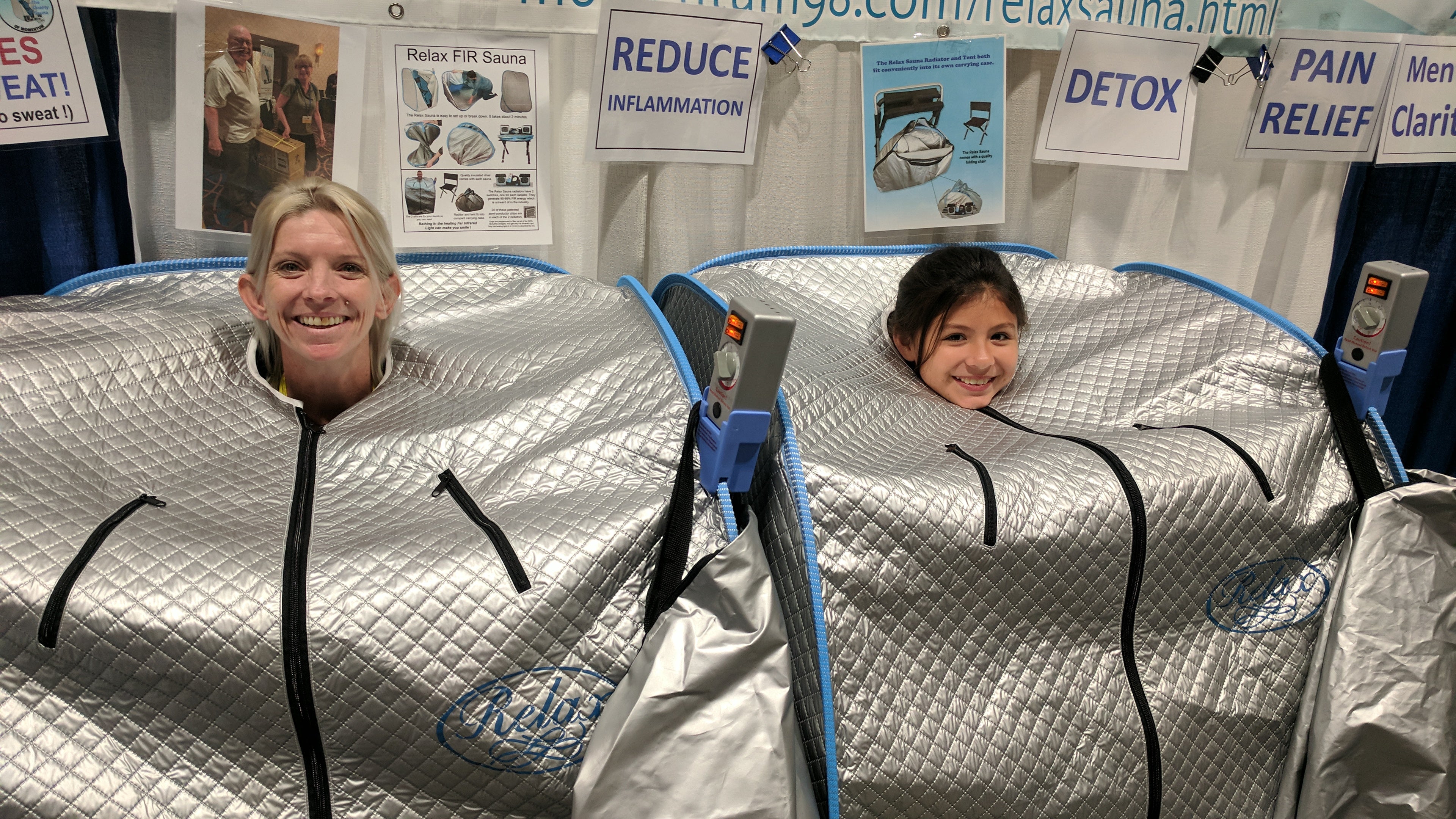
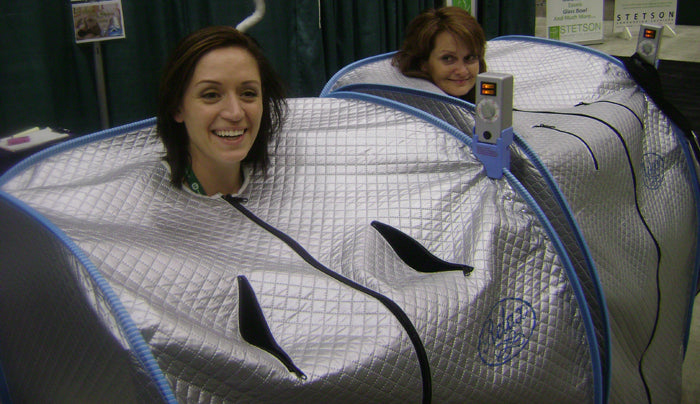
The Relax Sauna delivers the 7–14 μm band used in the Waon-protocol studies.
Populations Where eGCX Protection Would Be Most Relevant
- Type 2 diabetes with known hyperglycemia-driven eGCX loss
- Post-sepsis recovery with persistent endothelial dysfunction
- Chronic kidney disease (both pre-dialysis and dialysis populations)
- Post-COVID vascular symptoms with elevated syndecan-1
- Chronic inflammation or autoimmune conditions with vascular involvement
- Preventive use in patients with strong cardiovascular family history
These are the populations where a proof-of-concept trial would generate the highest-signal data. Absent such trials, use is off-label from a research standpoint — reasonable as complementary to standard care in appropriate patients, with clear counseling about the mechanistic-vs-clinical distinction.
9. Contraindications and Clinical Considerations
Absolute Contraindications
- Acute MI (within 4–6 weeks)
- Unstable angina
- Uncontrolled arrhythmia
- Severe aortic stenosis
- Active dehydration / hypovolemia
- Acute febrile illness
- Decompensated CHF (NYHA IV, active pulmonary edema)
- Active sepsis (paradoxically — thermal stress in acute illness)
Relative Contraindications
- Recent stroke (<3 months)
- Uncontrolled hypertension (SBP >180)
- Autonomic dysfunction with orthostatic instability
- Pregnancy
- Photosensitivity conditions or medications
- Implanted cardiac devices (verify specifications)
- Severe peripheral neuropathy (impaired thermal sensation)
- Uncontrolled diabetes with autonomic neuropathy
Practical Clinical Considerations
- In diabetics, monitor for post-session hypoglycemia if sessions are long or frequent (peripheral vasodilation may enhance insulin absorption/action).
- In hypertensive patients on multiple antihypertensives, watch for post-session orthostatic hypotension in the first 1–2 weeks.
- Consider timing relative to anticoagulant dosing — increased peripheral blood flow during and after sessions.
- In renal patients, coordinate with dialysis schedule and volume status monitoring.
- In post-COVID patients, start with shorter sessions (5–10 min) given autonomic instability seen in this population.
- Serum syndecan-1 can be considered as a research biomarker for patients interested in tracking objective response (available through some specialty labs).
10. Patient Counseling Points
- FIR therapy activates pathways that should protect the endothelial glycocalyx — this is grounded in solid biology, not marketing.
- No human clinical trial has yet directly measured glycocalyx protection after FIR use. This is honest; it should not be overstated in either direction.
- The intervention is complementary to standard care for conditions in which glycocalyx dysfunction plays a role — not a substitute.
- Consistency matters more than intensity. Daily short sessions likely outperform occasional long ones.
- Effect timeframe: mechanistic activation is acute; documented endothelial functional improvement generally requires 2–4 weeks of daily use.
- Report any dizziness, chest pain, palpitations, or worsening symptoms immediately.
11. References
doi:10.1007/s00424-007-0212-8 ↗
doi:10.1146/annurev.bioeng.9.060906.151959 ↗
doi:10.3389/fcvm.2022.952022 ↗
doi:10.3389/fcell.2024.1471251 ↗
PMC9221624 ↗
doi:10.1186/s13054-018-2292-6 ↗
PMC7492929 ↗
doi:10.1007/s00125-010-1910-x ↗
PMID:23756809 ↗
doi:10.1161/atvbaha.107.160085 ↗
doi:10.1016/j.freeradbiomed.2025.09.039 ↗
doi:10.1007/s12032-007-9020-4 ↗
doi:10.1016/S0735-1097(01)01467-X ↗
doi:10.1016/S0735-1097(01)01824-1 ↗
doi:10.1097/01.mol.0000181325.08926.9c ↗
PMC2718593 ↗



Explore the Relax Far Infrared Line Up


Feel the Momentum