Autism & Heat: Comfort
Autism isn't an illness that a sauna can treat.
Here's what's actually known about heat, far infrared, and autism — and what to watch for.
Support Is Built Around the Person
Autistic people and their families are best served by developmental, behavioral, and educational supports, speech and occupational therapy, and good care for things that often come with autism, like sleep problems, anxiety, and seizures. Talk with your or your child's care team before trying anything new.
If someone has a seizure, a high fever, or seems seriously overheated — confused, very sleepy, vomiting, hot and dry skin — get medical help right away. In the US, call or text 988 in a mental-health crisis. Nothing on this page is a treatment.
About 1 in 31 eight-year-olds in the US was identified with autism in 2022 (CDC), and autistic people span every age and a wide range of strengths and support needs. Far infrared and saunas get pitched for autism online, often with big promises. This page covers what's actually known, and it's written for autistic adults, parents, and caregivers alike.

What the Research Actually Shows
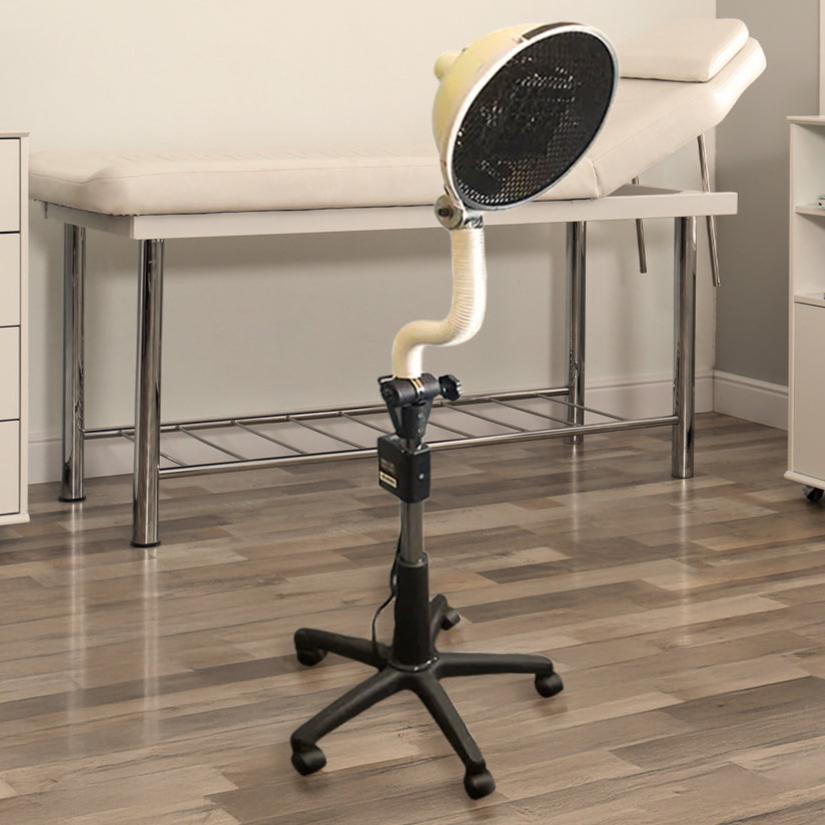
We found no trial of far infrared sauna or far infrared devices in autistic people. Claims about better communication, calmer behavior, or sensory comfort aren't backed by a study we could find.
Researchers are studying near-infrared light applied to the head with LEDs or lasers (transcranial photobiomodulation) in autistic children and adults. These are small, early studies, and several trials are registered. It's a different wavelength and a different delivery method than a far-infrared sauna or lamp, and we didn't evaluate their results, so none of it supports far infrared.
The “Fever Effect” — Interesting, but Not About Heat
Some parents report that their autistic child's behavior improves during a fever. It's a real research topic: in one prospective study of 30 children with autism (Curran et al. 2007, Pediatrics), researchers documented behavior change during fever, and other reports put the share of families noticing it around 1 in 6. Mouse research points to immune signaling, a molecule called IL-17a, as part of the explanation (Reed et al. 2020, Nature) — not temperature itself.
A sauna raises body temperature from the outside; a fever is the immune system raising it from the inside. We found no evidence that heating the body from outside reproduces the fever effect, and fever isn't something to induce.
Claims You May See
“A JAMA article showed infrared therapy helps children with autism.” This citation shows up in patent filings and sauna-company pages, usually pointing to a sauna seller's blog post. We couldn't find a JAMA article by that title.
The real JAMA paper often cited alongside it is Giulivi et al. (2010) — a small exploratory study of 10 autistic children and 10 comparison children that found signs of mitochondrial differences in blood cells. It didn't involve infrared, and as the authors note, it can't show cause and effect.
Please Skip “Detox” Approaches for Autism
Sweat does carry some metals and chemicals in adults, and we cover that on our Detoxification and PFAS pages. But we found no evidence that sweating out “toxins” improves autism.
Products and treatments marketed to “detox” autistic children — chelation, “detoxifying” clay baths, and similar — have caused harm. The FDA has warned that unapproved chelation products can cause dehydration, kidney failure, and death, and at least one death of a child with autism has been reported. FDA consumer guidance also states there is no cure for autism, and that products claiming to cure it are deceptive.
If Warmth Is Something You or Your Child Enjoys
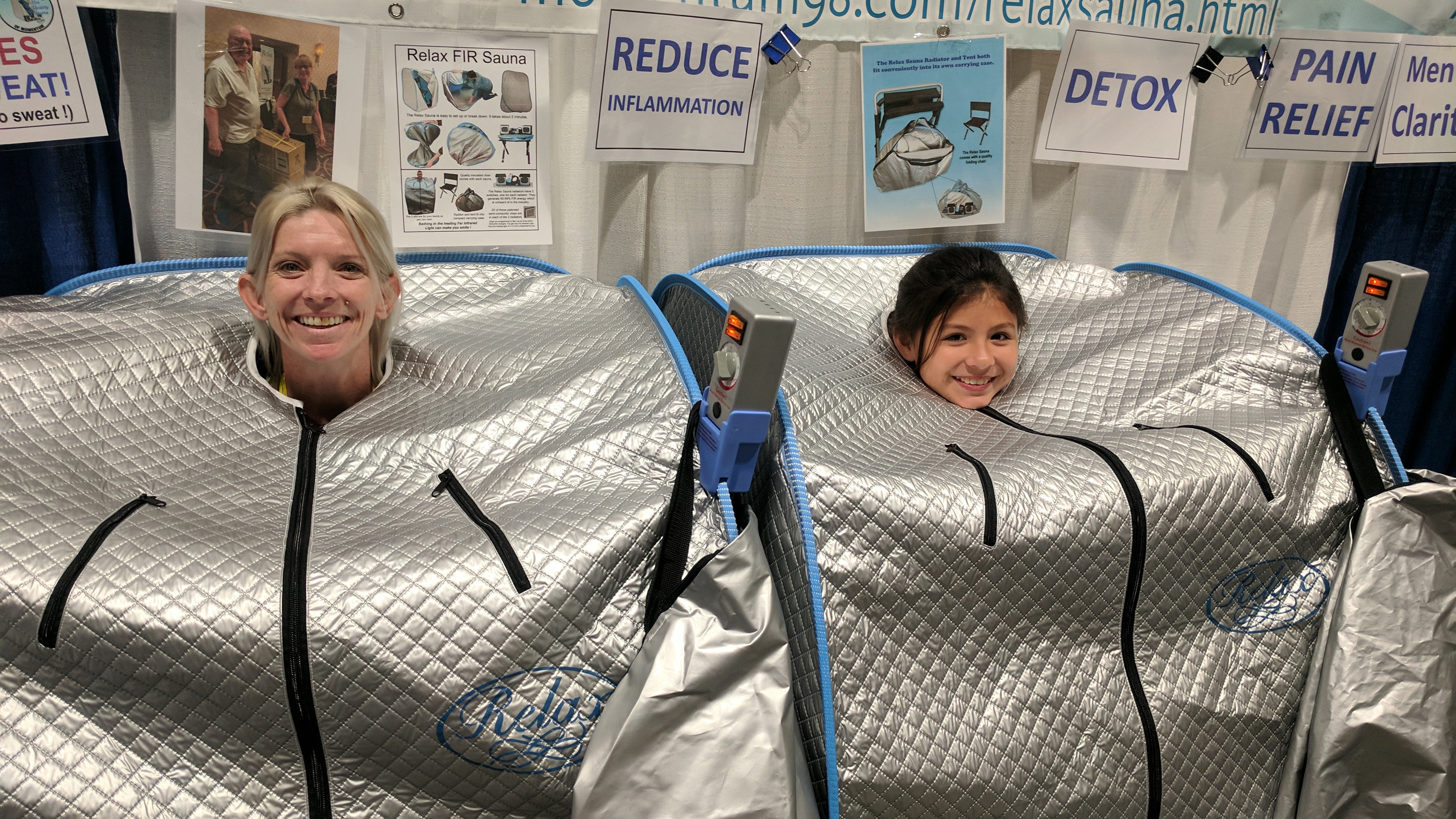
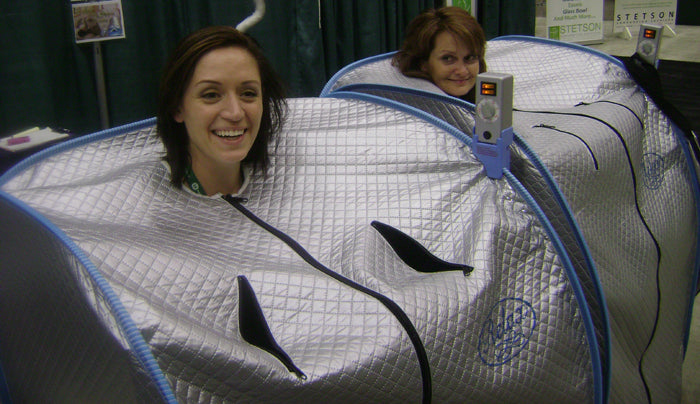
Some people find warmth soothing, and that's a perfectly good reason to use it. Treat it as a comfort activity, nothing more. If you're considering it, especially for a child:

Safety First
- Ask a pediatrician or your doctor first. We found no pediatric safety guidelines for far-infrared sauna from medical organizations. Online guidance comes mostly from sauna sellers, and it conflicts. A 2019 review argues children aren't simply worse at temperature control than adults, but smaller bodies, fluid needs, and supervision still matter.
- Never alone. Stay with the person for the whole session and keep it short and cool.
- Don't rely on being told. Some autistic people don't say or show discomfort in the ways you'd expect. Watch for flushing, heavy sweating, unusual quiet or sleepiness, irritability, nausea, or dizziness, and stop at the first sign.
- Sensory comfort matters. Heat, enclosed spaces, sounds, smells, and unfamiliar materials can overwhelm. Let the person choose, stop if they're distressed, and never force it.
- Seizures: epilepsy is more common in autistic people. If there's a seizure history, ask a neurologist first.
- No heat during a fever or illness, and keep fluids available.
- Medications: some affect heat tolerance or sweating. Check with the prescriber.
- This isn't a treatment and doesn't replace therapies, schooling supports, or medical care.
What Has Better Evidence
The mainstays of care for autistic children are early behavioral, developmental, and educational supports. Only two medications, risperidone and aripiprazole, are FDA-approved for irritability associated with autism, and none treat autism's core features.
Sleep problems are common in autistic children — estimates run as high as 40–80% — and melatonin has the strongest medication evidence for sleep, alongside behavioral approaches. Our Insomnia page covers what's known about heat and sleep.
For related context, see our companion Insomnia, Anxiety, Stress & Mood, Detoxification, and PFAS & Heavy Metals pages.
Sources & Further Reading
- CDC ADDM Network, MMWR Surveillance Summaries 2025 (2022 surveillance year).
- Curran et al. 2007. Pediatrics 120(6):e1386–e1392.
- Reed et al. 2020. Nature 577:249–253.
- Giulivi et al. 2010. JAMA 304(21):2389–2396.
- FDA consumer update on products claiming to treat autism (archived; the page has since been removed from FDA's site, per news reports), and FDA guidance on unapproved chelation products.
- FDA patient-focused report on autism (risperidone and aripiprazole).
- Pediatric thermoregulation review. Nutrients 2019;11(9):2010.
- Pharmacological treatments in ASD review (melatonin meta-analysis).
- Registered near-infrared trials: NCT06203938, NCT06352372, and NCT05363982.
Photos: Kamaji Ogino and Ani Coloca on Pexels.