RELAX SAUNAS · CLINICAL SCIENCE REVIEW
Far Infrared Therapy in Muscle Soreness and DOMS
A Mechanistic and Clinical Review, with Explicit Positioning on Clearance, Adaptation, and Performance Claims
ABSTRACT
Background. Delayed-onset muscle soreness (DOMS) follows unaccustomed or eccentric exercise, peaks 24–72 hours after the bout, and is accompanied by temporary losses of strength and power. Recovery strategies are widely used, but cold-based methods may blunt long-term training adaptation (Roberts et al. 2015).
Evidence. Four controlled studies have tested FIR after damaging exercise. An infrared sauna session after resistance training reduced soreness and attenuated loss of jump performance (Ahokas et al. 2023); FIR-emitting garments shortened the duration of DOMS in a double-blind trial (Loturco et al. 2016); FIR restored strength and perceived pain within 24 hours versus no recovery with passive rest (Hausswirth et al. 2011); and FIR sauna improved neuromuscular recovery after endurance but not strength exercise (Mero et al. 2015). Conventional heat ranks first for DOMS pain within 48 hours in network meta-analysis (Wang et al. 2022).
Positioning. FIR is positioned as an adaptation-compatible recovery tool that reduces soreness and supports return of performance. It does not clear metabolic byproducts, has not altered creatine kinase in controlled studies, and does not build muscle.
1. Introduction
DOMS is the familiar stiffness and tenderness that appears hours after unfamiliar, high-volume, or eccentric-biased exercise. It typically emerges within 6–12 hours, peaks at 24–72 hours, and resolves within 5–7 days. It is accompanied by measurable reductions in maximal strength, jump height, and range of motion, which can interfere with subsequent training and competition.
Recovery modalities aim to shorten this window. Cold-water immersion and cryotherapy are popular, but repeated post-exercise cold-water immersion attenuated strength and muscle-mass gains and blunted anabolic signaling over 12 weeks of resistance training (Roberts et al. 2015). This has renewed interest in heat-based recovery, which may relieve soreness without interfering with the adaptive processes training is meant to stimulate. Far infrared (FIR) offers whole-body and wearable formats for this purpose.
2. Pathophysiology of DOMS
- Mechanical disruption. Eccentric loading produces Z-line streaming and sarcomere disruption, with loss of force-generating capacity.
- Inflammation and sensitization. A local inflammatory response sensitizes muscle and fascial nociceptors, producing tenderness on movement and palpation. Growing evidence implicates the fascia and connective tissue as major contributors to the sensation of soreness.
- Not lactic acid. Lactate is cleared within roughly an hour of exercise and does not cause DOMS. Claims that heat "flushes lactic acid" misstate the physiology.
- Stiffness and swelling. Fluid shifts and increased passive tension reduce range of motion.
- Adaptation signal. The same disruption that causes soreness contributes to the repair and remodeling response that drives the repeated-bout effect and training adaptation.
3. Far Infrared Biophysics and Delivery Formats
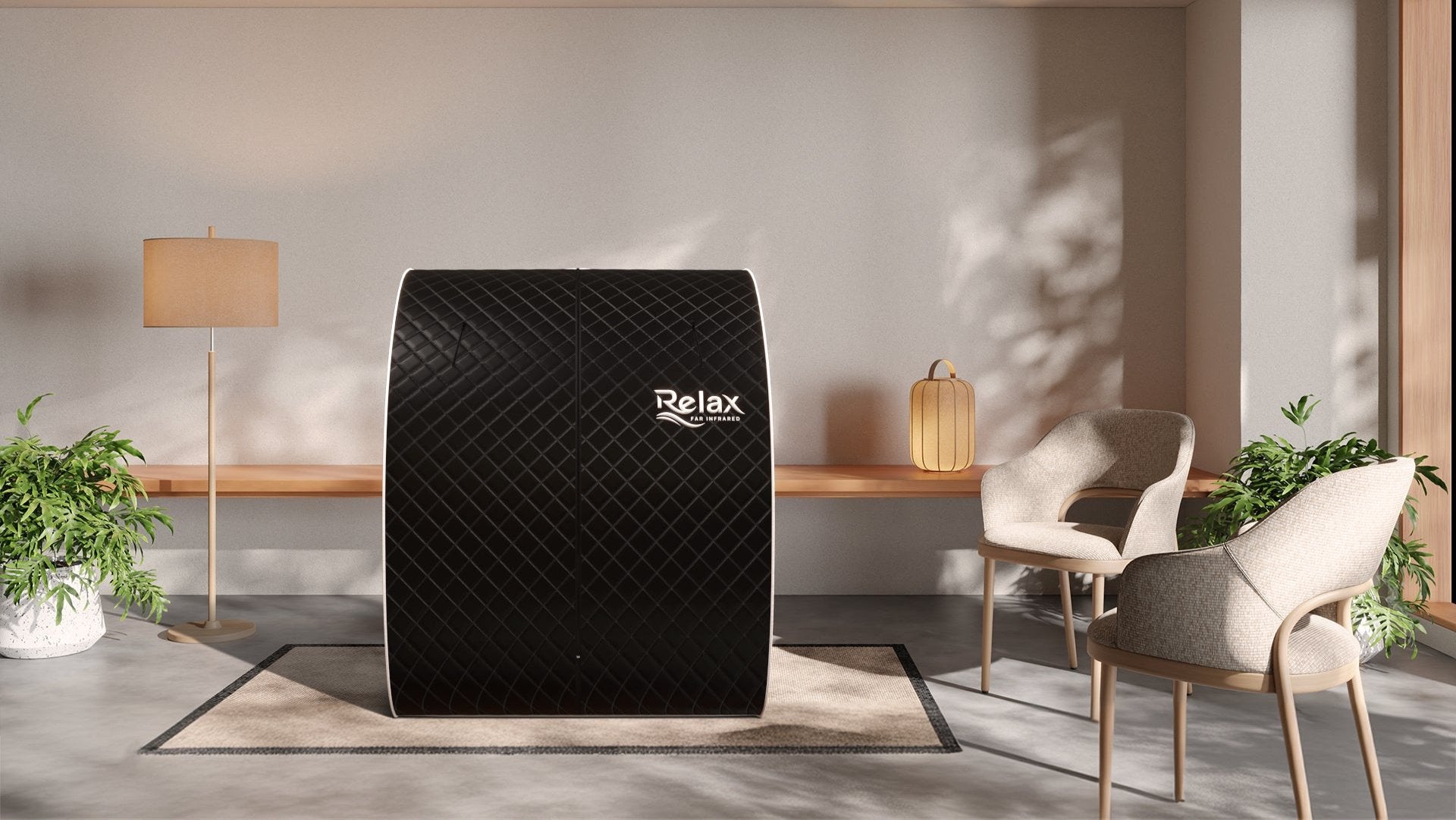
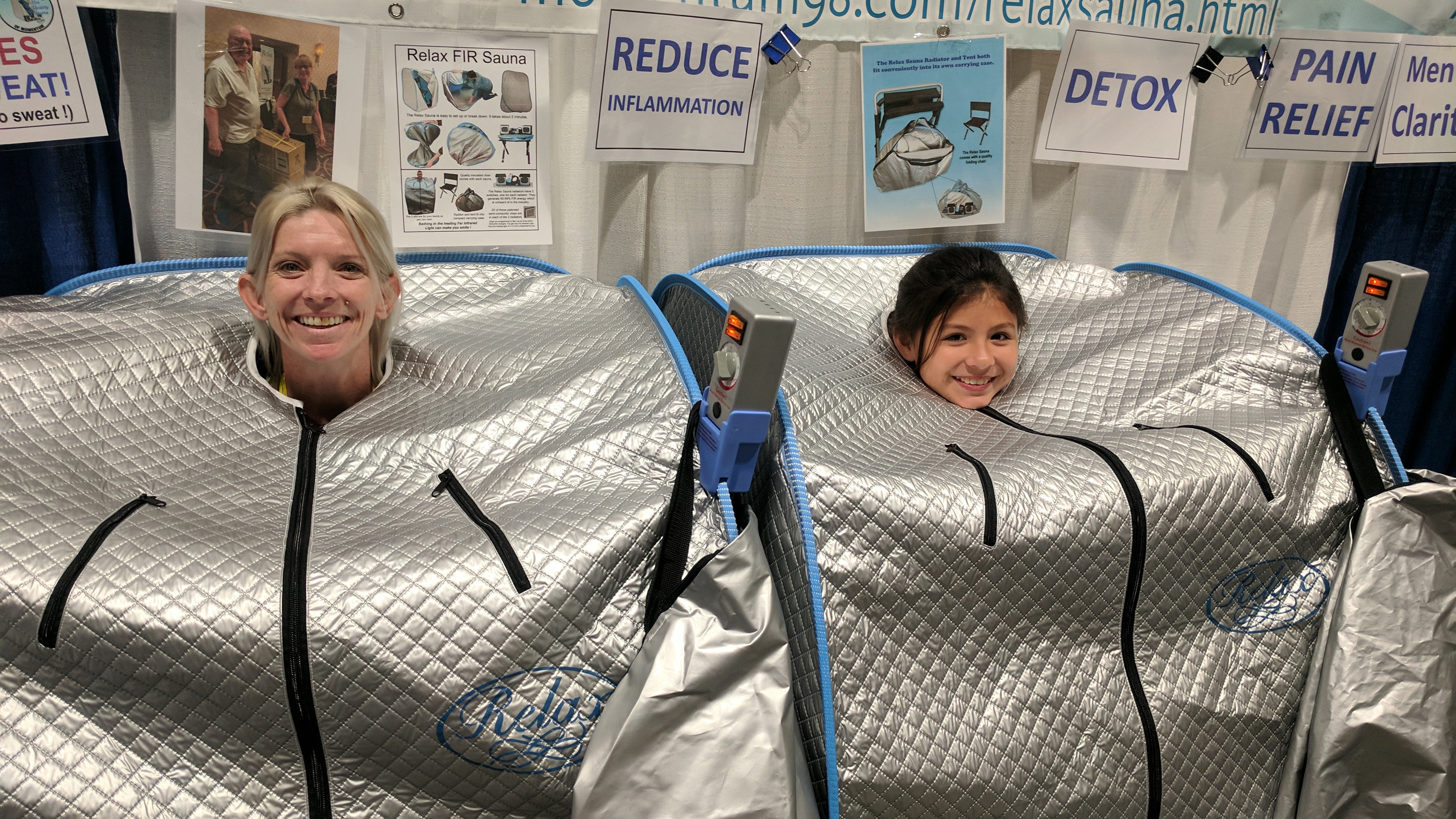
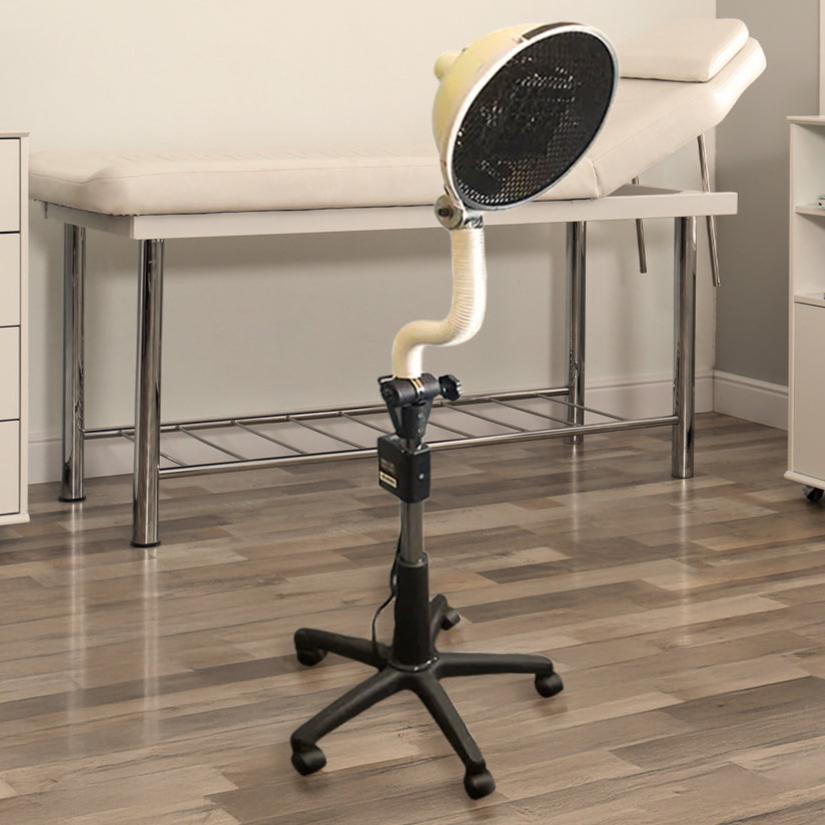
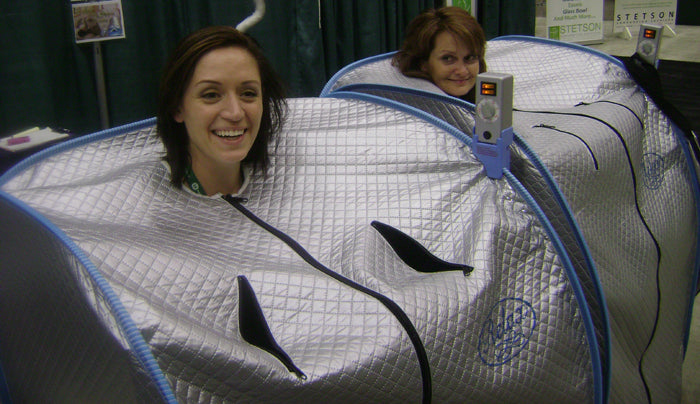
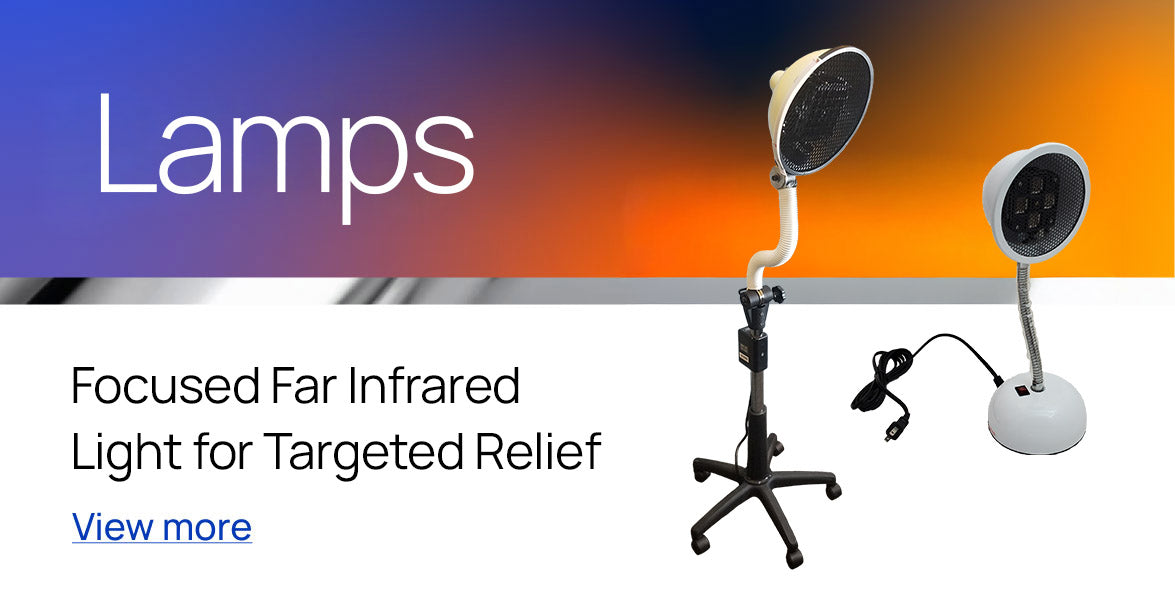
Far infrared radiation (approximately 4–14 µm) is absorbed predominantly by water in superficial tissues. Whole-body FIR, such as the Relax Sauna (PTC semiconductor emitters, 95–99% emissivity, 9.4 µm peak, head-out design), warms large muscle groups at lower air temperatures than traditional saunas, with lower cardiovascular strain (Mero et al. 2015).Wearable FIR textiles and mineral topicals re-radiate body heat as low-intensity infrared over many hours. Both formats have supporting controlled data in DOMS.
4. Clinical Evidence
4.1 Infrared sauna after resistance exercise
In a randomized crossover study, 16 male basketball players performed a demanding session of maximal strength and plyometric exercise followed by either an infrared sauna session at approximately 43 °C or 20 minutes of passive recovery (Ahokas et al. 2023). At 14 hours, soreness was lower and perceived recovery higher after the sauna (p<0.01), and the decline in countermovement jump height was attenuated (p<0.01). The sauna acutely raised heart rate and lowered HRV, but nocturnal heart rate and HRV did not differ, indicating no detriment to overnight autonomic recovery.
In ten physically active men, a 30-minute FIR sauna session improved neuromuscular recovery after endurance exercise but produced no additional benefit after a maximal strength session, with low cardiovascular strain (Mero et al. 2015). Benefit appears to depend on the type of exercise.
4.2 FIR textiles
In a randomized, double-blind, placebo-controlled trial, 21 elite soccer players performed 100 drop jumps and six hours later began wearing FIR-emitting garments (polyamide with embedded bioceramic, emissivity 0.88, 5–20 µm) or identical placebo garments (Loturco et al. 2016). Soreness remained elevated at 24, 48, and 72 hours with placebo, but had resolved by 72 hours with FIR, with moderate-to-large effect sizes at 48 and 72 hours. Jump performance, leg-press strength, thigh circumference, and creatine kinase did not differ between groups.
4.3 FIR versus cryotherapy
Nine trained runners completed a muscle-damaging treadmill trail run on three occasions, followed by whole-body cryotherapy, FIR, or passive recovery immediately and at 24 and 48 hours (Hausswirth et al. 2011). Maximal strength and perceived pain, tiredness, and well-being recovered within one hour with cryotherapy and within 24 hours with FIR, while passive recovery never returned to baseline over 48 hours. Creatine kinase did not differ between conditions. Cryotherapy produced faster short-term recovery; FIR clearly outperformed doing nothing.
4.4 Conventional heat
A network meta-analysis of 59 trials and 1,367 participants ranked hot packs first among ten modalities for DOMS pain relief within 24 and 48 hours, with cryotherapy ranking first beyond 48 hours (Wang et al. 2022). In a controlled study of 60 adults, an 8-hour low-level heat wrap applied immediately after exercise reduced soreness more than the same wrap applied 24 hours later (Petrofsky et al. 2017). Early application appears to matter.
APPRAISAL
The FIR studies are small (n=9–21), mostly male, and in trained populations. Soreness is a subjective outcome, and only the garment trial was double-blinded. Objective damage markers such as creatine kinase have not changed with FIR. Performance benefits are inconsistent across exercise types. The direction of effect on soreness is consistent across all four studies, which is encouraging given the different formats and protocols.
4.5 Evidence summary
| Study | Population | Intervention | Key finding | Tier |
|---|---|---|---|---|
| Ahokas et al. 2023 | Male basketball players, n=16 | IR sauna (43 °C) vs 20 min passive recovery after resistance + plyometric session; crossover | Less soreness and better perceived recovery at 14 h (p<0.01); CMJ decline attenuated (p<0.01); no effect on nocturnal HRV | Direct FIR, randomized crossover |
| Loturco et al. 2016 | Elite soccer players, n=21 | FIR-emitting garment (5–20 µm, emissivity 0.88) vs placebo garment after 100 drop jumps | DOMS resolved by 72 h with FIR vs persisting with placebo; moderate-to-large effect sizes at 48–72 h; no performance or CK differences | Direct FIR textile, double-blind RCT |
| Hausswirth et al. 2011 | Trained runners, n=9 | FIR vs whole-body cryotherapy vs passive, 3 sessions over 48 h | Strength and perceived pain recovered by 24 h with FIR, by 1 h with cryotherapy, not at all with passive; CK unchanged | Direct FIR, randomized crossover |
| Mero et al. 2015 | Physically active men, n=10 | 30 min FIR sauna after strength or endurance session | Improved neuromuscular recovery after endurance session; no added benefit after strength session; low cardiovascular strain | Direct FIR, crossover |
| Wang et al. 2022 | Network meta-analysis; 59 RCTs, n=1,367 | 10 heat and cold modalities | Hot packs ranked first for DOMS pain relief within 24 h and 48 h; cryotherapy ranked first beyond 48 h | Review (adjacent heat) |
| Petrofsky et al. 2017 | Healthy adults, n=60 | 8-h low-level heat wrap immediately vs 24 h post-exercise vs none | Immediate heat produced the largest soreness reduction (p<0.01) | Adjacent heat, controlled |
| Roberts et al. 2015 | Active men, n=21 (12 wk) and n=9 (acute) | Cold-water immersion vs active recovery after strength training | Cold-water immersion blunted gains in strength, muscle mass, and satellite-cell signaling | Comparator (cold) |
| Bagabir et al. 2025 | Human, heat-controlled 3-arm RCT | FIR vs heat vs control | FIR-specific upregulation of NOS3, TXNRD1, HSP70 via NRF2; improved endothelial function | Mechanistic |
5. Mechanistic Pathways
5.1 Perfusion and vascular signaling
FIR increases endothelial nitric oxide production through CaMKII-mediated eNOS phosphorylation (Park et al. 2013). A heat-controlled randomized trial showed FIR-specific upregulation of NOS3, TXNRD1, and HSP70 via NRF2 and improved endothelial function beyond the effects of equivalent heating (Bagabir et al. 2025). Increased perfusion of recovering muscle may support delivery of substrates for repair.
5.2 Heat shock proteins
HSP70 participates in protein folding and cytoprotection in stressed muscle. Its FIR-specific induction (Bagabir et al. 2025) offers a plausible protective pathway during remodeling, though HSP70 has not been measured in muscle after FIR in a DOMS model.
5.3 Tissue extensibility and nociception
Heating increases collagen extensibility (Lehmann et al. 1970), which may ease the passive stiffness of sore muscle and fascia. Warmth also activates cutaneous thermoreceptors that can modulate pain transmission, consistent with the rapid subjective relief seen with heat.
5.4 Adaptation compatibility
Unlike cold-water immersion, which blunted satellite-cell and p70S6K responses after strength training (Roberts et al. 2015), heat-based recovery has not been shown to impair adaptation. The FIR studies found no detriment to performance or overnight autonomic recovery (Ahokas et al. 2023).
6. Explicit Positioning
WHAT WE DO NOT CLAIM
- FIR does not flush lactic acid or "toxins" from muscle. Lactate does not cause DOMS, and creatine kinase was unchanged with FIR in controlled studies.
- FIR does not build muscle or increase strength gains on its own.
- FIR does not prevent injury, and soreness relief should not be used to justify training through pain from strains or tears.
- FIR has not been shown to outperform cryotherapy for the fastest short-term recovery; its advantage lies in comfort and adaptation compatibility.
- Results from FIR garments should not be presented as sauna outcomes, and results in trained young men may not generalize to all populations.
7. Open Question
WHAT A DEFINITIVE TRIAL WOULD NEED
Population: recreationally active adults of both sexes, with a standardized eccentric protocol.
Arms: whole-body FIR sauna, FIR garments, cold-water immersion, and passive control in a parallel design.
Primary endpoints: soreness (VAS and pressure-pain threshold) and maximal voluntary contraction at 24, 48, and 72 hours.
Mechanistic endpoints: creatine kinase, muscle oxygenation (NIRS), and muscle biopsy HSP70 and satellite-cell markers.
Training extension: an 8–12 week arm testing whether FIR recovery preserves or enhances strength and hypertrophy adaptations relative to cold.
8. Clinical Guidance
Do not
- Use FIR in place of assessment when soreness is severe, one-sided, sudden, or accompanied by a pop, bruising, or loss of function suggesting a strain or tear.
- Use heat when dark or cola-colored urine, extreme swelling, or disproportionate pain suggests exertional rhabdomyolysis; this requires urgent medical care.
- Recommend sauna sessions to dehydrated athletes immediately after prolonged exercise in the heat without rehydration.
- Market FIR as removing lactic acid or toxins.
Consider
- A 15–20 minute FIR sauna session within a few hours after hard or unaccustomed training, with fluid and electrolyte replacement.
- FIR garments or topicals during the 24–72 hour soreness window for prolonged, passive exposure.
- FIR as a heat-based alternative to routine cold-water immersion during training blocks focused on strength and hypertrophy.
- Pairing FIR with light movement and adequate sleep and protein, which remain the foundations of recovery.
9. Conclusion
Four small controlled studies using whole-body and wearable FIR consistently report less muscle soreness after damaging exercise, with some evidence of faster return of strength and power, and conventional heat ranks first for DOMS pain within 48 hours. FIR engages vascular and cytoprotective pathways and, unlike cold-water immersion, has not been shown to blunt training adaptation. FIR does not clear metabolic byproducts or build muscle. It is best positioned as a comfortable, adaptation-compatible recovery tool used early after demanding training, while larger trials in broader populations are undertaken.
References
-
Ahokas EK, Ihalainen JK, Hanstock HG, Savolainen E, Kyröläinen H. A post-exercise infrared sauna session improves recovery of neuromuscular performance and muscle soreness after resistance exercise training. Biol Sport. 2023;40(3):681-689. doi:10.5114/biolsport.2023.119289
-
Bagabir H, Mohammad OA, Lang C, et al. Far infrared therapy improves vascular function by enhancing endothelial function and decreasing arterial stiffness via cytoprotective pathways. Free Radic Biol Med. 2025;241:438-446. doi:10.1016/j.freeradbiomed.2025.09.039
-
Hausswirth C, Louis J, Bieuzen F, et al. Effects of whole-body cryotherapy vs. far-infrared vs. passive modalities on recovery from exercise-induced muscle damage in highly-trained runners. PLoS One. 2011;6(12):e27749. doi:10.1371/journal.pone.0027749
-
Lehmann JF, Masock AJ, Warren CG, Koblanski JN. Effect of therapeutic temperatures on tendon extensibility. Arch Phys Med Rehabil. 1970;51(8):481-487.
-
Loturco I, Abad CCC, Nakamura FY, et al. Effects of far infrared rays emitting clothing on recovery after an intense plyometric exercise bout applied to elite soccer players: a randomized double-blind placebo-controlled trial. Biol Sport. 2016;33(3):277-283. doi:10.5604/20831862.1208479
-
Mero A, Tornberg J, Mäntykoski M, Puurtinen R. Effects of far-infrared sauna bathing on recovery from strength and endurance training sessions in men. SpringerPlus. 2015;4:321. doi:10.1186/s40064-015-1093-5
-
Park JH, Lee S, Cho DH, Park YM, Kang DH, Jo I. Far-infrared radiation acutely increases nitric oxide production by increasing Ca²⁺ mobilization and Ca²⁺/calmodulin-dependent protein kinase II-mediated phosphorylation of endothelial nitric oxide synthase at serine 1179. Biochem Biophys Res Commun. 2013;436(4):601-606. PMID:23756809
-
Petrofsky J, Berk L, Bains G, Khowailed IA, Lee H, Laymon M. The efficacy of sustained heat treatment on delayed-onset muscle soreness. Clin J Sport Med. 2017;27(4):329-337. doi:10.1097/JSM.0000000000000375
-
Roberts LA, Raastad T, Markworth JF, et al. Post-exercise cold water immersion attenuates acute anabolic signalling and long-term adaptations in muscle to strength training. J Physiol. 2015;593(18):4285-4301. doi:10.1113/JP270570
-
Wang Y, Lu H, Li S, et al. Effect of cold and heat therapies on pain relief in patients with delayed onset muscle soreness: a network meta-analysis. J Rehabil Med. 2022;54:jrm00258. doi:10.2340/jrm.v53.331