Dr. Leslie Report
Clinical Evaluation of the Relax Far Infrared Sauna
Dr. Leslie Valle-Montoya’s Early Findings, Current Observations & Research Roadmap
Current Report · Four-Part Collection
From early observations to a measurable research program.
The early clinical evaluation introduced Dr. Leslie Valle-Montoya’s experience with the Relax Sauna. The current 44-page collection develops that starting point through a practitioner interview, a four-week observational pilot, a companion interpretation, and a broader review of measurable responses to far-infrared exposure.
The emphasis is on documenting what changed, when it was measured, and which observations need independent confirmation. These are exploratory findings, not proof of disease treatment or a substitute for controlled clinical trials.
1. From Skepticism to Clinical Discovery
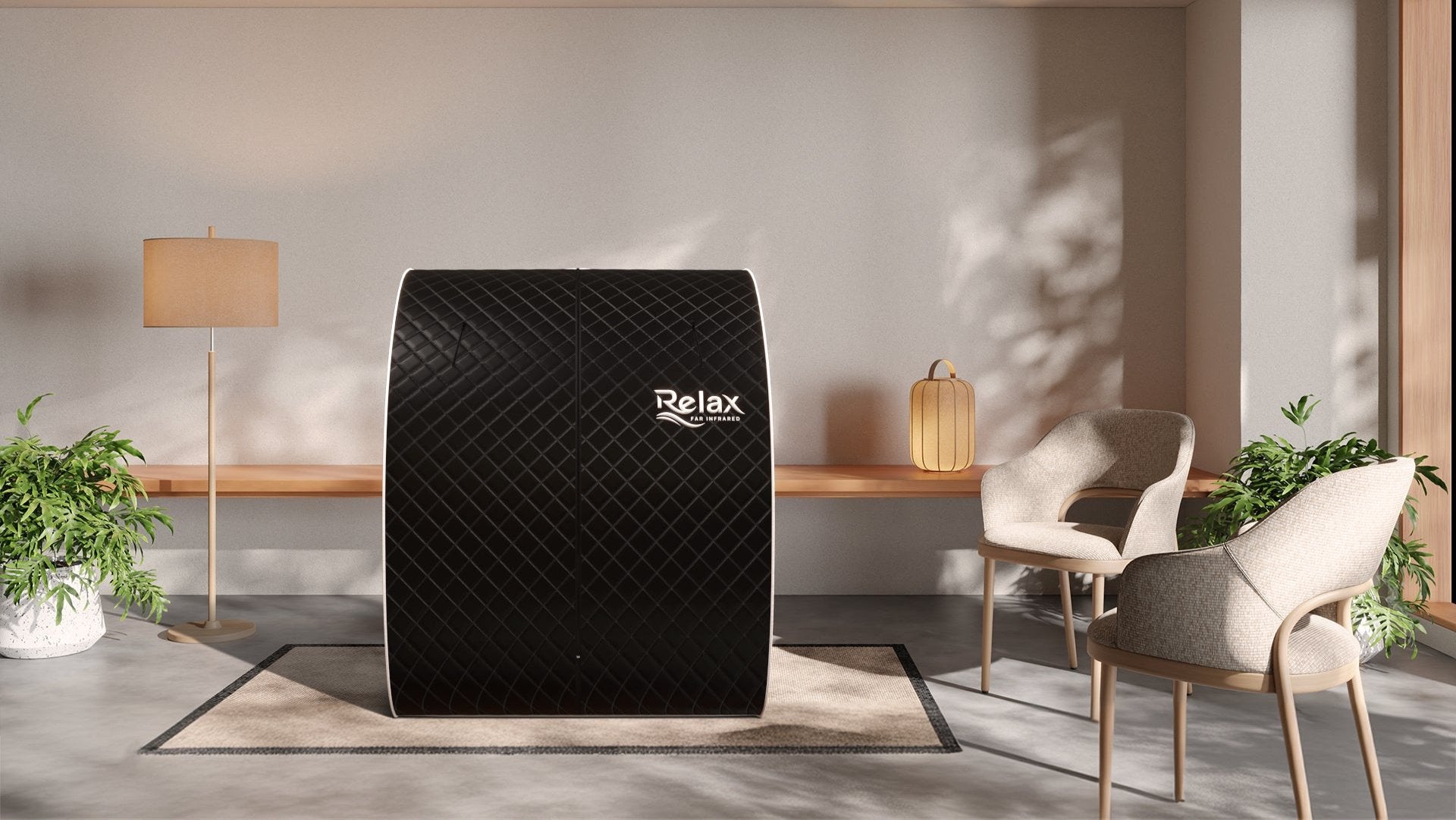
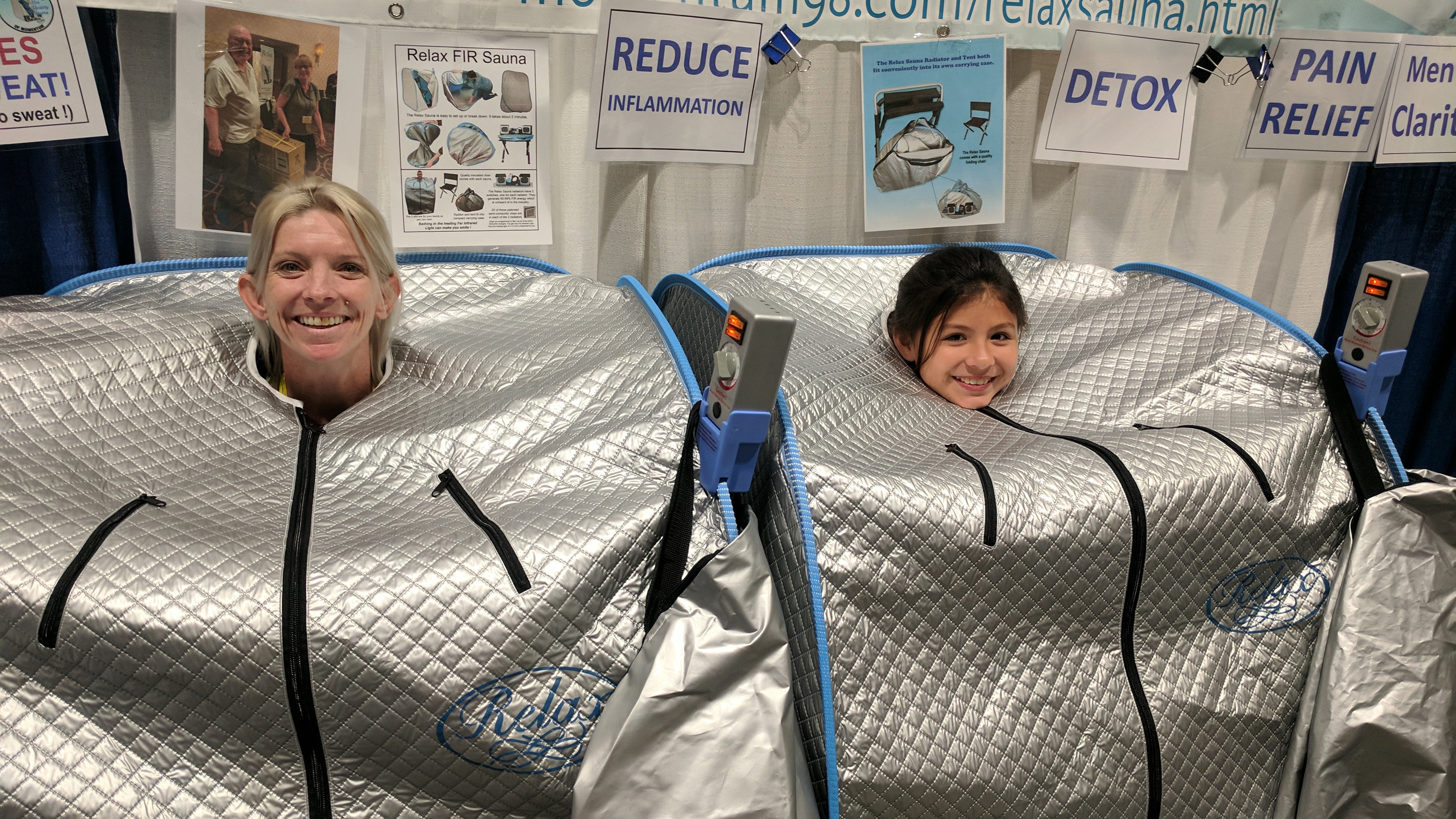
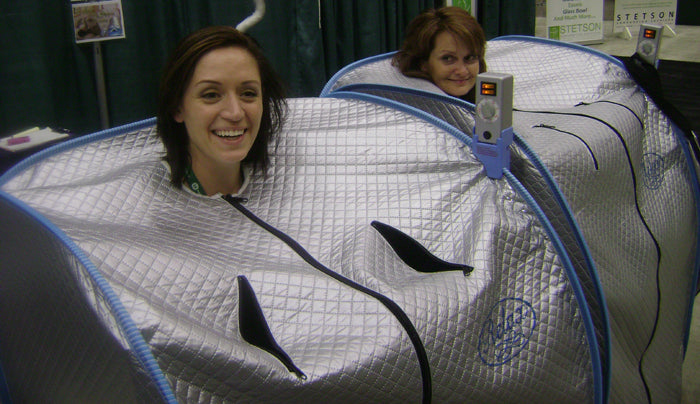
For Dr. Leslie Valle-Montoya, evaluating the portable Relax Far Infrared Sauna started not with instant enthusiasm, but with clear professional skepticism. As an experienced integrative clinician accustomed to large, substantial wooden infrared sauna cabins in personal wellness and patient care, the portable design initially raised doubts regarding its technical capabilities.
“I don't like this. I feel this is a cheap version of another sauna.”
— Dr. Leslie Valle-Montoya, Initial First Impression
She questioned whether a lightweight, portable construct could yield physiological outcomes comparable to the high-end wooden units she had previously integrated into clinical practice. However, that initial perspective transformed once active clinical testing began.

2. A Distinct Thermal & “Medicinal” Experience
The primary functional distinction identified by Dr. Valle-Montoya was rapid heating efficiency. Unlike traditional wooden saunas requiring extended preheating cycles, the Relax Sauna generated noticeable heat immediately upon activation, running at a core operating temperature of approximately 140°F.
Conventional Wooden Saunas
- Requires extended preheating periods before entry.
- Typically requires 45 to 60 minutes for a full thermal session.
- Described as relaxing, soothing, and passive.
Relax Portable FIR Sauna
- Immediate heat delivery upon activation without long preheats.
- Induces an intense thermal response in 20 to 30 minutes.
- Described in clinical terms as “medicinal” due to rapid physiological activation.
The Workflow Advantage
“If we can cut people's time almost in half and still get the same or probably better benefit out of it, it is a game changer,” Dr. Valle-Montoya observed. Shortening session duration directly improves patient compliance, daily practice scheduling, and clinical throughput.
3. Moving Beyond Subjective Experience
Dr. Valle-Montoya's evaluation model centers on a core principle in modern health technology: Can the physiological effects of a wellness intervention be objectively measured? Testing with approximately ten initial participants, her clinical methodology combines objective diagnostic tools to monitor physiological changes.
| Diagnostic Assessment Tool | Clinical Endpoint / Target | Preliminary Clinical Observation |
|---|---|---|
| OligoScan Assessment | Heavy metal excretion & tissue mineral status | Observed early shifts in mercury and aluminum after ~3 weeks |
| Heart-Rate Variability (HRV) | Autonomic nervous system & stress recovery | Monitored cardiovascular thermoregulatory stress & adaptation |
| Bioimpedance Analysis | Cellular health, phase angle, and fluid balance | Evaluating cellular vitality before and after thermal exposure |
| Dark-field Microscopy | Cellular morphology and blood profile | Examining structural micro-environmental changes |
In her early evaluation, one participant showed a measurable shift in mercury and aluminum levels after approximately three weeks of use, while a long-term detoxification patient demonstrated a more pronounced change when the Relax Sauna was introduced. Dr. Valle-Montoya emphasizes that these represent early clinical observations rather than completed controlled trial conclusions.
4. The “Dirty Towel” Phenomenon
One visually notable observation involved white towels intentionally placed inside the sauna during patient sessions. Dr. Valle-Montoya observed dark or black discolorations on the towels following certain sessions—a phenomenon she noted had not occurred in the same manner with her traditional wooden sauna systems.
Qualitative Observation
Visible dark residue accumulating on white towels post-session, indicating distinct sweat or particulate output during active far-infrared thermoregulation.
Scientific Boundary
Dr. Valle-Montoya explicitly noted: “I can't measure that black, those black spots” without formal laboratory chemical analysis, marking it as a hypothesis to be formally tested.
5. Integrative Clinical Framework & Research Roadmap
Rather than treating sauna therapy as an isolated amenity, Dr. Valle-Montoya incorporates far-infrared exposure into a multi-modal protocol including hydration, mineral support, cardiovascular recovery, and diagnostic tracking.
Future Research Roadmap
Future Environmental Toxicity Studies
Proposed pre- and post-testing protocol for modern environmental toxicants:
- Heavy Metals Testing: Tracking serial excretion profiles for lead, mercury, aluminum, and cadmium via objective screening.
- PFAS & Forever Chemicals: Measuring serum/tissue reduction of per- and polyfluoroalkyl substances following structured sauna regimens.
- Microplastics Elimination: Evaluating whether far-infrared hyperthermia aids in the systemic clearance of microplastic particles.
6. Inside the Current Report
7. The Four-Week Observational Pilot
A closer look at the program.
Ten adults aged 30–61 years—eight women and two men—completed a single-arm program at Brainwave Wellness Institute/Santa Barbara Longevity Center. The schedule was three sessions per week for four weeks, with 20–30 minute sessions at a nominal operating temperature of 140°F (60°C). Four participants used a recumbent unit and six used a seated unit. Electrolytes and binders were also part of the center’s program.
The 120 records are repeated measurements from 10 people, not 120 independent participants. Results were summarized descriptively; there was no control group and no planned inferential statistical testing.
What the session records showed
| Measure | Reported observation | How to interpret it |
|---|---|---|
| Systolic blood pressure | Lower in 110 of 120 paired sessions; average change approximately −6 mmHg. | A short-term recovery-phase observation, not proof of a lasting reduction in resting blood pressure. |
| Diastolic blood pressure | Lower in 100 of 120 paired sessions; average change approximately −7 mmHg. | Individual responses varied; measurements were taken around 10 minutes after exposure. |
| Heart rate | Higher in 120 of 120 paired sessions; average rise about 16 beats/minute. | Cardiovascular activation often persisted into early recovery. This differs from a change in resting heart rate across four weeks. |
| Oxygen saturation | Broadly stable; median change zero percentage points. | The recorded recovery measurements did not show a group-level oxygenation decline. |
| Facial surface temperature | Lower in 118 sessions and unchanged in two; average decrease about 0.3°F. | A glabellar skin reading after recovery, not a measurement of core body temperature. |
Source: current report, Part 2, pp. 13–17. Read the pilot report ↗
All ten participants completed the program, and no serious adverse events or withdrawals were reported. One early session was shortened because the participant felt too hot. This small program does not establish safety for all users.
8. HRV & Autonomic Measurement
Separating an observed signal from a clinical conclusion.
Heart-rate variability measures differences in the timing between successive heartbeats. The current report describes both immediate before-and-after observations and baseline-to-four-week recordings. Those are different measurement windows and should not be treated as interchangeable.
The individual example
The interview describes a system-generated neurohumoral-regulation value moving from about 22% to 37%, an “energy pyramid” index moving from about 105 to 137, and a psycho-emotional index moving from about 39 to 47 after a session. These are proprietary assessment outputs, not direct hormone measurements, cellular-energy measurements or independently validated mental-health outcomes.
The four-week observations
The program summary reports a favorable direction in resting autonomic measures, including increased RMSSD and SDNN and lower stress-index values. The report calls for complete paired data, raw HRV exports and standardized recording conditions before stronger conclusions are drawn.
HRV depends on recording duration, posture, breathing, hydration, timing and artifact handling. A lower software-generated “biological age” estimate is not evidence that a person became biologically younger.
Source: Part 1, pp. 3–7; Part 2, pp. 15–16. Read the HRV discussion ↗
9. OligoScan, Bioimpedance & Follow-Up Imaging
What changed—and what remains unproven.
OligoScan readings
The practitioner described lower device-reported aluminum and mercury values after repeated sauna use in an individual example. Other readings did not all move in the same direction. The report explicitly distinguishes a changed device reading from a demonstrated reduction in total body burden or a measured quantity eliminated in sweat.
Its proposed next step is corroboration with appropriate conventional blood, urine or sweat testing. OligoScan vitamin-related readings should not replace validated nutritional laboratory measurements.
Body composition and ultrasound
The pilot summary describes decreased fat mass index in seven participants, generally stable or slightly higher estimated skeletal muscle mass, and stable phase angle in seven participants with complete paired measurements. Hydration and fluid shifts can affect bioimpedance estimates; these findings do not establish fat loss or muscle gain caused by sauna use.
Follow-up thyroid imaging in two participants was reported to show fewer or smaller cystic findings. With no comparator and limited data, this does not establish treatment of thyroid nodules or thyroid disease.
The report’s central distinction: mobilization is not the same as elimination, and a change in a device-generated score is not automatically a meaningful clinical benefit.
Source: Part 1, pp. 8–10; Part 2, pp. 15–17. Read the measurement discussion ↗
10. The Physiological Fingerprint
A broader framework for asking better questions.
Part 4 organizes far-infrared research around thermal dose, cardiovascular response, hydration, autonomic recovery and functional outcomes. It separates direct human FIR findings from broader passive-heating research and from mechanisms that remain hypotheses.
How strong is each type of evidence?
Direct human FIR studies are the closest match to FIR-specific questions. Broader sauna and passive-heating studies can provide context but do not establish identical outcomes for every FIR device or protocol. Mechanistic plausibility and exploratory signals identify questions for research, rather than proving clinical efficacy.
Why temperature and exposure time matter
The report contrasts a moderate-temperature human FIR protocol that increased superficial muscle temperature without significantly raising intestinal core temperature with a hotter protocol that produced a larger core-temperature response. Findings from one thermal dose should not be generalized to all saunas or all sessions.
A practical measurement timeline
Resting heart rate, blood pressure, HRV, hydration, temperature and symptoms.
Exposure time, temperature, heart rate, perceived exertion and adverse symptoms.
Repeat vital signs, surface temperature, body weight and symptoms.
Track cardiovascular and autonomic recovery under standardized conditions.
Assess resting measures, sleep, soreness, fatigue and perceived recovery.
Sweating does not by itself prove detoxification. Immediate weight loss generally reflects fluid loss. Surface warming does not measure deep-organ perfusion. A measurable biological response is not automatically a therapeutic benefit.
Source: Part 4, pp. 25–43. Explore the proposed response panel ↗
11. Read Both Reports
Follow the evaluation from its early findings to the current collection.
Clinical Evaluation of the Relax Far Infrared Sauna
Dr. Leslie Valle-Montoya’s Early Findings and Vision for Integrative Wellness. The linked file contains four PDF pages, including its publication notice.
Read Early Report · PDFFull Performance Report · All Parts
The supplied 44-page collection: HRV and OligoScan observations, the four-week pilot, companion interpretation, and the physiological-response research framework.
Read Current Report · PDFReport figures retain their original publisher attribution. Current report: Science of Energy Healing / Overture Health Press / BeMore Advisory, LLC, © 2026. The page is an educational summary of the supplied reports.



Explore the Relax Far Infrared Line Up


Feel the Momentum