Far Infrared Therapy and Respiratory Mucus Clearance - Clinical
Far Infrared Therapy and Respiratory Mucus Clearance
Airway Temperature, Humidification and Whole-Body Heat, with Explicit Positioning on Airway Clearance Claims
ABSTRACT
Background: Mucociliary clearance (MCC) depends on mucus rheology, periciliary liquid hydration, ciliary beat frequency (CBF) and cough. Impaired clearance characterizes COPD, bronchiectasis, cystic fibrosis and acute respiratory infection. Patients frequently ask whether sauna use helps loosen or clear mucus.
Evidence: CBF is temperature-dependent ex vivo (Welchering et al. 2015). Interventions that deliver warm, humidified gas directly to the airways improve sputum clearance (Conway et al. 1992) and reduce exacerbation days in chronic airway disease (Rea et al. 2010). By contrast, sitting in hot sauna air did not alter nasal mucociliary transit in healthy adults (Lee et al. 1999), and heated humidified air has not shown clear benefit for the common cold (Singh et al. 2017). No study has examined far infrared (FIR) sauna effects on MCC.
Positioning: FIR sauna is not an airway clearance therapy. In head-out cabins the patient breathes ambient air, so the airway-directed warmth and humidity underlying the positive evidence are not delivered. Sauna use may be considered as a relaxing adjunct around established airway clearance techniques, with attention to hydration and to heat-sensitive airways.
1. Introduction
The mucociliary escalator comprises a gel-like mucus layer resting on a periciliary liquid layer, propelled by coordinated ciliary beating at roughly 10–15 Hz. Effective clearance requires adequate airway surface hydration, appropriate mucus viscoelasticity and intact ciliary function, with cough providing a backup mechanism. Clearance is impaired by smoking, infection, dehydration of the airway surface, primary ciliary dyskinesia, cystic fibrosis transmembrane conductance regulator dysfunction and chronic inflammation.
Established strategies include airway clearance techniques (active cycle of breathing, oscillating positive expiratory pressure, autogenic drainage), physical activity, inhaled hypertonic saline or mucoactive agents where indicated, and treatment of underlying disease. Heat is often assumed to "loosen" mucus, but the relevant variable is whether warmth and moisture reach the airway surface.
2. Airway Temperature and Ciliary Function
Ciliary beat frequency is strongly temperature-dependent. In human respiratory epithelium, control CBF was approximately 3.6 Hz at 15°C and 10.5 Hz at 37°C (Welchering et al. 2015). Inhaled cold, dry air cools and dehydrates the airway surface, which is one rationale for conditioning inspired gas in patients with impaired clearance.
Under normal breathing, however, the upper airway warms and humidifies inspired air efficiently, and airway temperature in the lower airways remains close to core temperature.
3. Airway Humidification
In bronchiectasis, nebulized humidification before chest physiotherapy increased sputum wet weight by a median 6 g and radiolabel clearance by 8.7% compared with physiotherapy alone in a small randomized crossover study (Conway et al. 1992). In a 12-month randomized trial of 108 patients with COPD or bronchiectasis, daily high-flow humidified air at 37°C reduced exacerbation days (18.2 vs 33.5, p=0.045), lengthened time to first exacerbation, and improved quality of life and lung function (Rea et al. 2010). These benefits arise from delivering conditioned gas to the airway surface at controlled temperature and full saturation.
For acute upper respiratory infection, a Cochrane review of six trials found that heated humidified air showed no clear benefit or harm, with low-quality evidence (Singh et al. 2017).
4. Sauna Exposure and Mucociliary Function
In 31 healthy adults, nasal saccharin transit time did not differ between room air (7.98 min), a 70°C dry sauna (8.47 min) and a 70°C wet sauna (7.59 min) (Lee et al. 1999). In COPD, repeated Waon sessions (60°C FIR sauna) improved FEF50 relative to usual care in a 20-patient pilot, without change in six-minute walk distance (Kikuchi et al. 2014); sputum and clearance were not measured.
Inhaled hot, humid air can provoke reflex bronchoconstriction in asthma (Hayes et al. 2012), so airway heating is not uniformly beneficial. Head-out FIR cabins avoid inhaled heat entirely, which improves tolerability for heat-sensitive airways but also means that the sauna does not act on the airway surface. Systemic sweating may reduce total body water; whether this meaningfully affects airway surface hydration has not been studied, but rehydration is prudent.
AIRWAY-INTERFACE DISTINCTION
Positive airway-clearance findings come from delivering warm, saturated gas directly to the airway surface or pairing clearance with humidification. Head-out FIR cabins leave inspired air at room temperature, avoiding hot/humid air triggers while not delivering airway-surface humidification.
4.1 Evidence Summary
| Study | Population / Model | Intervention | Key Finding | Tier |
|---|---|---|---|---|
| Welchering et al. 2015 | Human respiratory epithelium, ex vivo | Ciliary beat frequency at 15°C vs 37°C | Control CBF ≈3.6 Hz at 15°C vs ≈10.5 Hz at 37°C | Physiology (in vitro) |
| Rea et al. 2010 | COPD or bronchiectasis, n=108 | Daily high-flow humidified air at 37°C × 12 mo vs usual care, RCT | Exacerbation days 18.2 vs 33.5 (p=0.045); first exacerbation at 52 vs 27 days; improved QoL and lung function | Airway humidification, RCT |
| Conway et al. 1992 | Bronchiectasis, n=7 | Nebulized humidification before chest physiotherapy, randomized crossover | Sputum wet weight +6 g (median); radiolabel clearance +8.7% vs physiotherapy alone | Airway humidification, small |
| Lee et al. 1999 | Healthy adults, n=31 | Room air vs 70°C dry and wet sauna | Saccharin transit time 7.98, 8.47, 7.59 min; no significant difference | Sauna air (null) |
| Singh et al. 2017 (Cochrane) | 6 RCTs, n=387 | Heated humidified air for common cold | No clear benefit or harm; low-quality evidence | Systematic review (null) |
| Hayes et al. 2012 | Mild asthma n=6; healthy n=6 | Hot humid air (49°C) vs room air | Asthma SRaw +112% (hot) vs +38% (room air); cholinergic reflex | Safety (inhaled heat) |
| Kikuchi et al. 2014 | COPD, n=20 | Waon 60°C FIR sauna × 20 sessions + usual care vs usual care | FEF50 improved vs control (p=0.019); no 6MWT difference | Direct FIR, pilot |
| FIR sauna and MCC | — — | No study of FIR sauna on mucociliary clearance, sputum or cough identified | No study of FIR sauna on mucociliary clearance, sputum or cough identified | Not studied |
5. Explicit Positioning — What We Do Not Claim
- FIR sauna does not improve mucociliary clearance, loosen sputum or relieve congestion; this has not been studied.
- Head-out cabins do not humidify or warm the airways; airway humidification evidence does not transfer.
- Sweating does not drain the lungs or sinuses.
- FIR does not replace airway clearance techniques, mucoactive therapy, humidification devices or disease-specific treatment.
- FIR does not treat respiratory infection, bronchiectasis, COPD or cystic fibrosis.
6. Open Question — What a Definitive Study Would Need
7. Clinical Guidance
Do Not
- Present sauna as an airway clearance therapy or a substitute for humidification devices, mucoactive agents or clearance techniques.
- Recommend sauna during acute respiratory infection with fever, or with hemoptysis.
- Recommend steam rooms or humid saunas for patients with heat-sensitive or hyperresponsive airways.
- Recommend sauna for patients with unstable chronic lung disease without specialist input.
Consider
- For stable patients who enjoy sauna, scheduling the usual airway clearance routine after a session, when patients often feel more relaxed.
- Pre- and post-session hydration, especially in patients prescribed mucoactive therapy.
- Referring patients with chronic sputum production to respiratory physiotherapy for an individualized clearance plan.
- Discussing prescribed airway humidification where indicated, as a separate intervention with its own evidence.
8. Conclusion
Effective mucus clearance depends on conditions at the airway surface. Evidence supports warm, humidified gas delivered to the airways and established clearance techniques, while sauna air did not alter nasal clearance in healthy people and no study has examined FIR sauna and mucociliary clearance. Head-out FIR cabins are well tolerated by heat-sensitive airways precisely because they leave inspired air unchanged, which also places them outside the mechanisms that improve clearance. Their appropriate role is as an optional, relaxing adjunct to evidence-based airway care.
At a Glance
- Airway Surface & Humidification: Conditioned airway gas and clearance techniques act directly on clearance; sauna air showed no nasal transit change in healthy adults.
- Direct FIR Evidence: Zero trials identified on FIR sauna and MCC, sputum, or cough; Waon pilot in COPD showed FEF50 gain without 6MWT change.
- Head-Out Cabin Role: Ambient room-air breathing avoids hot/humid air bronchoconstriction triggers but does not humidify airways.
- Key Cautions: Acute febrile respiratory infection, hemoptysis, unstable chronic lung disease without specialist input, and hydration with mucoactive therapy.
- Role: Optional, relaxing adjunct around established airway clearance routines.
Clinical Precautions First
- Do not position sauna as an airway clearance therapy or substitute for mucoactive or humidification care
- Avoid during acute respiratory infection with fever or with hemoptysis
- Avoid humid/steam cabins in heat-sensitive or hyperresponsive airways
- Prioritize pre/post hydration and schedule clearance after relaxing sessions when stable
- Refer chronic sputum production to respiratory physiotherapy
The Relax Sauna
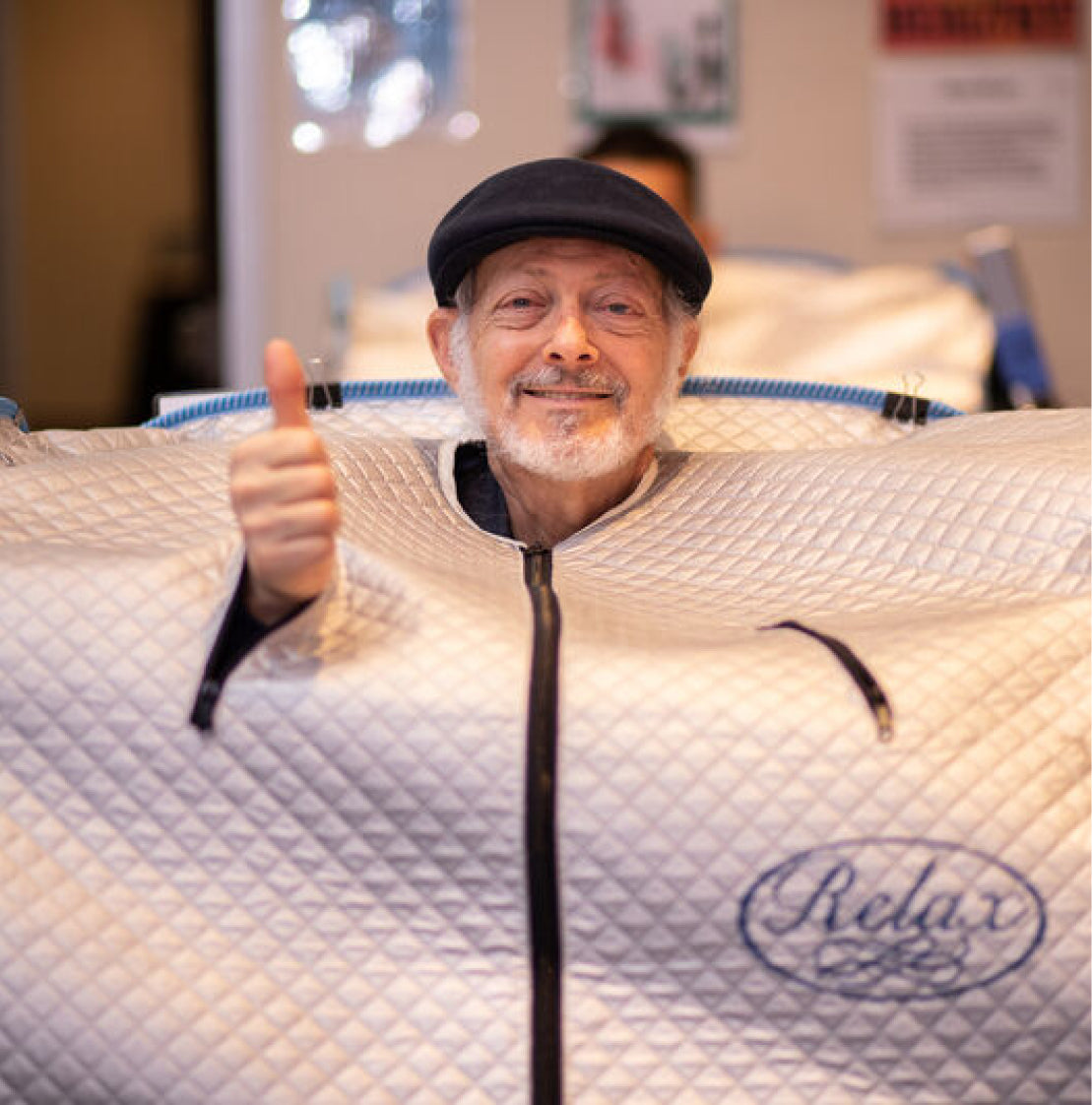
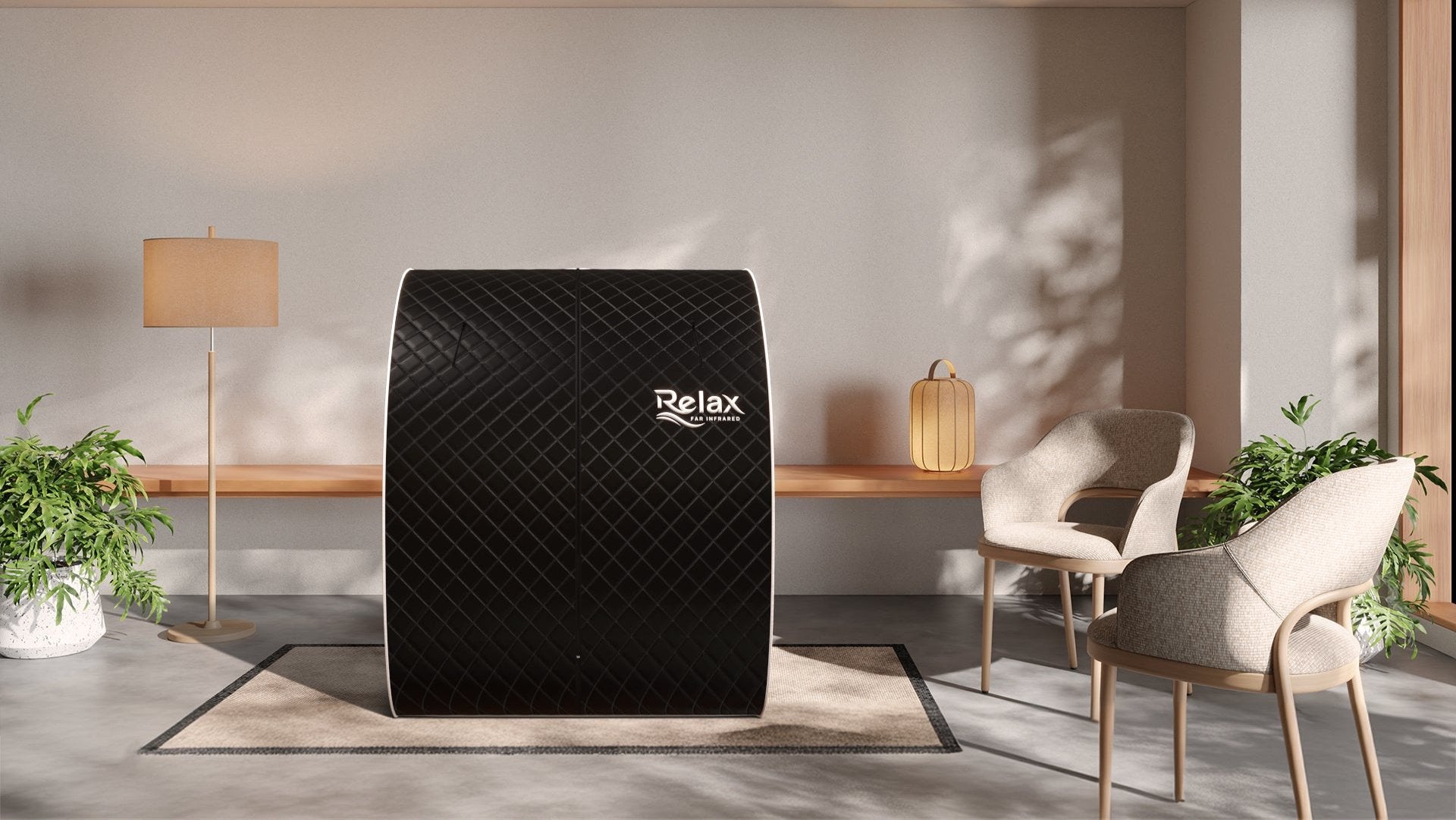
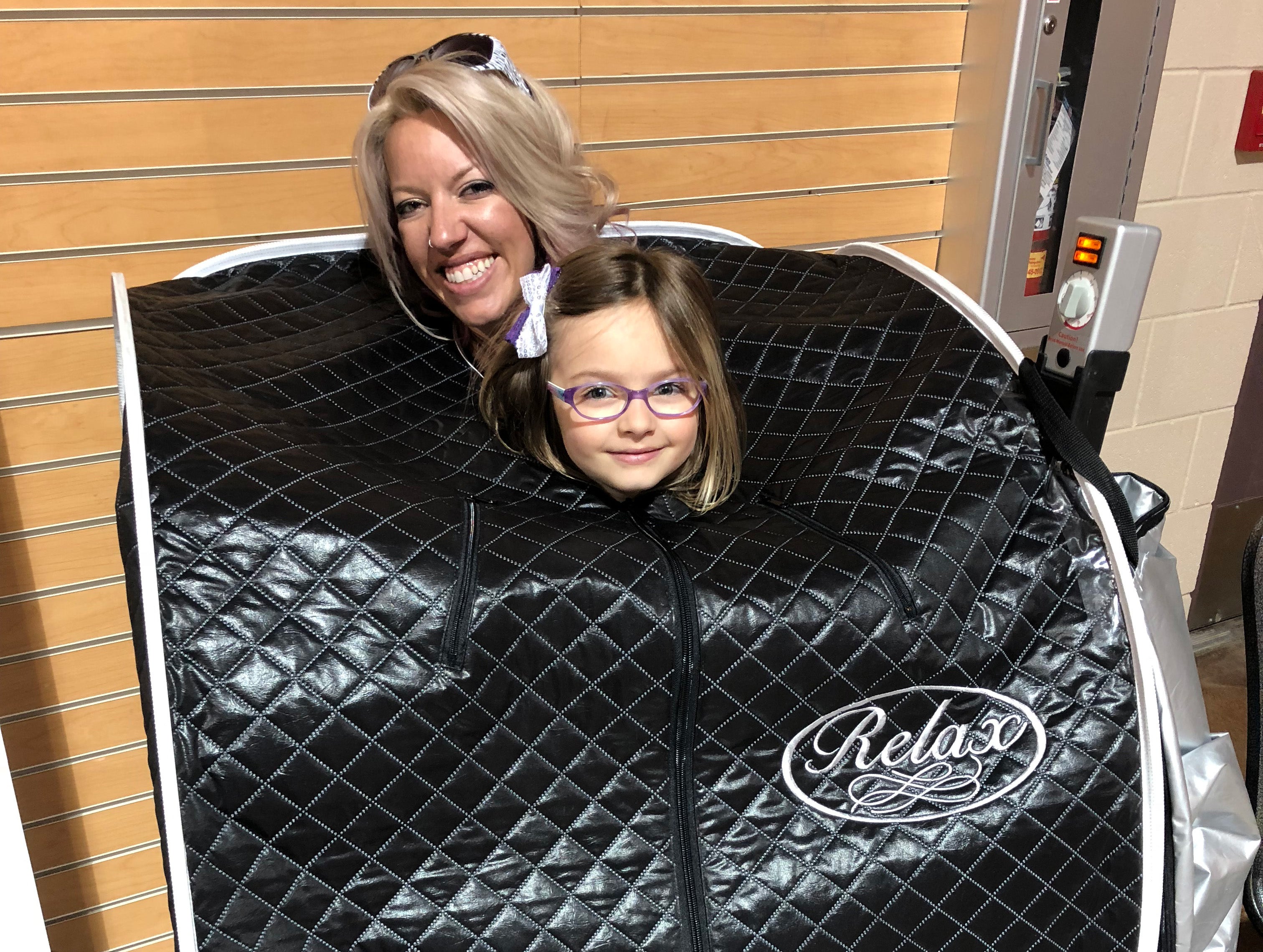
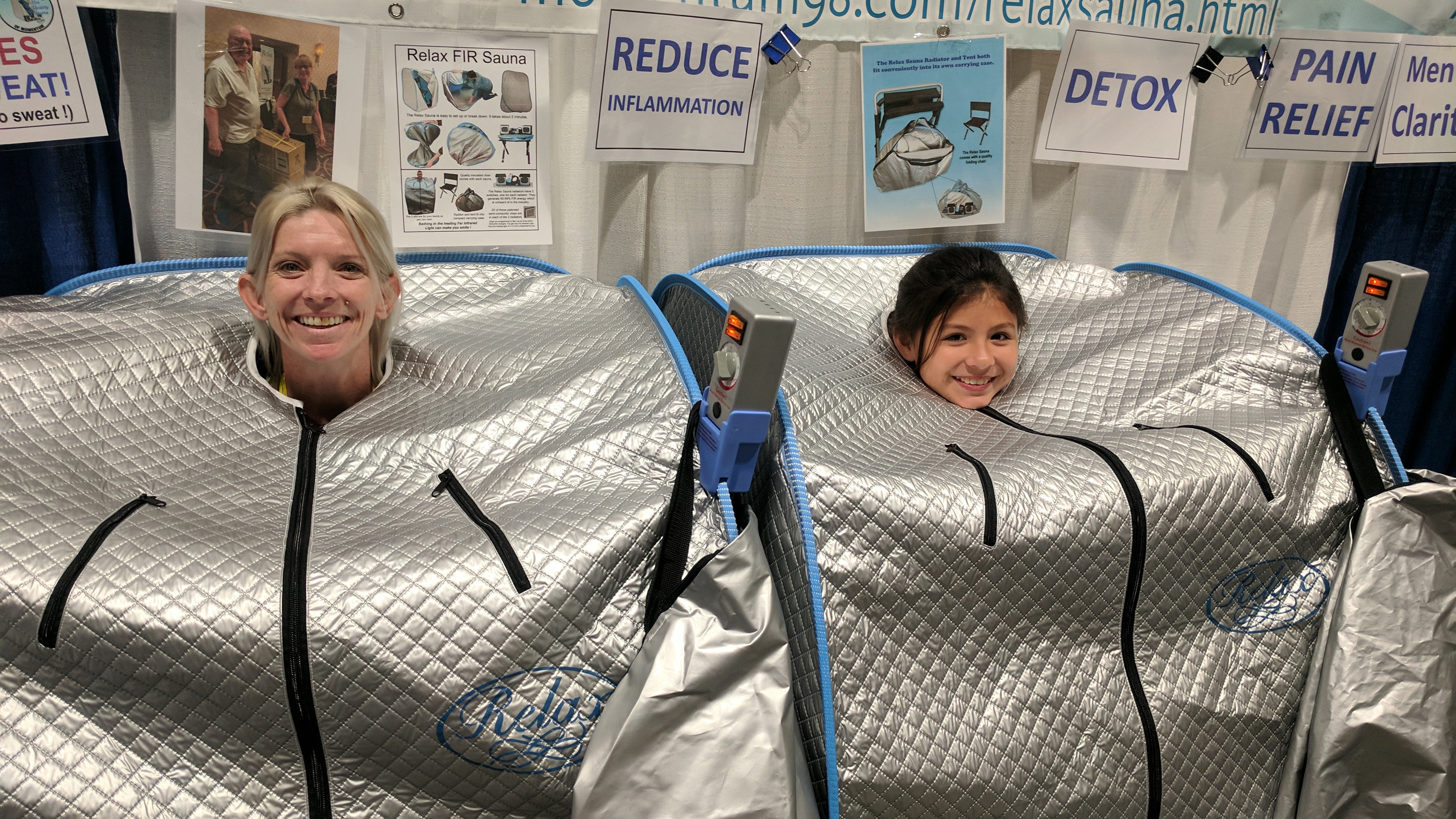
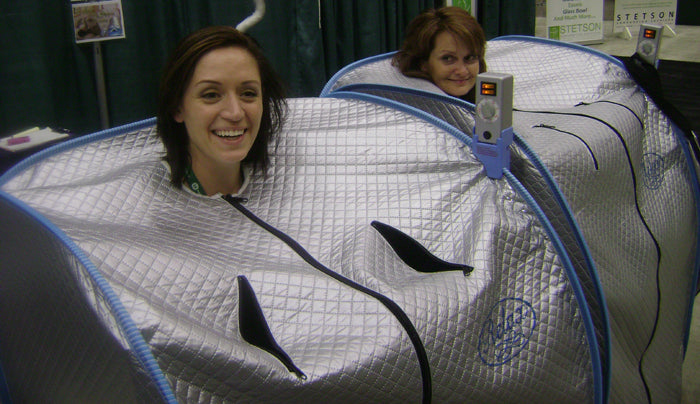
Head-out far-infrared cabin designed around ambient room-air breathing so users stay out of enclosed hot/humid cabin air, used only as an optional relaxation adjunct alongside established airway care.



Explore the Relax Far Infrared Line Up


Feel the Momentum