RELAX SAUNAS · CLINICAL SCIENCE REVIEW
Far Infrared Therapy in Post-Surgical Recovery
A Mechanistic and Clinical Review, with Explicit Positioning on Timing, Wound Safety, and Surgeon Clearance
ABSTRACT
Background. Recovery after surgery depends on wound healing, restoration of circulation, prevention of deconditioning, and progressive rehabilitation. Thermal therapy is attractive in principle but carries specific risks in the early post-operative period, including bleeding, wound maceration, infection, orthostatic hypotension, and burns in areas of reduced sensation.
Evidence. The only surgical setting with randomized FIR trials is the hemodialysis arteriovenous (AV) fistula, a surgically created vascular access. In Taiwanese trials, FIR improved fistula maturation, access flow, and unassisted patency (Lin et al. 2007; Lin et al. 2013; Huang et al. 2023), while a Danish study found no acute change in access flow and a multicenter Danish trial was designed to test the effect outside Taiwan (Lindhard et al. 2021). In rats, FIR accelerated full-thickness wound closure and collagen deposition without raising skin temperature (Toyokawa et al. 2003). Daily heating during immobilization preserved muscle and mitochondrial function in humans (Hafen et al. 2019).
Positioning. FIR is positioned for the later recovery and rehabilitation phases, only after the treating surgeon confirms incision healing and clearance for heat exposure. It is not a wound treatment, should not be applied to fresh incisions, and does not replace surgical follow-up or rehabilitation.
1. Introduction
Millions of surgical procedures are performed each year, from joint replacements and spinal surgery to abdominal, cardiac, and vascular operations. Enhanced recovery pathways emphasize early mobilization, multimodal analgesia, and prevention of complications. After discharge, patients commonly face incisional pain, stiffness, swelling, reduced circulation in the operated region, and loss of muscle mass and fitness.
Patients and practitioners increasingly ask whether far infrared (FIR) can support this recovery. The question requires careful handling. The direct surgical evidence is narrow, centered on vascular access in hemodialysis, and the early post-operative period carries risks that heat can aggravate. This review summarizes what is known and sets out a conservative, clearance-based framework for use.
2. Phases of Post-Surgical Recovery
- Early phase (approximately 0–2 weeks). Hemostasis, inflammation, and epithelial closure of the incision. Risks include bleeding, hematoma, wound dehiscence, infection, and venous thromboembolism. Surgeons generally advise keeping incisions clean and dry and avoiding baths, hot tubs, and heat until the incision is sealed.
- Intermediate phase (approximately 2–6 weeks). Incision closed, collagen deposition under way, progressive mobilization and early rehabilitation. Clearance for heat exposure typically comes from the surgeon in this window, depending on procedure and healing.
- Rehabilitation phase (weeks to months). Scar remodeling, restoration of range of motion, strength, and function. Stiffness and deconditioning are the dominant problems.
- Deconditioning throughout. Immobilization produces rapid muscle atrophy and mitochondrial decline, prolonging recovery.

3. Far Infrared Biophysics and Delivery Formats
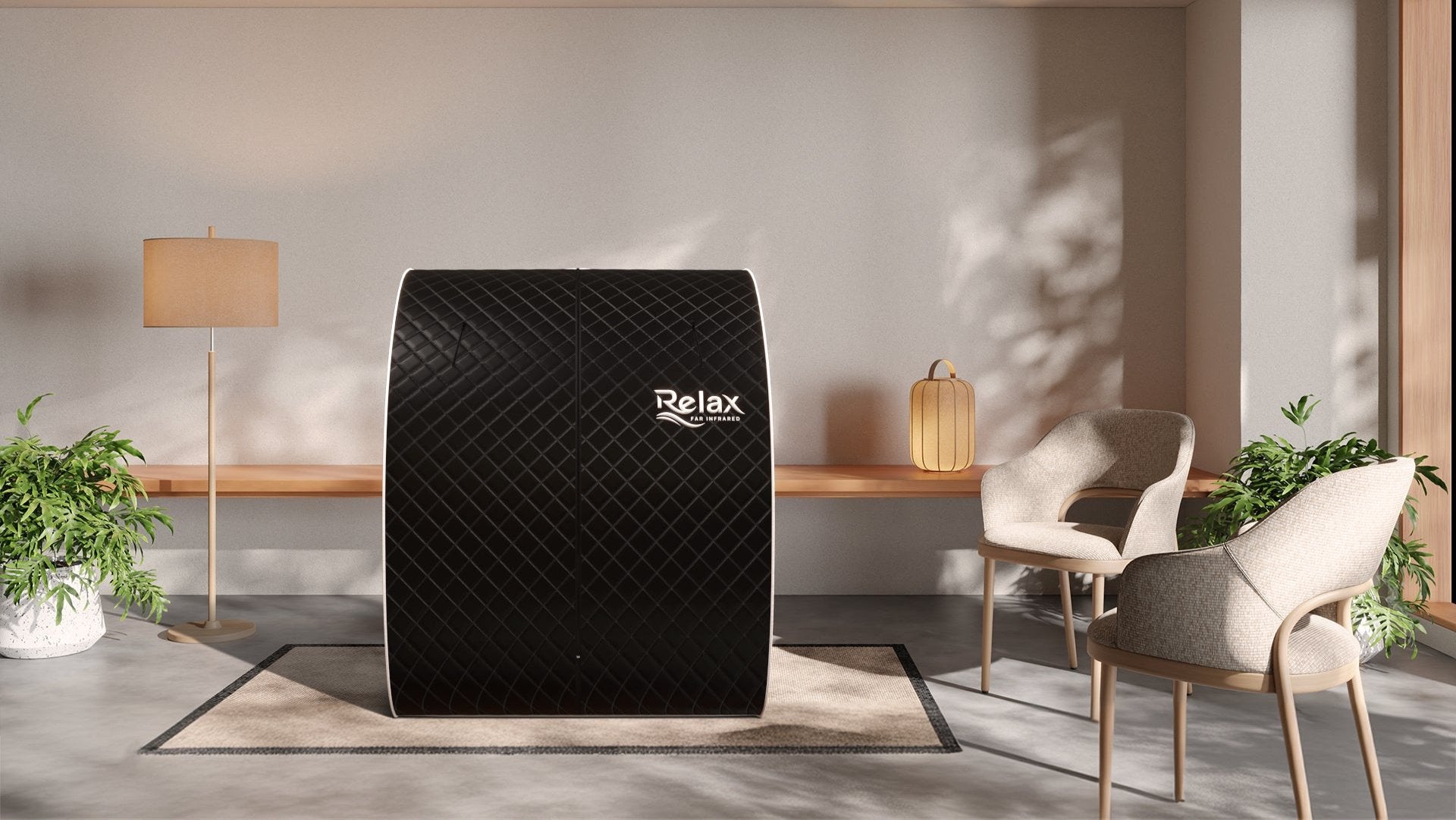
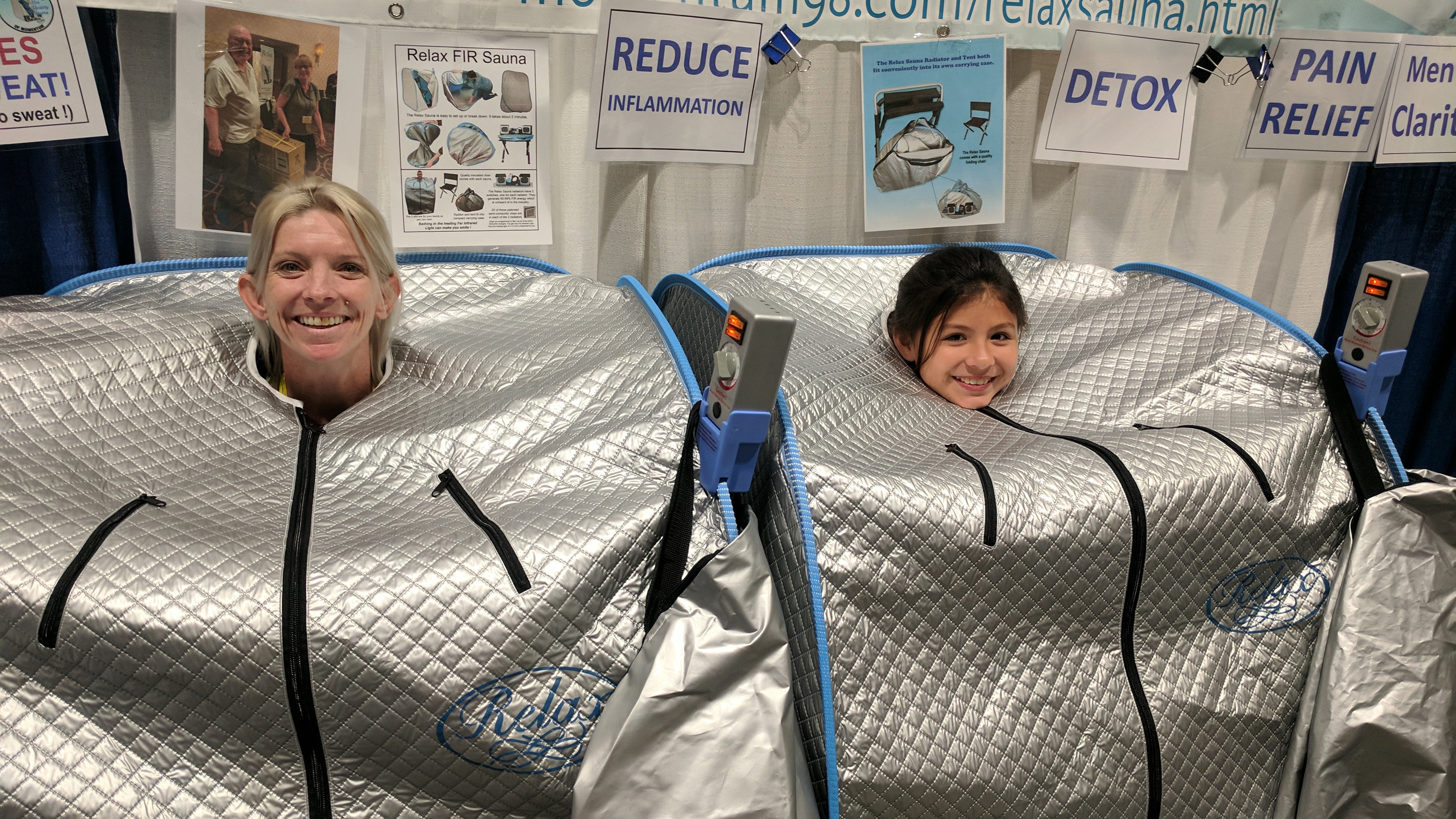
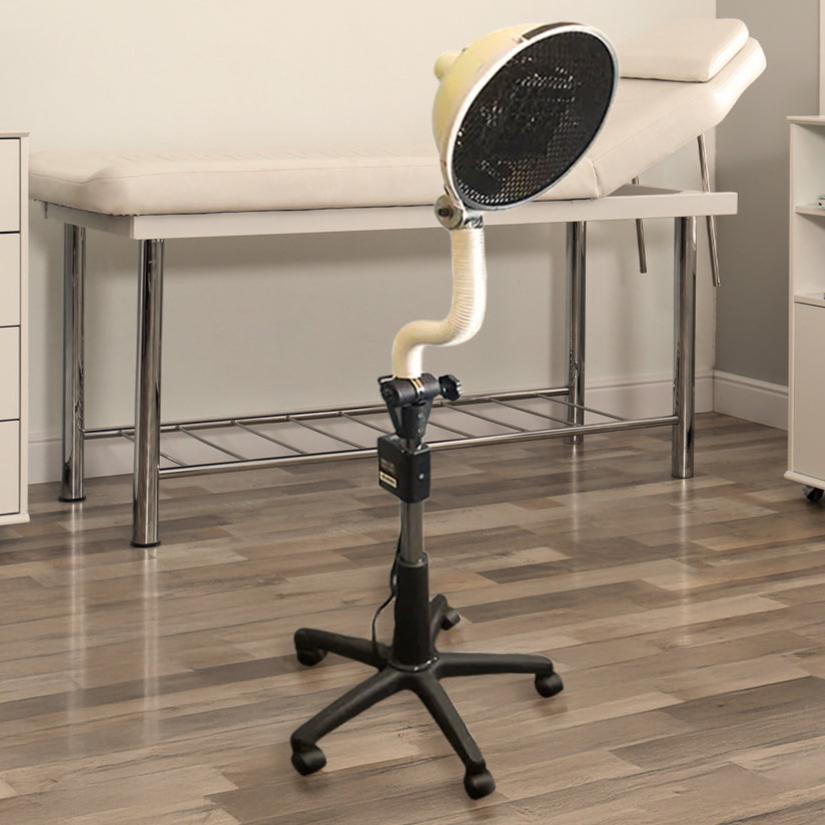
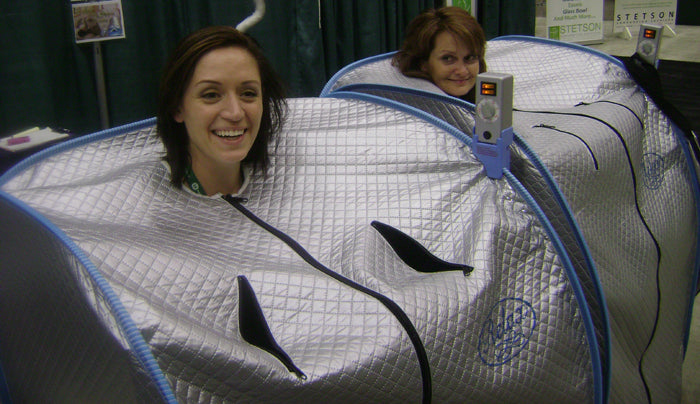
Far infrared radiation (approximately 4–14 µm) is absorbed predominantly in the superficial skin. Unlike shortwave or microwave diathermy, FIR does not selectively heat deep tissues or metallic implants. Whole-body FIR, such as the Relax Sauna (PTC semiconductor emitters, 95–99% emissivity, 9.4 µm peak, head-out design), raises core temperature and heart rate modestly and requires adequate hydration and cardiovascular stability. Local passive emitters, such as mineral topicals and carbon textiles, provide low-intensity exposure without meaningful heating and can be positioned away from incisions.

4. Clinical and Experimental Evidence
4.1 Surgically created vascular access
In a randomized trial of 145 hemodialysis patients, 40 minutes of FIR applied to the AV fistula during each dialysis session reduced access malfunction at one year from 30.1% to 12.5% and increased unassisted patency from 67.6% to 85.9% (both p<0.01) (Lin et al. 2007). An open-label randomized trial reported improved maturation of newly created fistulas with FIR (Lin et al. 2013). In 80 patients with new fistulas, FIR added to topical treatment shortened time to maturation (31.9 vs 42.5 days), lowered complications (30% vs 55%), and improved 18-month primary patency (79.5% vs 49.3%) (Huang et al. 2023).
APPRAISAL
These trials were open-label and conducted almost entirely in Taiwan and China. A small Danish randomized study found no acute change in access flow after a single FIR session, and a one-year multicenter Danish trial (FAITH on fistula) was designed specifically to test whether the effect holds in other populations (Lindhard et al. 2021). The fistula evidence demonstrates that FIR can benefit a surgically created vascular structure, but it should not be generalized to other operations.
4.2 Wound healing (animal)
In rats with full-thickness skin wounds, FIR (5.6–25 µm, peak 8–12 µm) accelerated wound closure by day 7 compared with both normal and temperature-matched controls, roughly doubled collagen fiber area (56.8% vs 26.5%), and increased fibroblast infiltration and TGF-β1 expression (Toyokawa et al. 2003). Skin temperature and blood flow did not change, indicating a non-thermal mechanism. No human trial has tested FIR on surgical incision healing.
4.3 Preventing disuse loss
In 23 adults whose leg was immobilized for 10 days, daily two-hour shortwave diathermy increased HSP70, limited loss of mitochondrial respiratory capacity (8% vs 27%), and reduced muscle atrophy (4.5% vs 7.6% loss of cross-sectional area) (Hafen et al. 2019). Diathermy heats deeper tissue than FIR and is contraindicated over metal implants; the finding supports the principle that repeated heating can protect muscle during disuse.
4.4 Evidence summary
| Study | Population / model | Intervention | Key finding | Tier |
|---|---|---|---|---|
| Lin et al. 2007 | Hemodialysis AV fistula, n=145 | FIR emitter 40 min per dialysis session vs control, 1 yr | Access malfunction 12.5% vs 30.1%; unassisted patency 85.9% vs 67.6% (both p<0.01) | Direct FIR, RCT (post-surgical access) |
| Lin et al. 2013 | New AV fistulas | FIR vs control after creation | Improved fistula maturation (open-label RCT) | Direct FIR, RCT |
| Huang et al. 2023 | New AV fistulas, n=80 | FIR + topical cream vs cream alone | Maturation 31.9 vs 42.5 days; complications 30% vs 55%; 18-month patency 79.5% vs 49.3% (all p<0.05) | Direct FIR, open-label RCT |
| Danish trials (FAITH, Hansen) | Hemodialysis AV fistula | FIR vs no FIR | Single session produced no acute change in access flow; one-year multicenter trial designed to test outside Taiwan | Honest counterweight / pending |
| Toyokawa et al. 2003 | Full-thickness skin wounds, rat | FIR 5.6–25 µm (peak 8–12 µm) vs temperature-matched control | Faster wound closure by day 7; collagen area 56.8% vs 26.5%; more TGF-β1 fibroblasts; skin temperature and blood flow unchanged | Direct FIR, animal |
| Hafen et al. 2019 | Healthy adults, 10-day immobilization, n=23 | Daily 2-h shortwave diathermy vs sham | Mitochondrial loss 8% vs 27%; muscle CSA loss 4.5% vs 7.6% | Adjacent deep heat |
| Kraaij et al. 2024 | Healthy adults, n=20 | FIR-emitting patch, phase 1 RCT | Increased local skin perfusion and microcirculation | Direct FIR, mechanistic |
| Bagabir et al. 2025 | Human, heat-controlled 3-arm RCT | FIR vs heat vs control | FIR-specific NOS3, TXNRD1, HSP70 upregulation via NRF2 | Mechanistic |
5. Mechanistic Pathways
5.1 Perfusion and vascular signaling
FIR increases local skin perfusion and microcirculation (Kraaij et al. 2024) and endothelial nitric oxide production (Park et al. 2013), and produces FIR-specific improvements in endothelial function via NRF2-regulated pathways, including upregulation of NOS3 and HSP70 (Bagabir et al. 2025). Induction of heme oxygenase-1 via NRF2 has been proposed as a mechanism for the fistula findings (Lin et al. 2007).
5.2 Fibroblast activity
Increased fibroblast migration, TGF-β1 expression, and collagen deposition in the rat wound model (Toyokawa et al. 2003) identify a plausible pathway for tissue repair. Because TGF-β1 also drives fibrosis, effects on scar quality in humans cannot be assumed.
5.3 Muscle and mitochondrial preservation
Heat-induced HSP70 and preserved mitochondrial function during immobilization (Hafen et al. 2019), together with FIR-specific HSP70 induction (Bagabir et al. 2025), suggest a role in limiting post-operative deconditioning.
5.4 Stiffness and rehabilitation readiness
Warming periarticular tissues increases extensibility and comfort, potentially supporting range-of-motion work during rehabilitation after orthopedic procedures.
6. Explicit Positioning
WHAT WE DO NOT CLAIM
- FIR should never be applied to fresh or unhealed incisions, and whole-body sessions require explicit surgeon clearance.
- FIR is not a wound treatment. Wound-healing effects have been shown only in animals.
- FIR does not reduce scarring, infection risk, or complication rates after general surgery; these have not been studied.
- Fistula results should not be generalized to joint replacement, spinal, abdominal, cosmetic, or other surgery.
- FIR is not a substitute for surgical follow-up, prescribed rehabilitation, or thromboprophylaxis.
7. Open Question
WHAT A DEFINITIVE TRIAL WOULD NEED
Population: adults after total knee arthroplasty or another common orthopedic procedure, enrolled after incision healing and surgeon clearance.
Arms: standard rehabilitation plus local and/or whole-body FIR versus rehabilitation plus sham, starting at a defined post-operative week.
Primary endpoints: knee range of motion and patient-reported function (e.g., KOOS) at 12 weeks.
Secondary endpoints: pain, swelling, quadriceps cross-sectional area, scar assessment (e.g., POSAS), and adverse events including wound complications.
Vascular access: completion and publication of multicenter fistula trials outside Taiwan.
8. Clinical Guidance
Do not
- Use whole-body or local heat before the incision is fully closed and the surgeon has cleared heat exposure; soaking or sweating over unhealed incisions risks maceration and infection.
- Apply heat with signs of infection (spreading redness, warmth, drainage, fever), hematoma, or suspected deep vein thrombosis (calf pain, swelling); these require urgent medical review.
- Apply local heat over skin with reduced sensation from nerve blocks, epidurals, or nerve injury.
- Recommend whole-body sessions to patients who are dehydrated, anemic, orthostatic, on newly started blood pressure or opioid medication, or who have unstable cardiovascular status.
- Use FIR as a reason to delay rehabilitation or follow-up.
Consider
- Passive local FIR on uninvolved regions or muscles proximal and distal to the surgical site during periods of reduced mobility, with surgeon agreement.
- After clearance, whole-body sessions starting at 10 minutes at a low setting and progressing gradually, with hydration and slow standing afterward.
- Local FIR around, and later over, a fully healed scar to ease stiffness before rehabilitation exercises.
- For hemodialysis patients with AV fistulas, discussing the fistula evidence with the nephrology and vascular access team.
9. Conclusion
Randomized trials support FIR for improving the maturation and patency of surgically created AV fistulas, although confirmation outside Taiwan is pending. Animal data show non-thermal acceleration of wound healing, and heat preserves muscle during immobilization. There are no randomized trials of FIR after joint replacement, spinal, abdominal, or other common operations. FIR is best positioned as a later-phase adjunct for circulation, stiffness, and deconditioning, introduced only after incision healing and surgeon clearance, with clear boundaries on wound-healing and complication claims.