Parkinson's Disease - Medical Page
Infrared Therapies and Parkinson's Disease
An Absent Far-Infrared Evidence Base, a Wavelength-Mismatched Preclinical Literature, and Autonomic and Device Safety Considerations
1. Overview
We did not identify a controlled trial of far infrared (FIR) sauna, FIR-emitting devices, or whole-body hyperthermia as a treatment for Parkinson's disease (PD), and in the searches conducted for this review we did not identify a FIR-specific study in an animal model of PD.
The infrared literature in PD is dominated by near-infrared photobiomodulation (PBM) at roughly 670–810 nm, tested in toxin-based rodent models and delivered as non-thermal light. That is a different spectral band, with a different proposed mechanism and delivery route, from FIR sauna, and its findings do not transfer to it. This review separates the two literatures, states the human evidence gap, and gives the most clinically actionable content available: PD-specific autonomic, fall-risk, medication, and implanted-device considerations. Absence of identified studies reflects the searches conducted here, not a systematic review.
2. Human Evidence
No human trial of FIR sauna or FIR devices in PD was identified.
Intraventricular Illumination Device (Ev-NIRT)
The only human infrared-in-PD work found was an early-phase safety and tolerability study of a surgically implanted near-infrared (670 nm) intraventricular illumination device in seven patients with very early PD (Ev-NIRT, NCT04261569). This is an invasive neurosurgical intervention using a non-thermal near-infrared source and is not relevant to the evaluation of FIR sauna.
3. Preclinical Infrared Literature in PD Models Is Near-Infrared Photobiomodulation
Direct Transcranial & Intracranial NIR
In an acute MPTP mouse model, near-infrared light treatment yielded significantly more surviving dopaminergic cells in the substantia nigra pars compacta than MPTP alone (approximately 35–45% more), without protection in the zona incerta–hypothalamus (Shaw et al., PMID 19882716). The LED used in related work generated no heat. Intracranial delivery through an implanted fiber device protected nigral dopaminergic cells against MPTP in mice (Moro et al. 2014, J Neurosurg 120(3)) and has been reported in a 6-hydroxydopamine rat model.
Remote Photobiomodulation
670 nm light directed at the dorsum and hindlimbs of mice for 2, 5, or 10 days before MPTP, with the head not irradiated, significantly attenuated MPTP-induced loss of midbrain tyrosine hydroxylase-positive cells after 10 days of pre-conditioning (PMID 30625333). A later study reported neuroprotection against MPTP when PBM was targeted at the abdomen or legs (Gordon et al. 2023, Eur J Neurosci).
4. Why These Findings Do Not Transfer to FIR Sauna
- Wavelength: Red/near-infrared light (≈670–810 nm) versus far infrared (4–14 µm), roughly an order of magnitude or more apart in wavelength.
- Proposed Mechanism: Mitochondrial photobiomodulation versus the thermal and water-absorption interactions relevant to FIR.
- Delivery: Low-heat LED, laser, or implanted fiber versus a radiant heater producing measurable heating.
- Model: Acute neurotoxin lesion models in rodents, which do not reproduce the human disease course. Consistent with the divergent FIR-specific findings in Alzheimer's mouse models reviewed in this series, preclinical infrared-brain results are not uniform across wavelength, model, or protocol, and should not be pooled.
5. Heat Physiology in Parkinson's Disease
A 2019 narrative review concluded that there is limited research on body warming in patient populations with neurodegenerative disease, noted that neural degeneration in higher-order centers including the hypothalamus is associated with impaired sudomotor function in PD that may influence tolerance to body warming, and cited an association between poor perfusion in several brain regions and motor and cognitive impairment in PD (Front Physiol 2019;10:1556).
The same review suggested infrared sauna, reported to impose lower cardiovascular strain than traditional sauna in a small study (Mero et al. 2015, as cited), as an avenue that could be investigated. This is a research suggestion, not a finding. Observational associations between sauna bathing and neurodegenerative disease risk described in that review concern traditional sauna and neurodegenerative disease generally, and are not evidence for FIR in PD.
A preliminary study using infrared thermography (a measurement tool, not a therapy) in 8 patients with PD and 8 healthy controls reported impaired thermal recovery after a cold-stress test in PD, interpreted as peripheral autonomic dysfunction, with no correlation to clinical and autonomic scores (Sensors 2025;25(17):5243). Small and exploratory, it is consistent with the broader recognition of thermoregulatory impairment in PD.
6. Mechanistic Rationale — Transferred, Not Direct
FIR's best-characterized effects concern peripheral and skin perfusion and endothelial function in small studies of healthy adults, including a single-blinded pilot in 50 healthy volunteers in which localized FIR improved endothelial function and arterial stiffness where a skin-temperature-matched heating pad did not (Bagabir et al. 2025, Free Radic Biol Med 241:438-446).
No human study has shown that FIR affects cerebral perfusion, dopaminergic function, or motor outcomes in PD. Extending peripheral vascular findings to the brain in PD is a hypothesis.
7. Correcting Circulating Claims — Practitioner Advisory
What Patients May Bring
- Wellness and vendor content stating that infrared sauna benefits Parkinson's disease: We identified no PD-specific FIR or infrared-sauna trial behind such statements.
- Photobiomodulation papers (near-infrared, mostly rodent) cited as though they supported sauna: The wavelength, mechanism, delivery, and model all differ, as detailed above.
8. Safety Considerations Specific to PD — Clinical Cautions
- Orthostatic Hypotension: Described as the most disabling feature of cardiovascular autonomic dysfunction in PD, and impaired thermoregulation and hyperhidrosis can contribute to reduced intravascular volume (PMC9146778). Heat-induced vasodilation and sweating can compound this; post-session standing and transfers are a fall risk.
- Sudomotor Impairment: Impaired sudomotor and thermoregulatory function may blunt the normal response to overheating. A conservative initial exposure with monitoring is appropriate.
- Gait & Mobility Hazards: Gait, balance, rigidity, and freezing make entry, seating, and exit the highest-risk moments; supervised transfers are advisable.
- Medication-Induced Hypotension: Dopaminergic and other PD medications can contribute to hypotension (drug-induced); review with the treating neurologist before regular heat exposure.
- Deep Brain Stimulation (DBS) Guidance: Manufacturer labeling (Medtronic, Abbott, Boston Scientific) contraindicates diathermy — shortwave, microwave, and therapeutic ultrasound — because energy can be transferred through the implanted system with risk of tissue injury. FIR sauna is a radiant heater, not diathermy, and the labeling reviewed does not address infrared saunas specifically. Clinic guidance (UC Davis Health) advises avoiding focusing energy or heat sources over the implanted pulse generator in the chest or abdomen. Electrical and heat exposure should be confirmed with the DBS programming team before use, and device-directed energy (for example, a lamp aimed at the chest) avoided. See this series' companion review on cardiac conduction disease for implanted-device considerations.
- Cognitive Impairment: PD dementia and cognitive impairment reduce the reliability of self-report during sessions; see the companion Alzheimer's/Cognitive Decline review.
- Representation Guardrail: No claim in this document should be represented as evidence that FIR treats, prevents, or slows Parkinson's disease.
9. Evidence Grading Summary
| Domain | Model / Modality | Finding | Tier |
|---|---|---|---|
| FIR sauna / FIR devices, human PD | N/A | No trial identified | ABSENT |
| FIR, animal PD models | N/A | None identified in searches conducted | ABSENT (SEARCH-LIMITED) |
| Near-infrared PBM (670/810 nm) | MPTP and 6-OHDA rodents (non-thermal light) | More surviving nigral dopaminergic cells (~35–45% in one MPTP study); remote PBM also protective | POSITIVE PRECLINICAL (DIFFERENT MODALITY) |
| Implanted near-infrared device, human | Intraventricular 670 nm (n=7) | Early safety and tolerability study (NCT04261569) | EARLY PHASE (NOT FIR) |
| Heat tolerance and autonomic dysfunction in PD | Narrative review; thermography (n=16) | Impaired sudomotor and thermal recovery described | RECOGNIZED CONCERN (LIMITED DATA) |
| Sauna and neurodegeneration risk | Observational, traditional sauna | Neurodegenerative disease generally, per the 2019 review | NOT FIR / NOT PD-SPECIFIC |
Clinical Positioning Summary
FIR sauna and FIR-emitting devices should not be presented as a treatment for Parkinson's disease or as supported by the near-infrared photobiomodulation literature. For patients who ask, the most useful content is practical: autonomic and fall-risk precautions, medication review, and DBS-team confirmation before use, with any use framed as a comfort choice within existing care and not a therapy.
At a Glance
- Human FIR Data: Absent for Parkinson's disease
- Preclinical NIR Data: Rodent models use non-thermal light; non-transferable
- Key Risks: Orthostatic hypotension, fall hazards, blunted sweating
- DBS Implants: Confirm with care team; avoid direct emitter focus
- Framing: Comfort modality only; zero therapeutic claims
Clinical Precautions First
- Review dopaminergic drugs for orthostatic hypotension risk
- Ensure supervised transfers for gait freezing/instability
- Verify DBS implant safety with programming team
- Start with conservative exposure & active monitoring
- Do not represent FIR as treating or slowing PD
The Relax Sauna
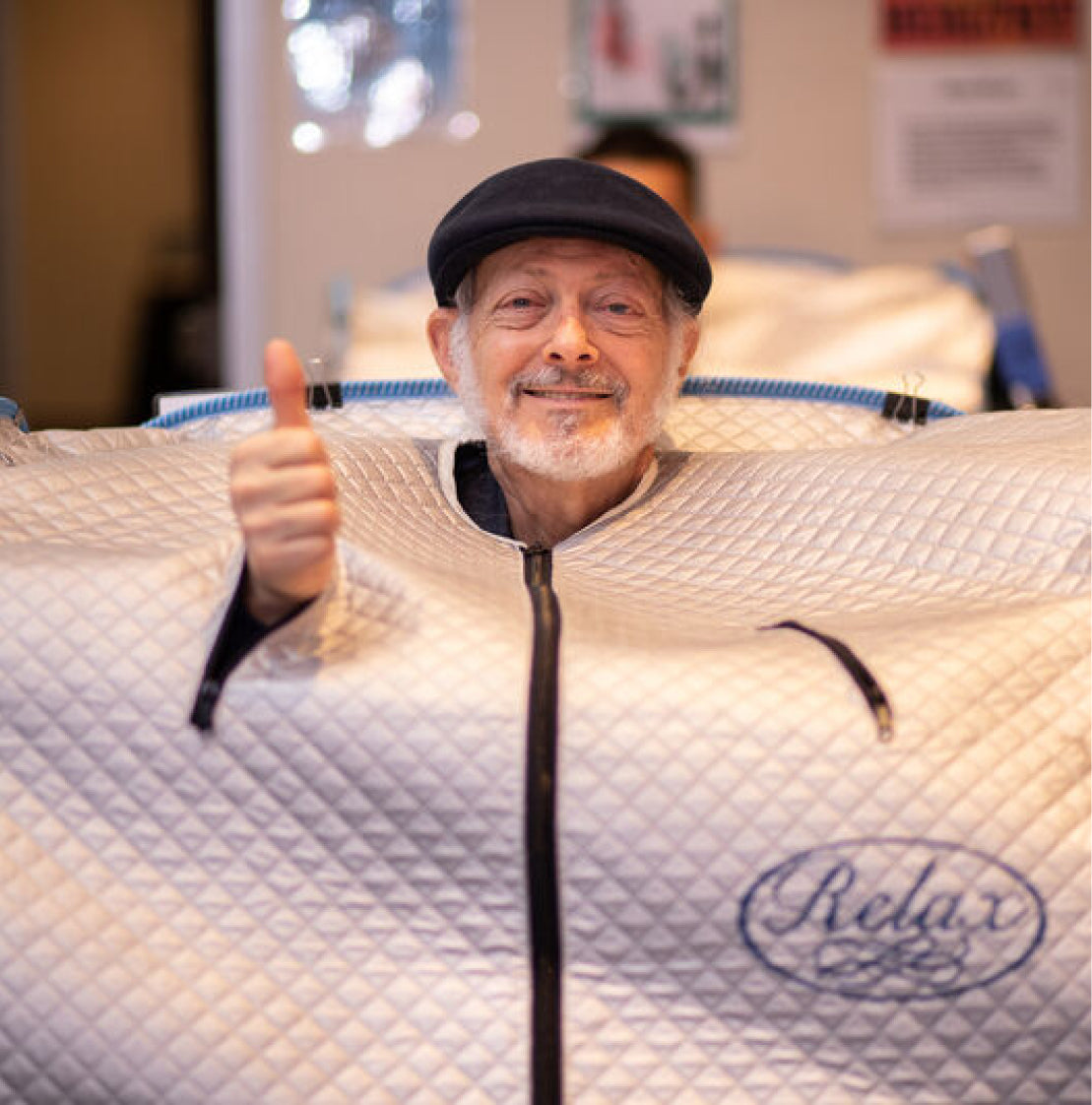
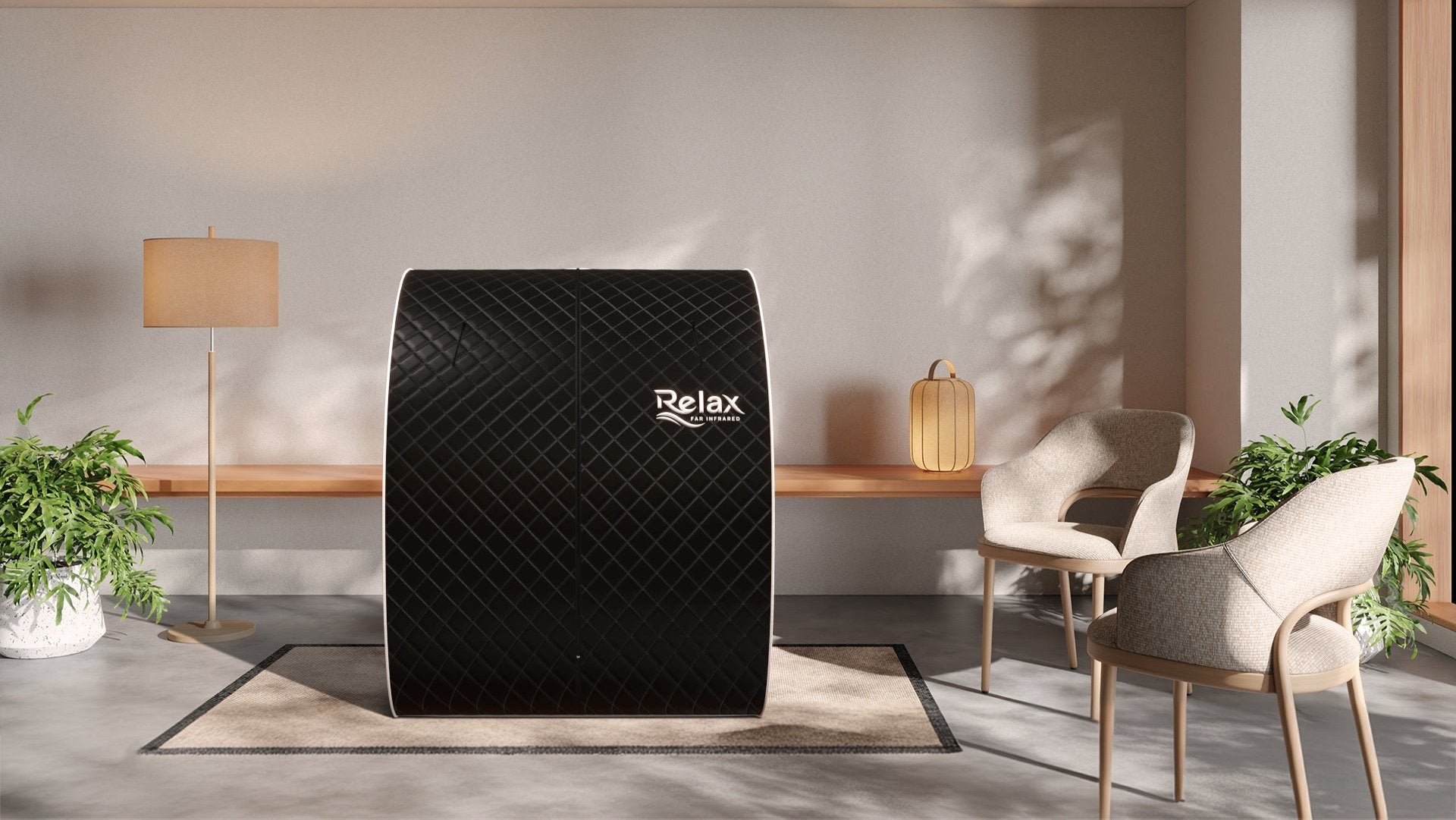
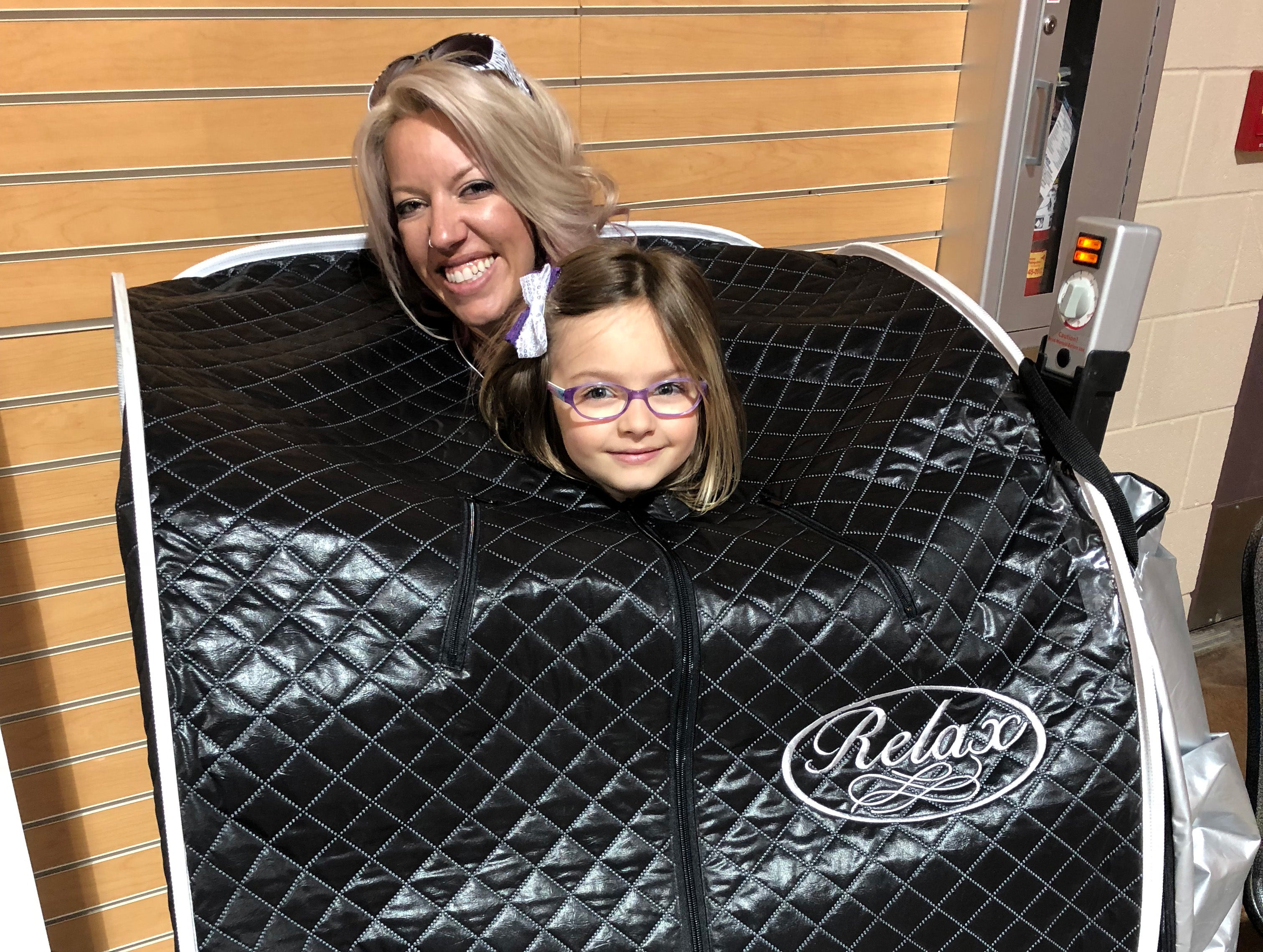
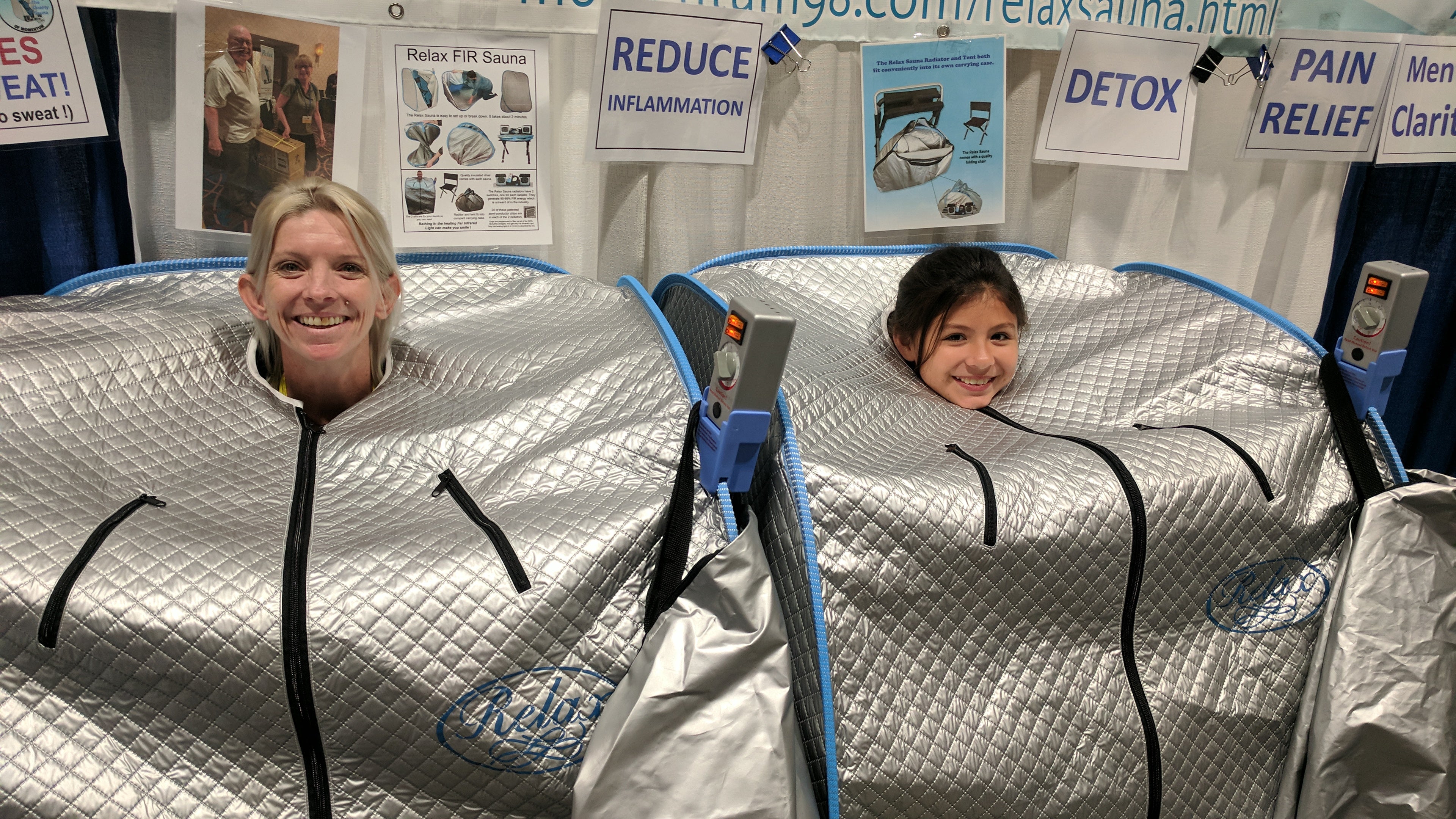
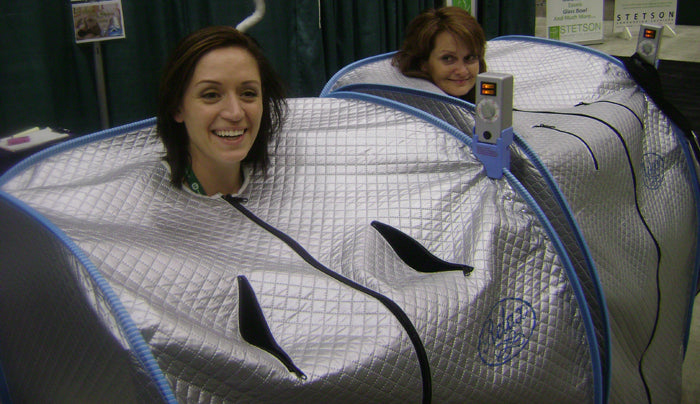
Delivers pure 7–14 µm far-infrared wavelength energy in a portable, head-out configuration to lessen hyperthermic strain compared to enclosed saunas. Requires full clinical safety clearance for PD patients.



Explore the Relax Far Infrared Line Up


Feel the Momentum